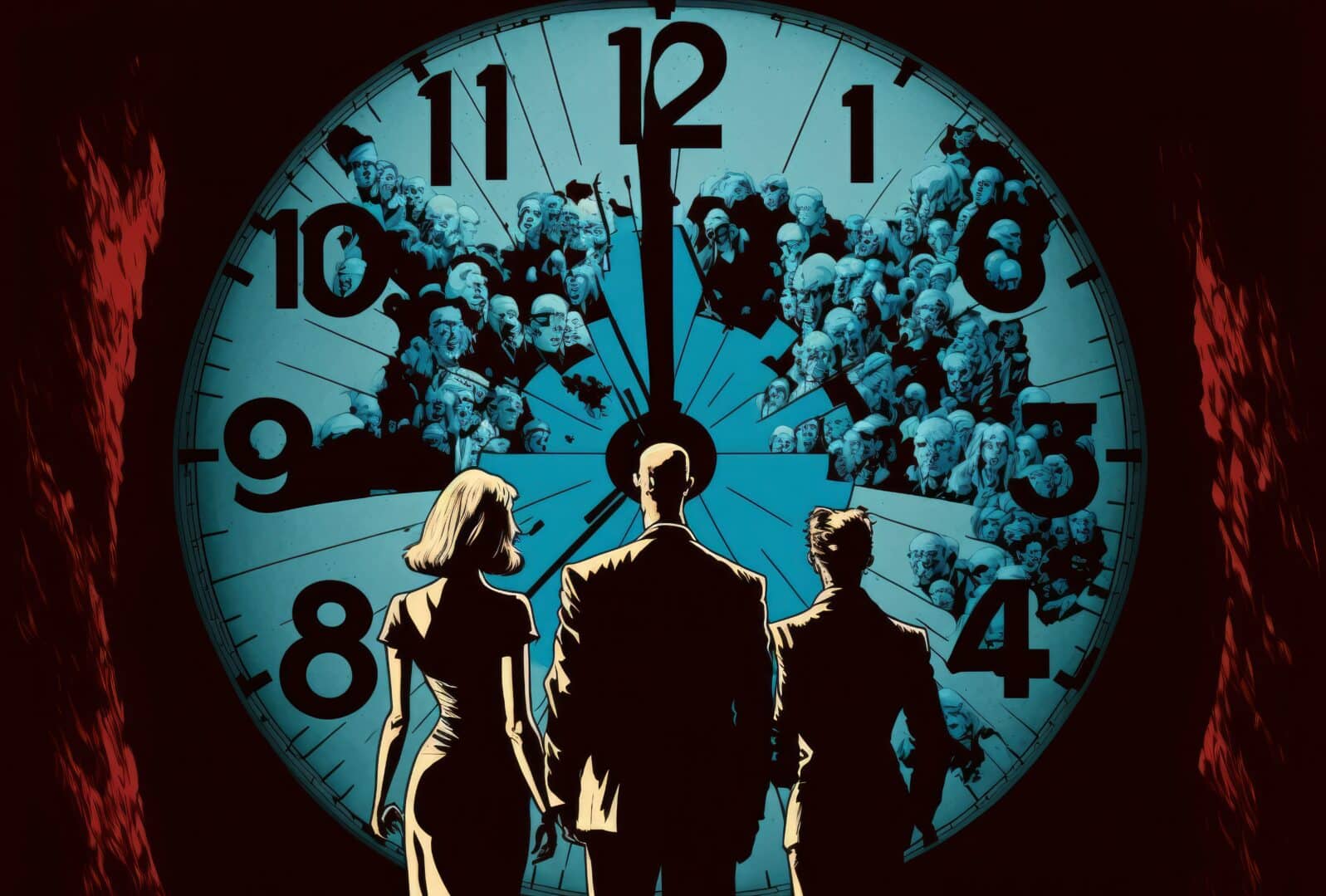
Nuclear doomsday mag says, AI Doomerism is bad science
On whose bingo card was this? The Bulletin of the Atomic Scientists, founded in 1945 by scientists who worked on the Manhattan Project (the Bomb), ran an article on Wednesday, informing us that AI doom is overrated.
They should know. They’ve been keeping the Doomsday Clock, clocking nuclear annihilation since 1947.
Believe what you will about that; here is what their associate editor Sarah Goudarzi has to say about the Doomers:
Behind the escalating warnings about superintelligence is a more fundamental issue, critics argue: There is no established path showing that today’s AI systems will surpass the smartest humans, much less a scientific basis for calculating the likelihood that such systems will destroy humanity. Yet the doomer narrative has increasingly overshadowed AI’s more immediate and concrete risks, while boosting the very companies whose products are being portrayed as extraordinarily powerful and potentially uncontrollable.
“I think Anthropic and OpenAI benefit a lot from claims that their system—their products, not science products—are so powerful that they might end humanity,” says David Widder, a professor at the University of Texas at Austin. “That’s, in some ways, capitalizing on fear to sell things, or at least to garner investment, garner interest in how powerful their systems are.”
“How the bad science of AI doomerism is good for big business,” September 30, 2026
Underlying philosophies of doom
She goes into more detail about the philosophies of effective altruism and longtermism in which Doomers like Jacob Coxon show interest:
Some inside these movements have even attached a striking probability to AI destroying humankind: a figure known as p(doom) or probability of doom. In 2025, Anthropic CEO Dario Amodei once put this figure at 25 percent. Others, like Anthropic’s Alignment Science lead Evan Hubinger, have suggested the chances of extinction are more than 10 percent.
How they have arrived at those numbers is unclear. Good for big business”
She quotes AI researcher Timnit Gebru, who suspects, as many do, that AI moguls’ sudden interest in talking to government is an effort to “shape regulation in their favor.”
Across the board, suspicion of the Doomers is now bipartisan and routine. But that does not seem to have stopped either them or the Valley’s investors. We shall see how that turns out.
