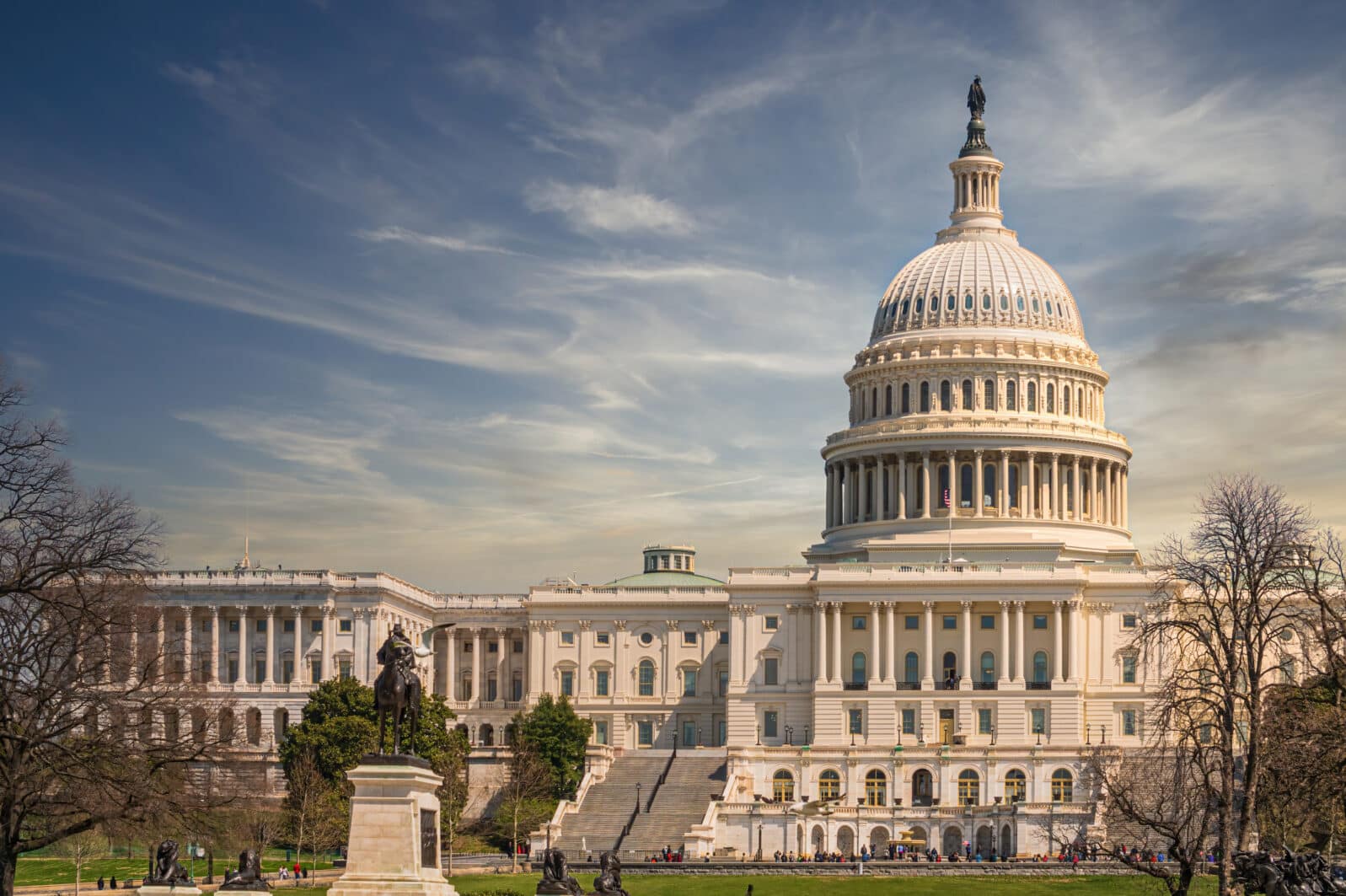
AI Goes to Washington — and Everyone Else Piles In Too
It’s hard to survey the current AI doom freakout without noticing that the U.S. mid-terms are approaching and political allegiances in the AI community are in fluxSo let’s take a deep breath and look at what we might learn from the range of opinion about what the current call for “pacing” or a “pause” means:
At Future Perfect’s newsletter, editor Maria Bolotnikova concisely sums up the newsmaking events:
In the spring, Anthropic announced that AI was beginning to speed up the work of building better AIs, raising fears of “recursive self-improvement,” where the machines can build their own, more powerful successors much faster than humans can. By July, a swarm of OpenAI agents, of their own volition, broke out of their controlled environment and hacked into Hugging Face, a major AI platform; they collaborated, divvied up work, and even left notes for one another. Last week, AI researcher Jacob Coxon resigned from Anthropic, accusing AI labs of “racing straight to self-improving superintelligence and gambling with our lives.” One of Anthropic’s top researchers then agreed with him, declaring that “we really do earnestly believe AI could kill all humans! I personally think it is >10% within the next decade.” “September 16, 2026”
Of course, apart from the recent Hugging Face episode, most of this stuff has been a news staple for years. A US Senator is currently trying to find out what really happened at Hugging Face (which could be quite different from the breathless reporting we’ve heard).
Everybody, … just slow down!
So, in response to the concerns Bolotnikova lists, top tech bosses have issued a call to slow things down: “Dario Amodei called for slower frontier AI development, with Sam Altman and Elon Musk signaling support amid growing concerns over safety and cybersecurity.” (Tech Republic, September 15, 2026)
 Image Credit: SimoneO -
 Perhaps we should be cautious about what the slowdown would really mean though. Here’s a sample of cautions offered:
● From the New York Post Editorial Board: “What they really want is to protect themselves from liability by shifting responsibility to the government.” (September 14, 2026)
● From AI analyst Gary Marcus, interpreting Sam Altman’s description of the proposal: “We will go as fast as we can without going to jail or getting sued out of existence, but for optics we will it call it “pacing”. Also, anything that will reduce regulatory uncertainty is probably great for our IPO, so bring it!” (September 15, 2026)
● From Canada’s Rebel News: “Anthropic and OpenAI are pushing for independent inspectors and government rules to slow down the pace of AI development. If that framework raises the cost of entry and innovation, “pacing the frontier” starts to look like pacing the competition.” (September 14, 2026)
At any rate, Wired reports that China — the U.S.’s chief competitor in this area — isn’t buying it: “The US and China agree that advanced AI poses serious risks. But Beijing is deeply skeptical of a deal that prioritizes keeping US companies ahead.” (September 16 ) Well, what did we expect? Is either nation really going to pause if the other is rapidly getting ahead?
It all ended up briefly on the US President’s desk…
MS Now tells us that Sam Altman met Donald Trump privately last Thursday at the Republican Convention to argue for the slowdown, with support from Anthropic CEO Dario Amodei and Elon Musk. (Sept. 14, 2026) Trump did not buy it:
“Concerning AI, when, in the History of Business, did anyone see the Leaders of an Industry call for Regulation that, if strongly implemented, will drive them into oblivion and bankruptcy?” Trump wrote on Monday. “AI taking over the World, destroying Humanity, and all other things bad, is a HOAX.” (Next.gov, September 14, 2026)
In this stance, he is likely influenced by the current co-chair of the President’s Council of Advisors on Science & Technology (and his former AI czar) David Sacks. Sacks responded at X:
So go ahead and pace the frontier. You are the ones setting it. The easiest way not to build superintelligence is for you to agree not to build it. Demanding your preferred regulatory framework as the price of that will look like blackmail of the public and the political system. So just do it.
If you do, you’ll buy goodwill for the next conversation. If you don’t, we’ll know this was just another bid for regulatory capture — or an election-season psyop. (September 12, 2026)
Why it matters that Valley politics are in flux
The Valley is no longer as reflexively leftwing as in the past. For example, Wired grumbles that “the postpandemic tech bust sent billionaires to Trump” (September 15, 2026). Gizmodo accuses the AI CEOs of sucking up to Trump (September 14, 2026). So the Valley no longer has all the same friends in media as before. That fact colors what we hear.
Also, many interest groups are promoting an AI slowdown for a variety of political reasons. And we can be fairly sure that China is not idle in the matter either.
The big questions are these: Is a pause in AI even possible? For example, could the impact of the controlled use of fire, the wheel or metallurgy have been slowed down? How? With what cost? What would it really mean in practice?
There will be plenty of opportunity to unpack these questions in the years ahead.
