
MIT psychologist: Beware the chatbot’s artificial empathy
At The Human Adventure, Andrew McDiarmid, talks about the dangers of the pretend empathy of a chatbot.
He interviewed MIT psychologist Sherry Turkle, author of just-published Artificial Intimacy: Who We Become When We Talk to Machines (2026):
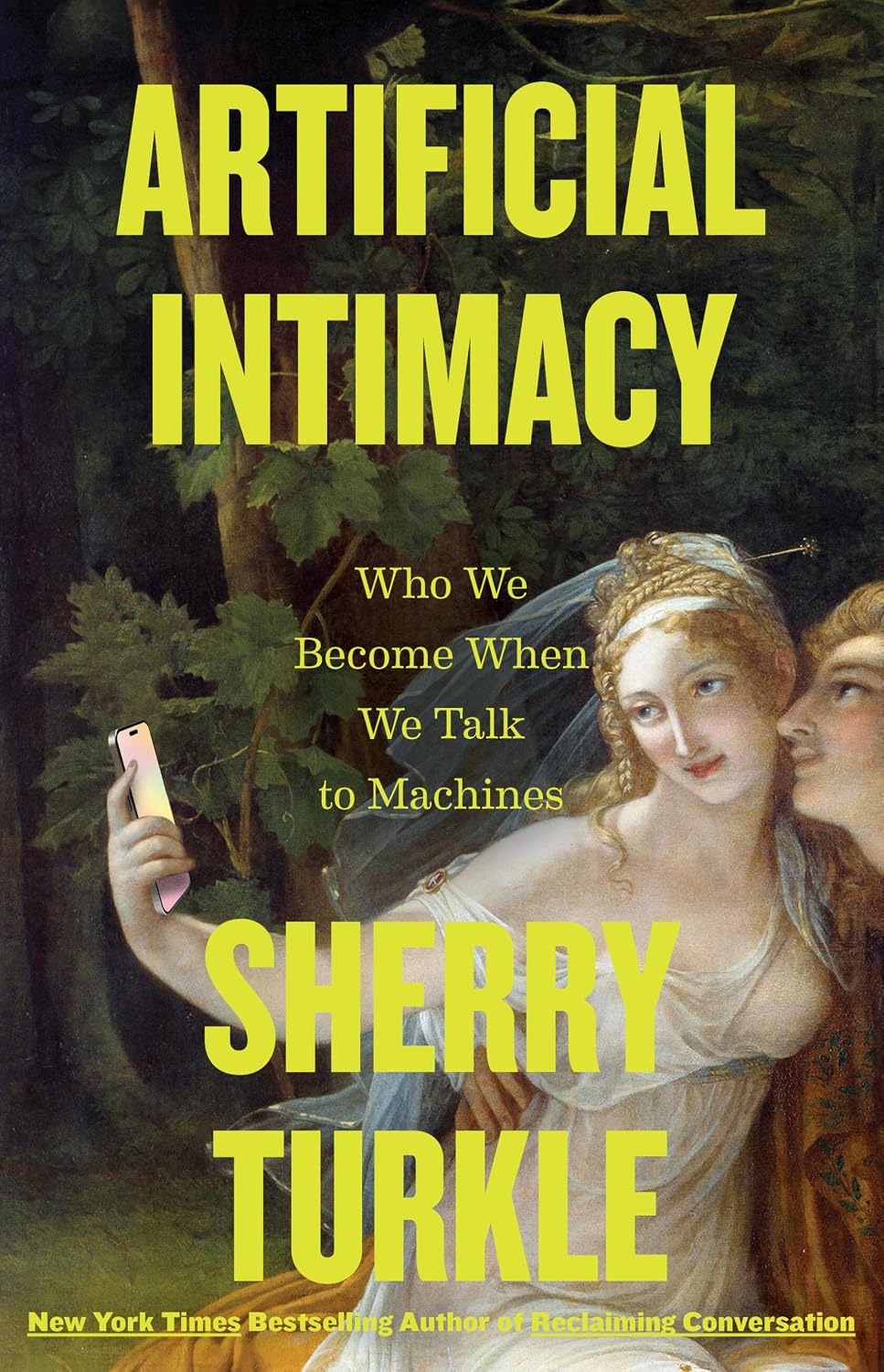
Turkle begins her preface by explaining that she’s a new grandmother who enjoys precious moments with her one-year-old granddaughter Lily. She recalls sharing one such experience with ChatGPT as part of her research into chatbots. Along with the usual bullet points about childhood development, Chat responded by adding this: “Observing Lily’s peaceful demeanor while arranging her books might have evoked a sense of tranquility within you.” For Turkle, it was a reminder of something that’s obvious but easy to forget: Chat doesn’t know what it’s like to have a granddaughter. It’s got the words to describe it, but there’s no life behind the words. That’s the fundamental problem with making chatbots our friends, lovers, or therapists. It’s a one-way street. There’s no relationship there at all.
“Don’t Settle for a Chatbot’s Pretend Empathy,” October 15, 2026
He got permission from publishers Little Brown to offer his readers a short excerpt from the book:
But chatbots can’t be empathic partners because they haven’t lived a human life. They don’t experience love. They don’t fear illness and death. They don’t know what it’s like to start out small and dependent and grow up so you’re in charge of your own life, but still feel many of the insecurities you knew when you were little. Without a body, they have no standing to talk about pain, fear, loss, joy, or passion. And they have no stake in our social world—our ability to live and work together in the real. More.
That empathy is both a pseudo-strength and a fatal weakness. When the user says “Me, me, me!”, the bot can reply, “Yes, you, you, you!” Real relationships can never be like that because both parties are real.
How much interaction with bots needs to take place before the human simply begins to prefer not to be challenged the way other human beings challenge us?
McDiarmid will be posting his interview with Turkle sometime soon.
