Mind Matters Natural and Artificial Intelligence News and Analysis

Mind Matters

sai-kiran-anagani-61187-unsplash-modified

Can Tim Berners-Lee, who invented the World Wide Web, save it from humanity?

Berners-Lee has launched a global campaign for a Magna Carta to “protect people’s rights online from threats such as fake news, prejudice and hate”

Not everyone sees Berners-Lee’s project as realistic. For one thing, acquiring and using masses of personal data without consent is the very basis of the business of the big social media companies, who are more powerful than many nation states.

Read More ›
matthew-guay-148463-unsplash

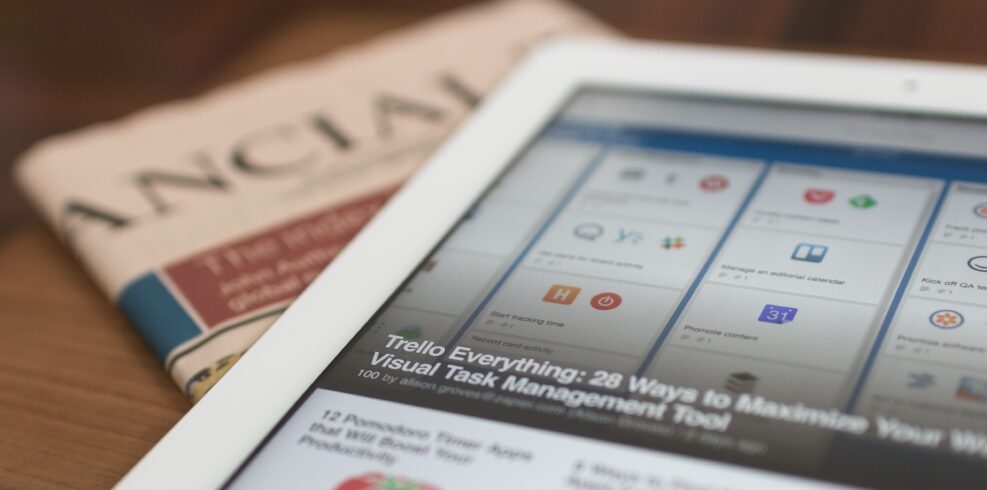
Is social media the best communications tool that ever happened?

The worst communications tool that ever happened? Or something less comfortable than either?

We hear all three views aired frequently these days, along with many prescriptions for reform. Some sound the alarm over the success of political movements they disagree with and long for more control

Read More ›
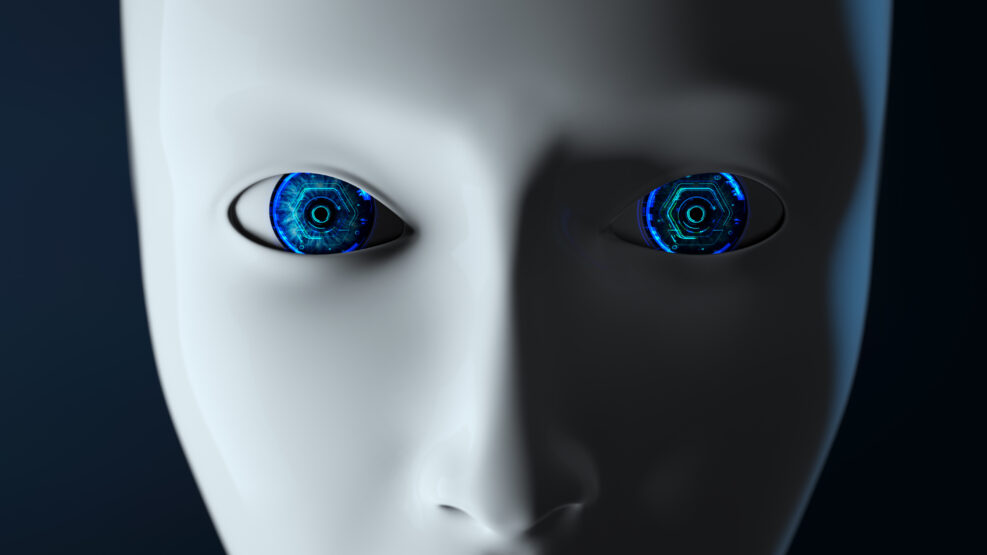
Female Cyborg Robot - 3D render of a futuristic robot conveying artificial intelligence, work and production automation in the digital age

Software pioneer says general superhuman artificial intelligence is very unlikely

The concept, he argues, shows a lack of understanding of the nature of intelligence

François Chollet, author of Keras, for the Python deep learning language, cites the No Free Lunch theorem as one of the reasons.

Read More ›
jose-maria-garcia-garcia-656379-unsplash

Machines just don’t do meaning

And that, says a computer science prof, is a key reason they won't compete with humans

Human understanding is grounded, as Prof. Mitchell says, in common-sense knowledge about how the world works and why things matter. Researchers have not been able to transfer this understanding to AI but she worries that many teams are moving ahead with projects that require such ability for safety.

Read More ›
Hardworking

Meet the everyday people behind AI

Not famous, not lone geniuses, usually not even well-paid. Without them, ambitious systems would gather dust.

Although you probably haven’t heard much about the 26-year-old single mother in the hi-tech news, Brenda is one of the intelligences behind artificial intelligence. For $9 a day, Brenda, who lives in the slum district Kibera in Nairobi, along with a thousand co-workers helps code information for self-driving cars for San Francisco-based Samasource (founded 2008).

Read More ›
bernard-hermant-590572-unsplash
Peep hole with camera

A chilling snippet from mass surveillance in China

China is helping other countries restrict their citizens’ internet, while shunning the U.S.

Overall, governments worldwide are restricting the freedom of the internet, especially around election times, and the big social media companies are conspicuous by their silence.


Read More ›
mika-baumeister-703680-unsplash

Facebook is said to be exploring minting its own cryptocurrency

If Facebook wants to mint private currency, can it still be the judge of morals and manners among users?

A software engineer and tech blogger sees ideas sprout up all over, including both the absurd and the brilliant, as traditional companies try to incorporate cryptocurrencies into their business model.

Read More ›
MS._Hatton_48_fol._6v-7r

Peaceful code of conduct sparks rage in Silicon Valley

Hi tech firm’s code, based on ancient monks’ practice, deemed “just disgusting”

Whether or not the Rule of St. Benedict is suited to a high tech workplace, the strategy of frightening or policing people out of bad behavior implies low expectations. One thing it means is, there will be many more news stories about harassment to come.

Read More ›
End of the road. Precipice, indicated by signs. 3d render

There is no universal moral machine

The “Moral Machine” project aimed at righteous self-driving cars revealed stark differences in global values

Whatever the causes of cultural differences, Brendan Dixon thinks that the Moral Machine presents mere caricatures of moral problems anyway. “The program reduces everything to a question of who gets hurt. There are no shades of gray or degrees of hurt. It is, as is so often with computers, simply black or white, on or off. None of the details that make true moral decisions hard and interesting remain.”

Read More ›
daniil-kuzelev-435431-unsplash

How a Computer Programmer looks at DNA

And finds it to be "amazing" code

From 2006 through 2017, Dutch entrepreneur and software developer Bert Hubert contributed from time to time to a web page where he listed many of the ways the workings of DNA can be likened to coding decisions by programmers.

Read More ›
Personal communication

Brain hacks

Do we understand the brain better if we see it as a computer?

Seeing the brain as a computer doesn’t tell us as much as we might think. When human beings build computers, we design them in a way that we can understand and use. So we think our brains must be like that too. Sure enough, in the vast complexity of our brains, we can surely find some elements that remind us of a computer. Others won’t.


Read More ›
Personal Bitcoin Wallet with euro coins

How Do Bitcoins Work Anyway?

And what's their future? A roundup for non-geeks

Everywhere these days one hears people foretelling the fortunes of cryptocurrencies such as Bitcoin—like so many fairies, good and bad, wishing around a cradle. Most people, including New Yorker staff writer Nick Paumgarten, have hoped to just avoid the scene, partly because few enthusiasts can even explain what the cryptocurrencies are or why they exist. But Paumgarten dove in and his recent long form article offers helpful explanations along with illuminating profiles of digital currency pioneers. First, why? Bitcoin and Ethereum enthusiasts want, in Paumgarten’s words, “a better, decentralized version of the World Wide Web—a Web 3.0—more in keeping with the Internet’s early utopian promise than with the invidious, monopolistic hellscape it has become. They want to seize back the tubes, and Read More ›

jimmy-chang-569951-unsplash

Would Google be happier if America were run more like China?

This might be a good time to ask

A leaked internal discussion document, the “Cultural Context Report” (March 2018), admits a “shift toward censorship.” It characterizes free speech as a “utopian narrative,” pointing out that “As the tech companies have grown more dominant on the global stage, their intrinsically American values have come into conflict with some of the values and norms of other countries.”

Read More ›
rawpixel-577480-unsplash

The $60 Billion-Dollar Medical Data Market is Coming Under Scrutiny

As a patient, you do not own the data and are not as anonymous as you think

Data management companies can come to know a great deal about you; they just don’t know your name—unless, of course, there is a breach of some kind. Time Magazine reported in 2017 that “Researchers have already re-identified people from anonymized profiles from hospital exit records, lists of Netflix customers, AOL online searchers, even GPS data of New York City taxi rides.” One would expect detailed medical data to be even more revelatory.

Read More ›
Background of engine room detail in a steam locomotive

George Gilder explains what’s wrong with “Google Marxism”

In discussion with Mark Levin, host of Life, Liberty & Levin

Gilder: Marx’s great error, his real mistake, was to imagine that the industrial revolution of the 19th century, all those railways and “dark, satanic mills” and factories and turbine and the beginning of electricity represented the final human achievement in productivity so in the future what would matter is not the creation of wealth but the redistribution of wealth.

Read More ›
louis-reed-747388-unsplash

Do we just imagine design in nature?

Or is seeing design fundamental to discovering and using nature’s secrets?

Michael Egnor reflects on the way in which the 2018 Nobel Prize in Chemistry has so often gone to those who intuit or impose desire or seek the purpose of things.

Read More ›
david-clode-347200-unsplash

Hacks damage Facebook, kill Google+

The internet changes everything. For example, it makes the Big Guys more vulnerable, not less vulnerable, than bit players

Facebook gets blamed for everything from what Russia does to what American voters do. But the people who seem to think Mark Zuckerberg and company have superpowers for changing the world are mistaken. Facebook was not able to fend off a damaging hack.

Read More ›
kobu-agency-798655-unsplash

Did AI teach itself to “not like” women?

No, the program did not teach itself anything. But the situation taught the company something important about what we can safely automate.

Back in 2014, it was a “holy grail” machine learning program, developed in Scotland, that would sift through online resumes, using a one-to-five star rating system and cull the top five of 100, saving time and money. Within a year, a problem surfaced: It was “not rating candidates for software developer jobs and other technical posts in a gender-neutral way.”

Read More ›
pawel-czerwinski-710838-unsplash

Google boss quits, writes satirical novel

The novel is said to be so far-fetched that it captures the environment

Recently, we’ve looked at a number of complaints about the way Silicon Valley is acquiring too much power over people’s lives, at home and abroad, and reaching deep into the compulsory school system as well. A former employee decided to respond creatively.

Read More ›