Researchers: Cave paintings are much better seen by torchlight
In the Smithsonian Magazine, Ben Crair recounts his journey to a Paleolithic “art gallery” cave:
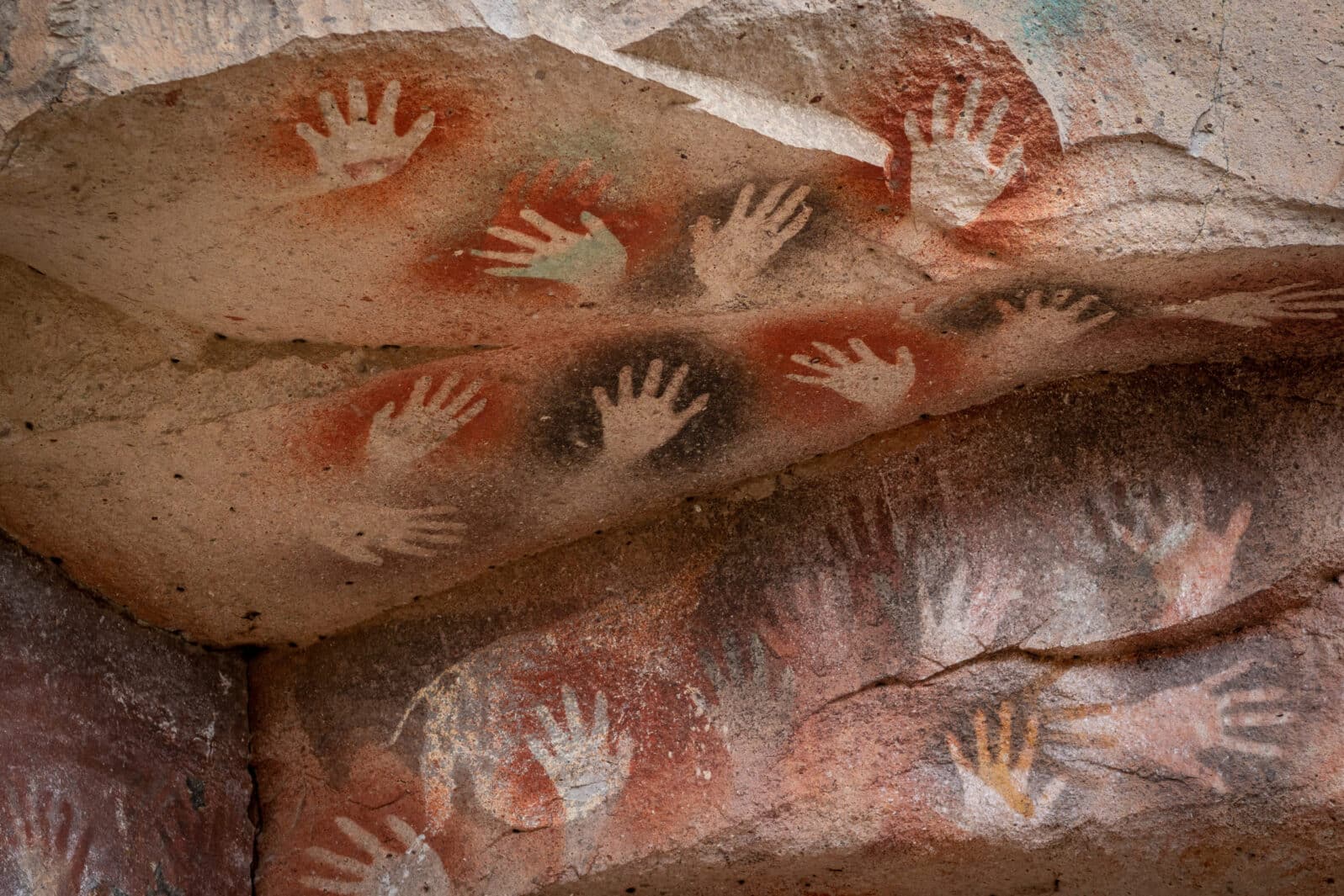
Last year, I followed two archaeologists through a heavy metal gate into a cave called El Castillo, in northern Spain. Artists likely visited the cave many times between 13,000 and 41,000 years ago, with only torches and rudimentary lamps to help them avoid dangerous falls and cave bears with claws capable of lacerating stone. They entered the deepest, darkest chambers and made engravings and drawings of not only animals but also red disks, hand stencils and geometric patterns—nearly 3,000 of which remain legible today. “If the Paleolithic record were a book, then in El Castillo we have every chapter, more or less,” one of the archaeologists, Eduardo Palacio Pérez, told me. “We have practically all the themes in Paleolithic rock art in Europe.”
“The Prehistoric Paintings on the Walls of Caves … With the Right Kind of Light, Some Actually Seem to Move,” September/October 2026
Researchers like Diego Garate of the University of Cantabria in Spain have found an intriguing new thing: the paintings reveal facets that can only be properly appreciated by torchlight.
Garate got a chance to test this — without harming any priceless artifacts — when he found some modern graffiti in a cave near a crowded beach in Basque country:
Other archaeologists, too, have turned their attention from drawings and etchings in isolation to other components of cave art, like lighting, placement, sound and touch. Their research is revealing cave art to be far more dynamic and immersive than most of us appreciate when we see it in photographs, or even a film like Werner Herzog’s Cave of Forgotten Dreams, a 2010 documentary about the Chauvet Cave in southern France. One pair of anthropologists called cave art a “pre-echo of cinema,” while another team compared it to “modern installation art,” which “integrated the artist/viewer and their physical environment in a two-way relationship that was constantly changing.” In their view, cognitive explanations for the origins of cave art have overlooked its sensual side. “Seem to Move”
Because they can’t allow torchlight viewing in the caves today, some researchers are experimenting with virtual reality, using a computer model, to show viewers more of what the actual experience would be like.
Of course, the experience wouldn’t be really complete without simulating the threat of a cave bear trapping the artists (and modern-day viewers) in the deep recesses of a cavern …
