
Different Bubbles, Different Methods of Detection: What of AI?
Circular financing is one of the signs. Even the media are beginning to catch onFinancial bubbles involving inflated share prices have occurred many times over recent centuries. But how do we detect inflated share prices? It depends on the nature of the bubble.
Bubbles and bursts

The Wall Street Crash of 1929 was due to excessive capacity in factories across the U.S. Investors overestimated the extent to which consumers would buy the rapidly increasing output. The resulting Great Depression, which led to widespread unemployment, also resulted in an emphasis on price-to-earnings ratios. The measurement was made in order to detect bubbles by comparing stock prices to earnings.
The dotcom bubble of 2000 revolved around the companies expected to benefit most from the internet economy. These were the largest companies in the Nasdaq Index such as Cisco, Microsoft, Lucent, Nokia, IBM, Oracle, AT&T, and Intel (despite the name “dotcom”). The value of the Nasdaq thus became a new barometer of bubbles.
How the AI bubble differs from the dotcom bubble
The AI bubble revolves around a much smaller number of companies, particularly OpenAI, a privately held firm that has no stock price nor audited earnings. Now valued at $500 billion by venture capitalists, OpenAI is incurring huge losses because it has set its prices far lower than its costs. Its costs are mostly incurred for AI cloud services that in turn require large purchases of semiconductors, mostly from Nvidia. Other AI companies also incur big losses and the construction of data centers to supply AI cloud services has become a significant fraction of the U.S. economy.
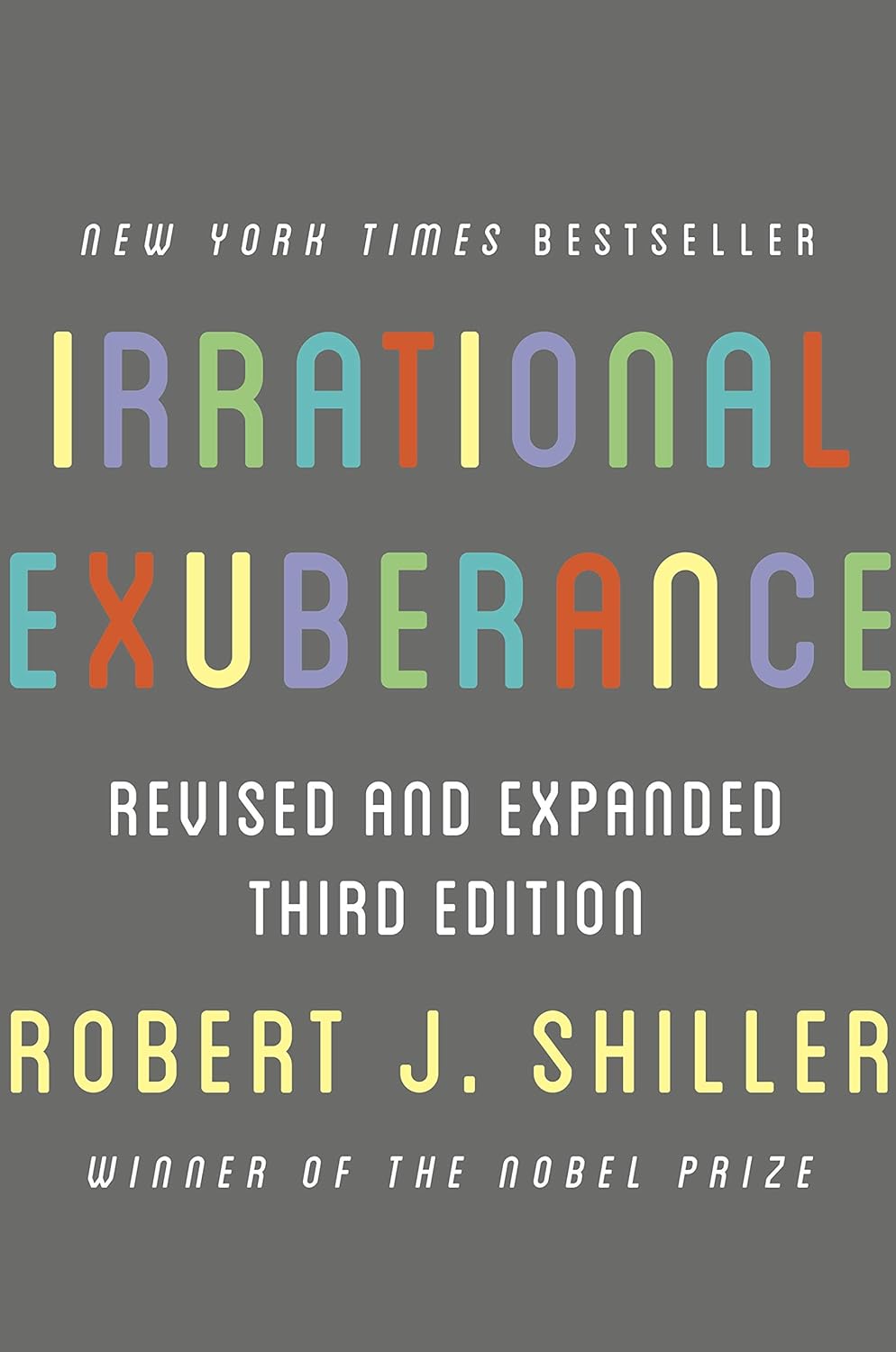
How do these bubbles arise? According to Nobel Laureate Robert Shiller’s book, Irrational Exuberance (2000), each bubble is accompanied by a narrative that explains how and why earnings will rise.
The rise of the AI narrative
Proponents of AI have been making fanciful forecasts for at least a decade. In 2017, many consulting organizations predicted $15 trillion in economic gains by 2030 that were far from being realized even in 2022 when generative AI was introduced.
Proponents of generative AI, such as Sam Altman, revived those optimistic forecasts with a new narrative. He claimed that generative AI would enable a “Moore’s Law for Everything.” A key part of his optimism came from training bigger models on bigger databases, which is known as scaling. Bigger models would purportedly lead to better results and to artificial general intelligence (AGI).
However, despite the rapid increases in model size (and data centers) over the last few years, hallucinations have not appreciably declined and the release of GPT-5 six months ago, after two years of inflated expectations, proved that scaling was insufficient; most users concluded that GPT-5 was not that much better than GPT-4.
The release of Sora 2 last month has again brought questions about the future of generative AI to the fore. Behind the oohs and aahs of slick videos are obvious questions of how the new technologies will enable productivity improvements and whether they are economical. These questions are important because recent studies continue to show that the percentage of organizations achieving any type of return is 5% or less.
OpenAI wants invited users to create 10 second videos for its Sora app that is supposed to resemble TikTok. Altman does not address how current improvements will enable rapid productivity. And again, the economics are questionable. Sora 2 videos cost about $5 each and OpenAI offers users 100 of them in a $20 per month service. It’s hard to imagine how this will work.
Backlash against AI slop
Parents have been creating a big backlash against TikTok and other social media for several years, and it has grown bigger this year because of AI slop. Critics have accused social media companies of “contributing to a deluge of so-called AI slop swamping the internet and blurring lines between real and fake. They are concerned that the new tools could facilitate abuses of users’ likeness, despite built-in protections, and that videos could spread misinformation.”
 Image Credit: Riya -
 AI slop is also showing up in business reports, emails, and meeting summaries, likely further reducing any positive return from AI. “Of 1,150 U.S.-based full-time employees across industries, 40% report having received workslop in the last month. Employees who have encountered workslop estimate that 15% of the content they receive at work qualifies.” They report that fixing each instance of workslop requires “one hour and 56 minutes, ” and they “no longer trust their AI-enabled peers, find them less creative, and find them less intelligent or capable.”
Altman’s search for revenues
Why is Altman emphasizing social media over business applications? Because he is desperate to find revenues and profits. Last year OpenAI had losses of $5.3 billion on revenues of $3.5 billion and 2025 is just as bad or worse. In the first half of 2025, OpenAI reportedly had operating losses of $7.8 billion on revenues of $4.3 billion, and some estimates of losses are even higher if R&D and advertising are included. Whatever the actual numbers, they are huge, and they are consistent with OpenAI’s estimates of $115 billion in cumulative losses by 2029.
By setting prices much lower than costs, OpenAI has increased the demand for not only its software, but also for cloud services and thus Nvidia chips. Rising demand has meant rising revenues, profits, and share prices for the big tech companies; the market capitalizations for the ten biggest tech companies are up almost $15 trillion in the last few years.
Luckily for Altman, these companies are stuck supporting him, even if doing so inflates the bubble further thus raising the risks to the U.S. economy. They must continue their investments in AI infrastructure, with some expecting more than $1 trillion invested in 2025.
Circular financing
The most recent sleight of hand is circular financing, an approach that has also been popular in previous bubbles including the dotcom one. Companies such as Nvidia, AMD, Oracle, Microsoft, and most recently Broadcom have given OpenAI funding, often on the order of $100 billion, and OpenAI promises to buy an equivalent amount of services from those companies. These promises were part of Microsoft’s initial investment, President Trump’s Stargate, and have been part of recent announcements.
 Bubbles 1 Adobe Stock licensed
 Investors have mostly greeted this year’s circular financing announcements with big jumps in share prices. The media initially played right along, singing the praises of the AI revolution. Optimists have also claimed that there is not a bubble because price to equity ratios for America’s largest companies are not as large as in the dotcom bubble or because that bubble involved startups while the purported AI revolution involves big companies with strong balance sheets.
Unfortunately, every bubble is different, and analyses must include an understanding of the idiosyncrasies of a purported bubble to make sense of it. Circular financing is the last gasp for OpenAI and the cloud services. They need it to maintain the mirage of an economic boom despite big losses and small revenues for AI software, which is being sold for far less than its costs. These coordinated investments can’t go on forever and some of the media are starting to catch on. CNBC can be seen here grilling investment banker Michael Wolf on their usefulness. The end of the generative AI lunacy may finally be here.
