Researchers Ask: What Happens After a Near-Death Experience?
The experiences themselves tend to attract attention and study. But how do they really change lives?A report at Neuroscience News from the University of Virginia School of Medicine found that, while NDEs do change lives, the aftermath can be far from easy:
 Image Credit: freshidea -
 For most, near-death experiences, or NDEs, have a positive effect; the brush with death can give experiencers renewed purpose in life, a desire to serve others and an appreciation for being part of a greater whole.
But even then some people may struggle to make sense of the experience, especially if their NDE conflicts with their religious or existential beliefs, personal values or scientific views.
Additionally, individuals who have had an NDE may struggle with incorporating changes in priorities, relationships and values into their lives.
Josh Barney, “What Happens After a Near-Death Experience?,” October 13, 2025
The study of 167 participants found that 64% of near-death experiencers sought professional or social support afterward — but that mental health professionals often lacked the understanding needed to address NDE-related challenges effectively.
The study results certainly make sense. If a man who has spent his life making money, reaching for the top, or running for office has an NDE, he may decide that money, status, and power don’t matter as much as serving others as part of a greater whole. Then he may have some explaining to do to his colleagues. Also, his initial choice of confidants might not be wise.
Shortage of experienced counselors
But the study of NDEs is comparatively new and there may not be many counselors equipped to help the client work through them:
Notably, support received from mental-health professionals was associated with lower perceived helpfulness. This may reflect a need for more counselors, therapists and health professional specifically trained in helping people cope with near-death experiences, the researchers conclude.
“We are hoping that this work brings light to the support needs of individuals who have had a near-death experience and are trying to make sense of it and its impact,” [researcher Marieta] Pehlivanova said. “What Happens After?”
The paper is open access.
One reason for the shortage of experienced counselors is that far more people survive close brushes with death today than did a century ago, or even fifty years ago. It probably takes time for disciplines to catch up. Of course, some professionals may need to overcome a reluctance to talk about spiritual matters as well, especially if they trained in an era where professionals assumed that that sort of thing was slowly dying out.
Incidentally, the anchor author is Bruce Greyson, the psychiatrist who wrote After (2021), a book about his own work with near-death experiencers. He is also known for the Greyson Scale for evaluating them.
What matters most to people who are dying?
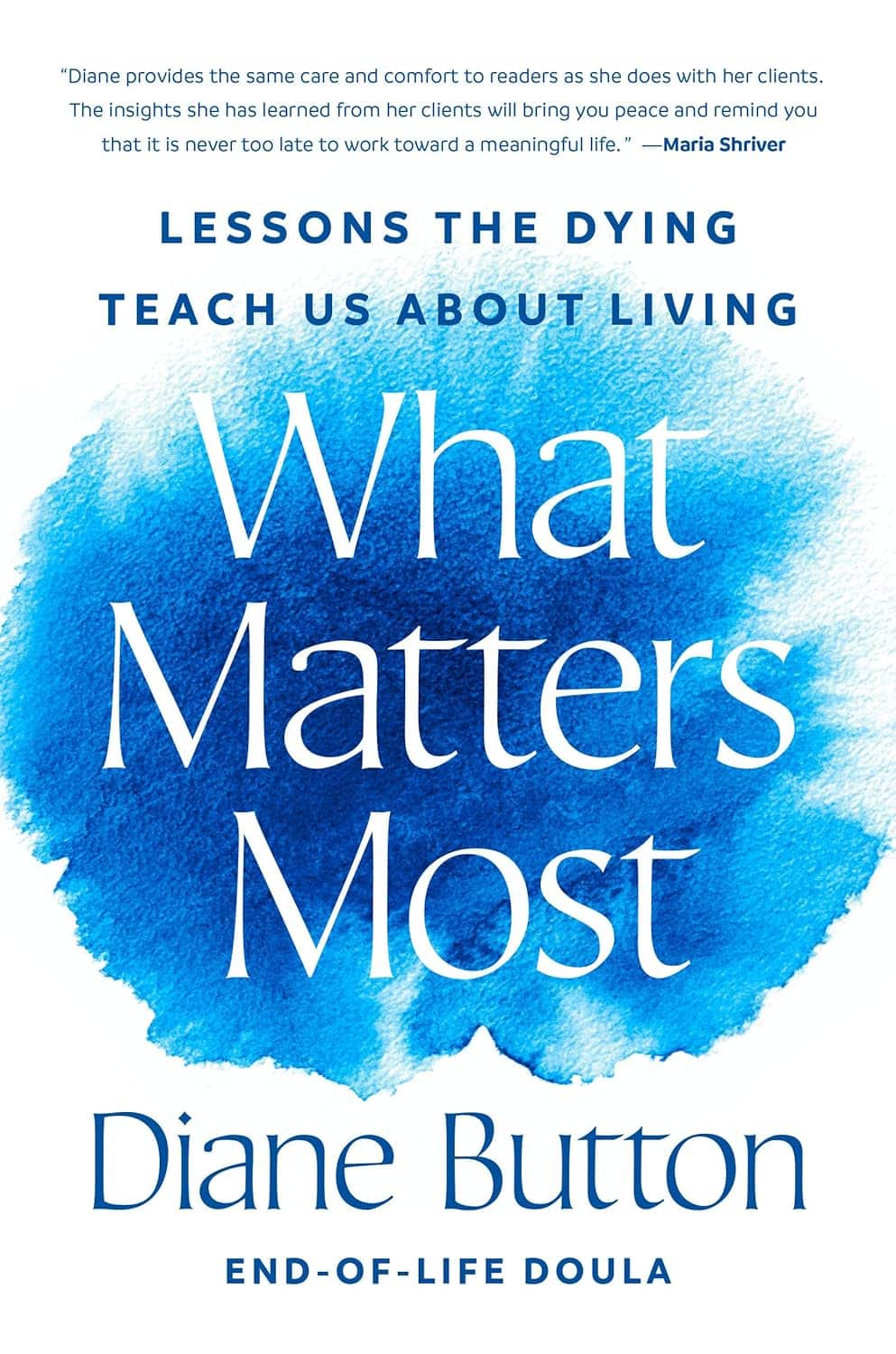
Meanwhile, a new book looks at people who do not have long to live (though they are not reporting an NDE). As Diane Button, author of What Matters Most (September 2025), told Jill Suttie at Berkeley’s Greater Good Magazine,
When people are facing the end of life, everything that is superficial just gets stripped away. The idea of taxes and politics and other things that we worry about are just gone, and you’re really focusing on love, relationship, healing, and, oftentimes, spirituality, because that’s something a lot of people believe they’re going to take with them when they die. The world becomes smaller in certain ways, but also just so profound and raw and beautiful. There’s often so much joy at the end of life. It’s amazing.
“What Matters Most to People Who Are Dying,” September 23, 2025
Of course, when that happens, it is not all roses:
JS: I found many of the stories in your book to be very moving. But one in particular stood out for me—the mother who’d abandoned her children and wanted to ask for forgiveness. How does listening to stories like hers affect you?
DB: Witnessing people’s stories has really changed my life. Sometimes they’re beautiful stories and I think, Oh, I want to have an ending like that. But sometimes they’re really hard stories, and it’s a lesson in a different way for me.
This woman named Carrie had left her family—her teenage daughters, her work, everything—and moved to California to be with a man that she fell in love with. When she was diagnosed with cancer, which later became terminal, the fact that she had abandoned her family was, at first, not really percolating. She was worrying about her medicine, her treatments, and such.
But once I got to know her and she told me the honest story, I realized that there was real big unfinished business that she was holding on to. So, we talked about it. These are the hard conversations, but they’re also the most profound. It took me a few visits of just sitting and processing it before I really understood the depth of what she was going through. I didn’t recommend anything. I just listened and I asked a few questions that gave her the opportunity to pause and reflect on what would matter most to her in her last few days and weeks of life. In the end, she actually got on a plane and went back to be with her family. “People Who Are Dying”
So the end of life can be spiritually challenging even without near-death experiences. It pays to live in awareness of that.
