Did a bot retract Max Planck’s papers?
Worse. Truth can be stranger than fiction.
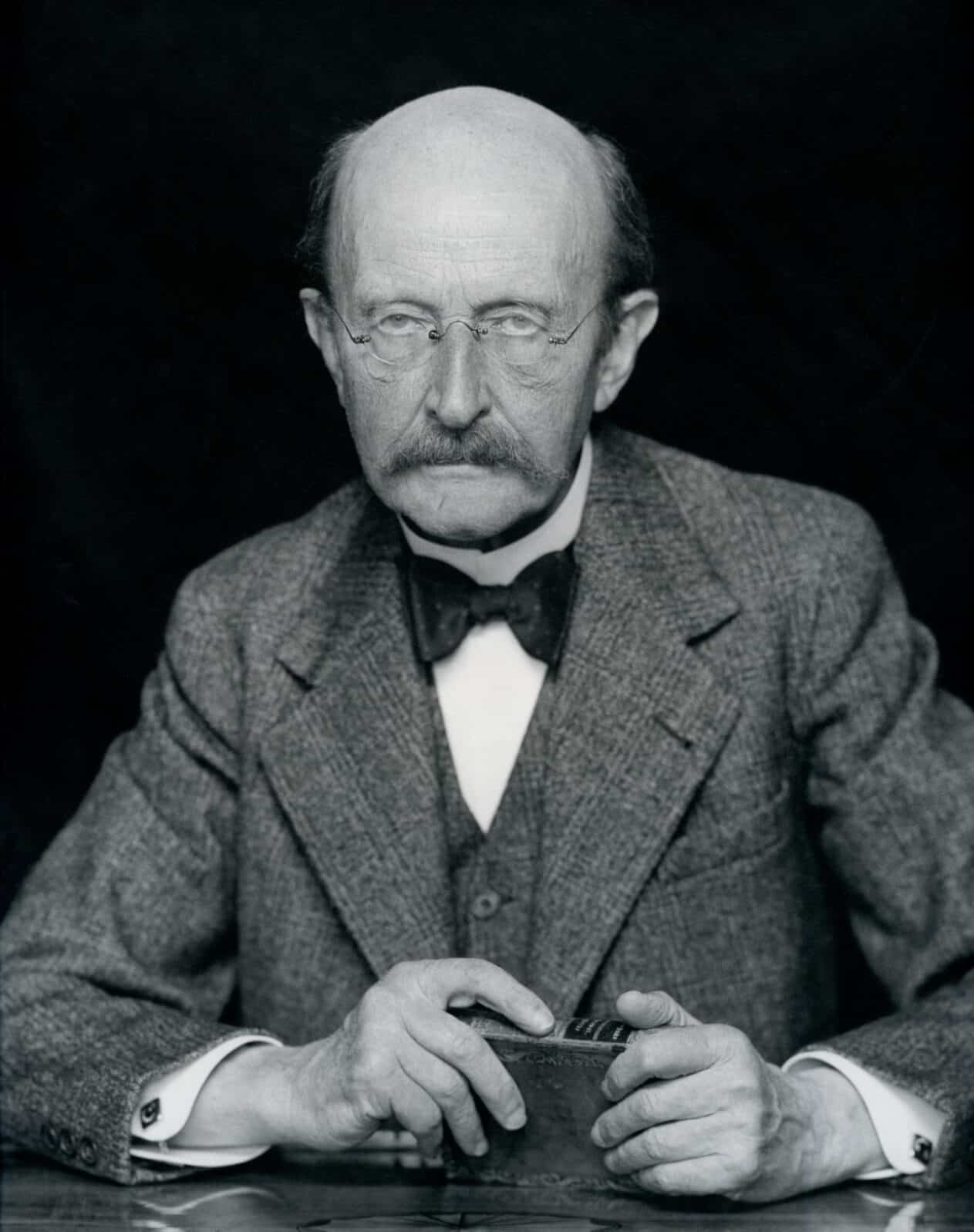 Max Planck by
 Max Planck (1858–1947) is one of the all-time famous physicists; his Planck’s Constant helped lay the foundation for quantum theory. But that didn’t seem to matter.
At Science, Sam Kean has the story (maybe):
In early May, Yves Gingras, a historian of physics at the University of Quebec (UQ) at Montreal, was browsing Retraction Watch, a website that catalogs fraud, data manipulation, and other scientific sins. He noticed a link that read “Retractions by Nobel Prize winners.” Were there really Nobel laureates whose papers had been withdrawn from the scientific literature?
After clicking, Gingras froze. “That’s impossible,” he recalls thinking. The fourth name on the list, with two retracted papers, was Max Planck—a legendary pioneer of quantum mechanics and the 1918 Nobel laureate in physics. Gingras had never heard a whiff of scandal about Planck, who was almost as widely revered for his character as his physics. In 1933, for example, he bravely confronted Adolf Hitler over Nazi Germany’s discriminatory laws against Jews.
“Why have papers by one of history’s most famous physicists been retracted? ,” June 26, 2026
The issue turned out to be that, prior to the internet, republishing papers in several journals was commonplace (and surely a convenience) so Planck did it. Still, Yves Gingras and colleague Mahdi Khelfaoui noted:
The text of a retracted scientific article usually remains accessible in its original form alongside a withdrawal notice, but remarkably, the two PDF files available on Naturwissenschaften’s digital platform contain only blank pages where the articles originally appeared: two (778-779) for the 1940 paper and nine pages (125-133) for the 1942 paper (Figure 1). All this clearly suggests that some lawyer at Springer was overshadowing the process and considered these papers as problematic forms of “duplicate publications”. Thankfully, both Planck Papers can still be read through the nonprofit digital library Internet Archive, which hosts scanned versions of Naturwissenschaften volumes from 1913 to 2001 – From the authors’ open access paper.
In any event,
Springer’s own presentation of its online journal archives similarly indicates that the large-scale digitization of older scientific periodicals largely took place around the turn of the 21st century, when publishers progressively integrated historical collections into searchable digital platforms, thus adding more value to their product. It therefore seems plausible that the decision to “retract” Planck’s papers was made at that time and applied rather mechanically by Springer according to some internal cataloguing criteria, with little attention paid to the historical context of the publications themselves. It is somewhat ironic that the few comments posted on PubPeer treated the two papers as ordinary cases of “retraction”, one commentator even asking whether Planck had agreed to retract them, as if publication norms and practices had remained unchanged since the beginning of modern science. Open access paper.
Skinny: “The most plausible explanation is that the decision to “retract” them, and to even erase their texts from the journal’s electronic archive, resulted from Springer’s modern digitization and rights-management procedures.” So maybe it was a bot and maybe it was a bot-adjacent advisor or employee.
Planck’s work is in the public domain and free at Internet Archive anyway. But when Springer’s system gets around to erasing Newton, Copernicus, and Galileo, after whom science measurements and spacecraft are named, maybe more of us will get around to wondering what is going on at some of these science publishing outfits.
