What might a pioneer computer programmer say about AI today?
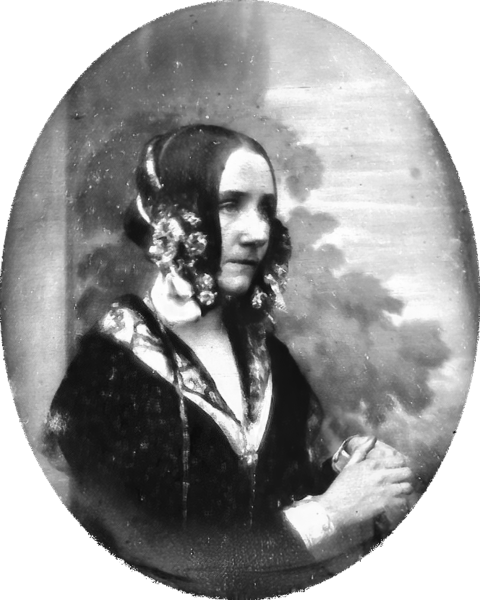 Antoine Claudet - shared by Paul Graham on x.com https://x.com/paulg/status/1927655441913250041 Public Domain
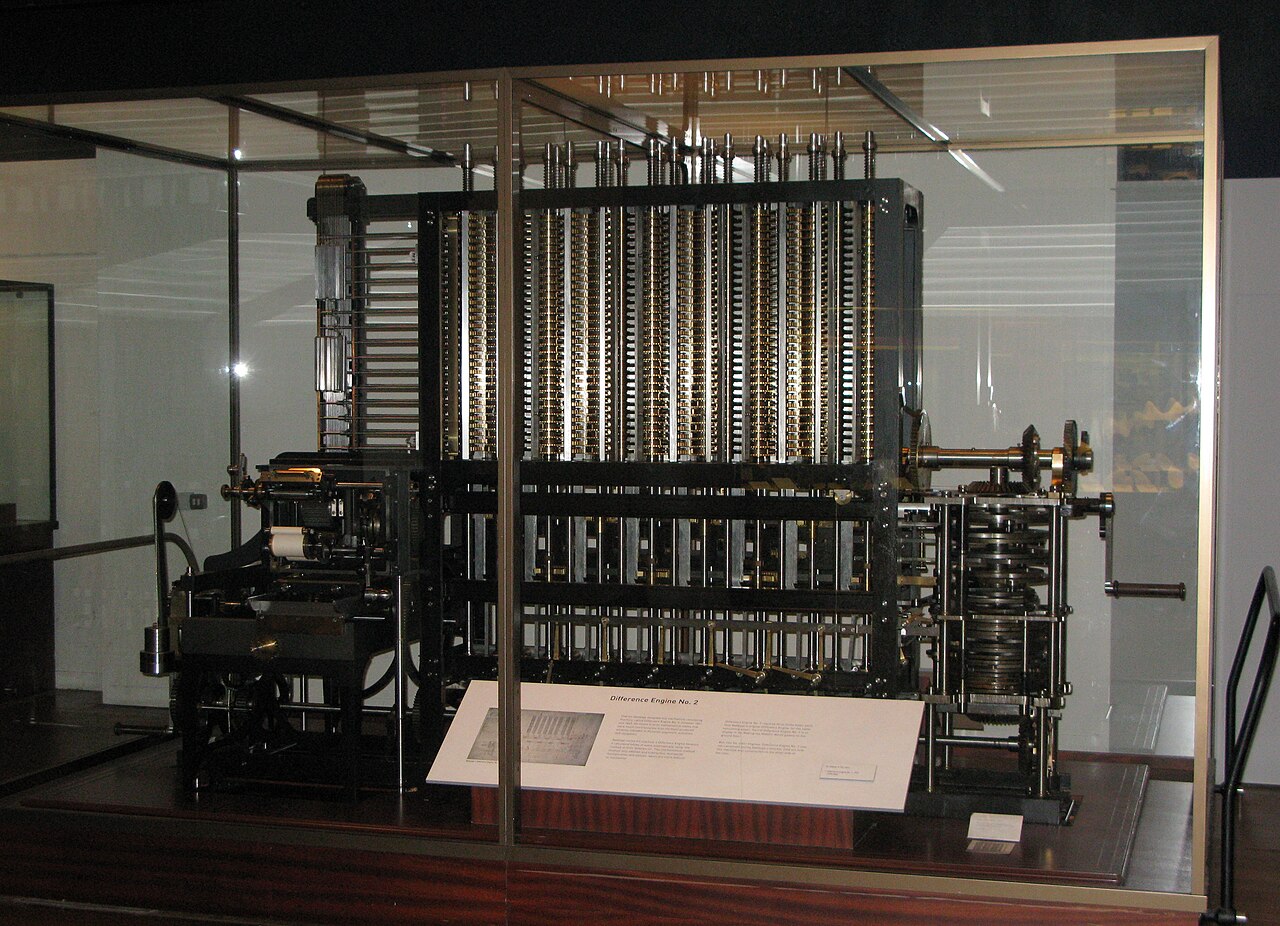
At his Substack, Andrew McDiarmid offers some thoughts on the pioneer computer programmer Ada Lovelace (1815–1852). Daughter of British Romantic poet Byron, she became an associate of Charles Babbage (1791–1871), who built early computers — the difference engine and later the analytical engine.
Skilled in both mathematics and literature, Lovelace supplied some critical insights to the early computing efforts. She is best known for the Notes she appended to her translation of Italian military engineer Luigi Menabrea’s description of Babbage’s Analytical Engine (the difference engine).
McDiarmid offers,
But for all her imagination and optimism, Lovelace was still careful to offer clarity on the limits of such a machine as the Analytical Engine. In Note G, she cautions her readers to put the engine’s powers in perspective:
“It is desirable to guard against the possibility of exaggerated ideas that might arise as to the powers of the Analytical Engine. In considering any new subject, there is frequently a tendency, first, to overrate what we find to be already interesting or remarkable; and, secondly, by a sort of natural reaction, to undervalue the true state of the case, when we do discover that our notions have surpassed those that were really tenable.”
Lovelace continues:
“The Analytical Engine has no pretensions whatever to originate anything. It can do whatever we know how to order it to perform. It can follow analysis; but it has no power of anticipating any analytical relations or truths. Its province is to assist us in making available what we are already acquainted with.”
“Ada Lovelace on Human Imagination and the Limits of Machines,” August 13, 2026.
 By
By engine/GFDL CC-BY-SA.
He adds,
And though Lovelace’s words are almost two hundred years old, I think they can help us understand today’s artificial intelligence. The computers of our age may be vastly more complex than Babbage’s Analytical Engine, but the logic remains very much the same. Today’s computers can calculate and output at incredible rates, but they are still governed by the same limitations as the Analytical Engine; namely, the necessity for programming instructions. Current AI models perform impressive feats of analysis and prediction, but their capabilities are governed by their training data and their programmed parameters and safeguards. “Limits of Machines”
He wonders what she would think of today’s AI-generated music, videos, and text: “Would she consider it a wonder and encourage its use? Or warn against it as a step too far in the relationship between man and machine? One can only guess.”
She might, however, be preoccupied with something else: recent revelations that a British law court and the US House are battling time-consuming AI slop. Here “It can do whatever we know how to order it to perform” takes on a new and troubling meaning.


