COSM 2026: Human Creativity Is Never Going To Be Obsolete
Our panelists, who understand both AI and creativity, look forward to explaining whySome Big Tech moguls are now arguing that AI can replace humans at everything that matters. As urban studies specialist Joel Kotkin noted recently at Spiked!,
According to a senior Anthropic executive, humans may still find work in ‘grounds maintenance, like food and serving, personal care, personal service’. That is, until robots are put to work providing these services. Most of hoi polloi will be reduced to serf-like status, subsidised by the state to keep them from destitution.
But COSM 2026: Reality Check participants think those moguls are reading the future all wrong. As philosopher of technology George Gilder has noted about Elon Musk, people can be both smart and wrong at the same time.
First, a word about human creativity…

The Friday morning panel (November 20) asks: Is Human Creativity Irreplaceable? Not one of the panelists thinks it is replaceable and each of them comes to that position from a different perspective.
Consider: Humans created AI — not the other way around. The assumption that AI will eliminate the need for human creativity goes against the very long history of both tools and automation.
Panel moderator Jay Richards — VP of Social and Domestic Policy at the Heritage Foundation — is also the author of The Human Advantage: The Future of American Work in an Age of Smart Machines (2018). There he points out that at the time of the American revolution, 95% of the population lived and worked on farms. Today, about 1 percent do. Are the other 94% now unemployed? Of course not. Mechanization creates new jobs because new needs develop as a result.
Mechanization creates a disruption in which anything that can be automated will be. But, in Richards’ view, creative freedom is precisely the sort of thing that can’t be automated.
AI: There’s clickbait and then there’s reality
 Robert J. Marks II, image courtesy of Discovery Institute.
Panelist Robert J. Marks, a professor of computer science at Baylor University, is also the author of Non-Computable You: What You Do That Artificial Intelligence Never Will (2022). He is currently updating that book to include material on new agentic AI but sees no reason to change his thesis as a result.
One of his concerns is that panic headlines about AI misrepresent what’s happening: Yes, advanced AI can cause problems like hacking into websites, et cetera. But “dealing with these problems does not require assuming that AI will go off the rails on its own, become conscious, or develop a desire to take over the world.”
He attributes overblown and misleadingly focused concerns to the constant desire of tech bosses for investor funds and media for ad clicks.
Eventually, a closed AI loop collapses
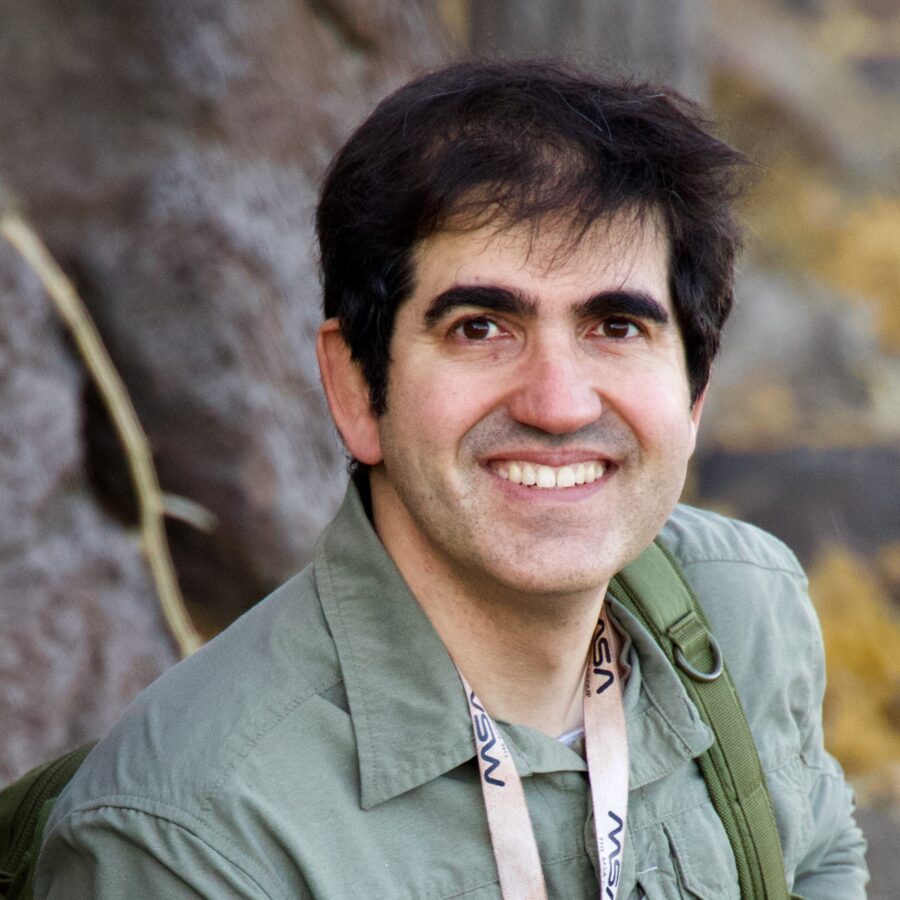
Casey Luskin, a Senior Fellow of the Discovery Institute, focuses on a growing problem that results from trying to shut humans out of the loop: AIs start eating their own tails (model collapse):
It’s been demonstrated that when AIs are trained on material generated by other AIs, you get degradation of quality. Some call it “AI Slop”; I call it “Digital Inbreeding.” Whatever the case, this shows that genuine human creativity is absolutely necessary to keep feeding AIs new material so it can “learn” and “grow” and reach new heights. Perhaps someday when AIs are doing most of the work, humans will still be needed to creatively generate new material for AI training.
As AIs become more and more impressive, they will always just reflect their training material. And we need to keep in mind that everything an AI “knows” from its training ultimately came from human intelligence, creativity, and ingenuity. Even if someday AI replaces most jobs, we humans will still be needed to generate that creative spark for AI training.
For artists, AI means new creative possibilities

And finally, Nathan Jacobson, Director of Media and Brand for Discovery Institute and a digital artist in his own right, reflects on the new vistas he sees opening up. For example, he says, “It is counter-intuitive, but using software generated images, videos, and sound allows the creator to put more of themselves into their work, not less. Depending upon stock images, clips, and tracks can be a very limiting and tiresome endeavor, often requiring hours of searching through stock providers for suitable source material.”
Anyone who has spent hours looking through stock photos for a specific type of image (an injured weasel, for example) will understand.
So, is this not what you have been hearing from pundits?
Then you will probably enjoy a fresh, much more hopeful, perspective at COSM 2026, November 18–20 at the Westin Kierland in Scottsdale, AZ. These guests’ panel is Friday, November 20, at 9:00 am. Here are the other talks and panels that you won’t want to miss. Register here.