Note: Professor Marks will also be speaking at COSM 2026: Reality Check as part of a 9:00 am panel on Friday, November 20, on the question, “Is Human Creativity Irreplaceable?” Register here to get the standard rate. Meet AI pros and find out more about why you have little cause for panic about it all.
Generative models and agentic AI are powerful tools that can cause harm through misuse, errors, and inadequate safeguards.
But dealing with these problems does not require assuming that AI will go off the rails on its own, become conscious, or develop a desire to take over the world.
So why do we see such chilling hyperbolic reports?
Motivation: Who benefits from the panic?
Most of today’s AI headlines belong in with the supermarket tabloids of old. What drives the media to sensationalize these stories? Here’s a list.
Big AI: Large AI companies are lobbyists to the media. Andrew Ng, adjunct faculty member at Stanford and AI entrepreneur, makes the point:
Multiple companies are overhyping the [AI] threat narrative. … There is an incentive to hype up fears … and then raise funding to fight the phantoms they themselves conjured. … There are significant financial incentives for one or multiple parties to hype up fear.
Image Credit: mod - Adobe Stock
Clickbait:Yellow journalism, a term coined in the late nineteenth century, describes reporting that uses sensational headlines, exaggeration, distorted facts, and emotional appeals to attract readers at the expense of accuracy. Back then, the goal was to sell more newspapers. Today, it is to draw more visitors to web pages carrying ads. The technology has changed, but the incentive remains: more readers mean greater visibility and more money.
Anthropomorphism. The Uncanny Valleyis the uneasy or unsettling feeling people may have when AI performance seems human. Terms that anthropomorphize AI are common. Large language models do not “hallucinate”. They generate inaccurate or unwanted responses shaped by their training, programming, and supplied information. Calling an AI “afraid” implies an emotional experience computers cannot have. Even the term artificial “intelligence” relates to a human quality. Such seductive semantics feeds the fear felt in the uncanny valley.
Worldview: A naturalist believes that everything that exists is ultimately physical. From this perspective, the mind must arise entirely from the physical brain. Humans are assumed to be computers made of meat. It follows that AI could eventually reproduce all human abilities in silicon. This assumption implicitly runs through many of today’s AI headlines, yet mounting evidence continues to challenge the claim that the human mind can be fully reduced to computation.
Emergentism. Some AI fearmongers believe that, as AI grows more complex, consciousness, sentience, creativity, and other humanlike qualities will magically emerge. This position is a faith without evidence. Futurist George Gilder calls it the “rapture of the nerds.”
When reading alarmist AI stories, look for the man behind the curtain – the possible faulty motives driving the coverage.
History is repeating itself
Scary AI stories are nothing new, and we can expect more of them in the years ahead.
Image Credit: whitehoune - Adobe Stock
As early as 1958, The New York Timesreported on an early computer that its sponsors expected would someday “walk, talk, see, write, reproduce itself and be conscious of its existence.”
In 2017, sensational headlines claimed that Facebook engineers had panicked and shut down two AI chatbots after they invented a secret language. The claim was hype. Facebook programmer Dhruv Batra rightfully challenged the headlines and called the coverage “clickbaity and irresponsible.”
“The AI Text Generator That’s Too Dangerous to Make Public” was a headline that scared us in 2019. This story was about an early version of OpenAI’s ChatGPT2. Apparently, this danger has magically disappeared in the later versions we use today.
More recently, we were told that an AI resorted to blackmail when threatened with being shut down. This should hardly be surprising. The vast body of text used to train large language models undoubtedly contains countless stories of people threatening retaliation when placed in danger. Placed in a threatening position with a backstory, the AI was reproducing a familiar response from its training data. The AI itself had no will to survive.
Today’s scare stories about AI are a continuation of the tradition of yellow journalism.
The real limitations of AI
In the movie Magnum Force, Clint Eastwood’s Dirty Harry offers a bit of Solomonic wisdom: “A man’s got to know his limitations.” All science, including computer science, has its limitations. Physics, for example, shows that perpetual motion machines are not possible. In math an angle can’t be trisected using a compass and a straightedge. In computer science, Alan Turing, famous for his role in breaking the Nazi Enigma code during World War II, proved in 1936 that some problems cannot be solved by any computer. Similarly, AI will never feel emotion, truly understand, create, or become sentient.
Naturalists who take the time to delve into deeper computer science recognize AI’s limitations. In The Emperor’s New Mind, Nobel laureate and naturalist Sir Roger Penrose brings out advanced computer science math and shows that creativity and consciousness are beyond the reach of algorithmic computation.
A sober acceptance
So what’s the reality? To what degree should we be afraid of AI?
Other technologies offer useful comparisons. Electricity powers our homes, hospitals, and industries, yet frayed wiring can start fires and downed power lines can kill. Nuclear technology can generate electricity, power submarines or produce devastating weapons and even Chernobyl-like disasters. We have learned to manage these risks.
Development of powerful tool like AI demands a steady hand, not a panic attack.
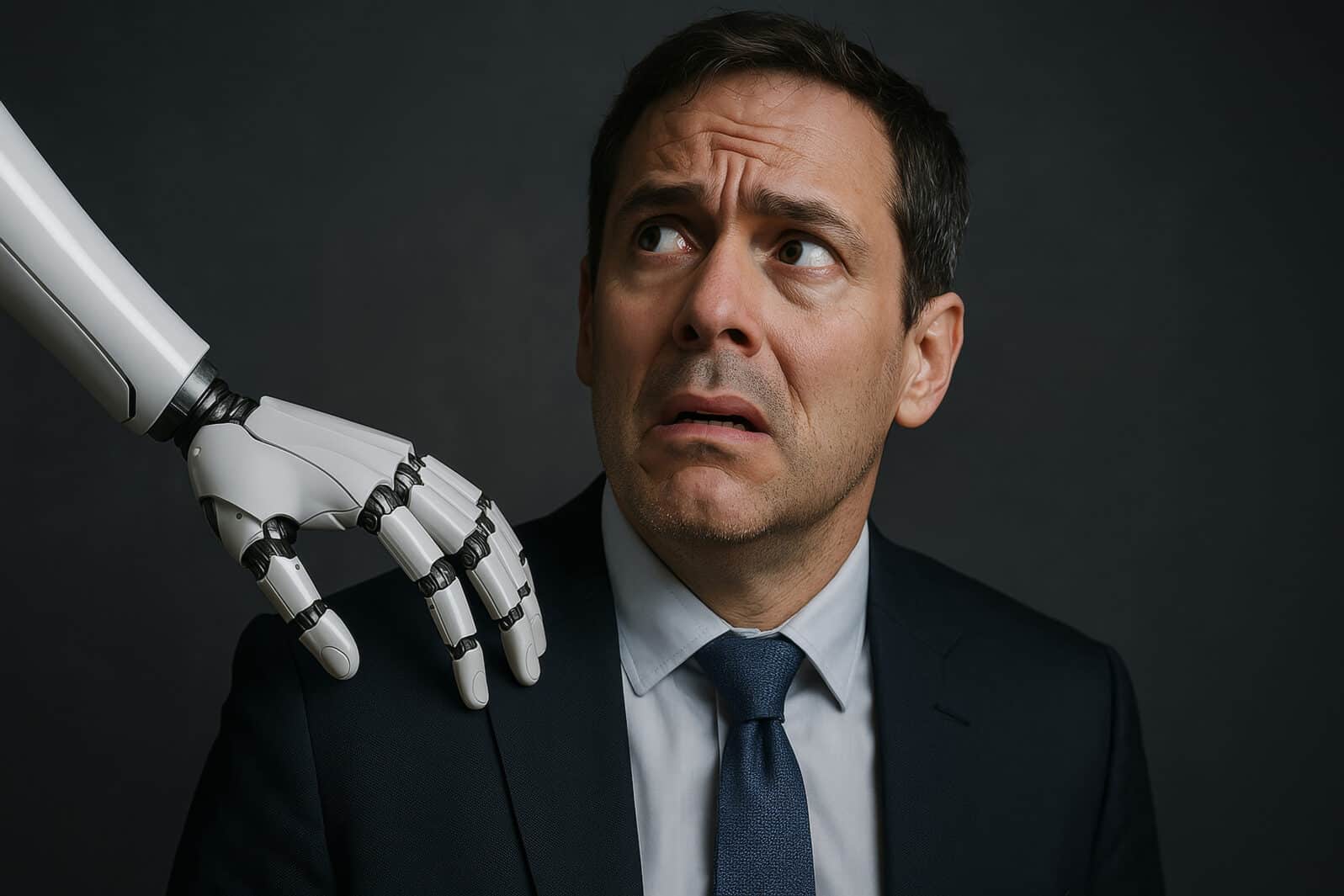

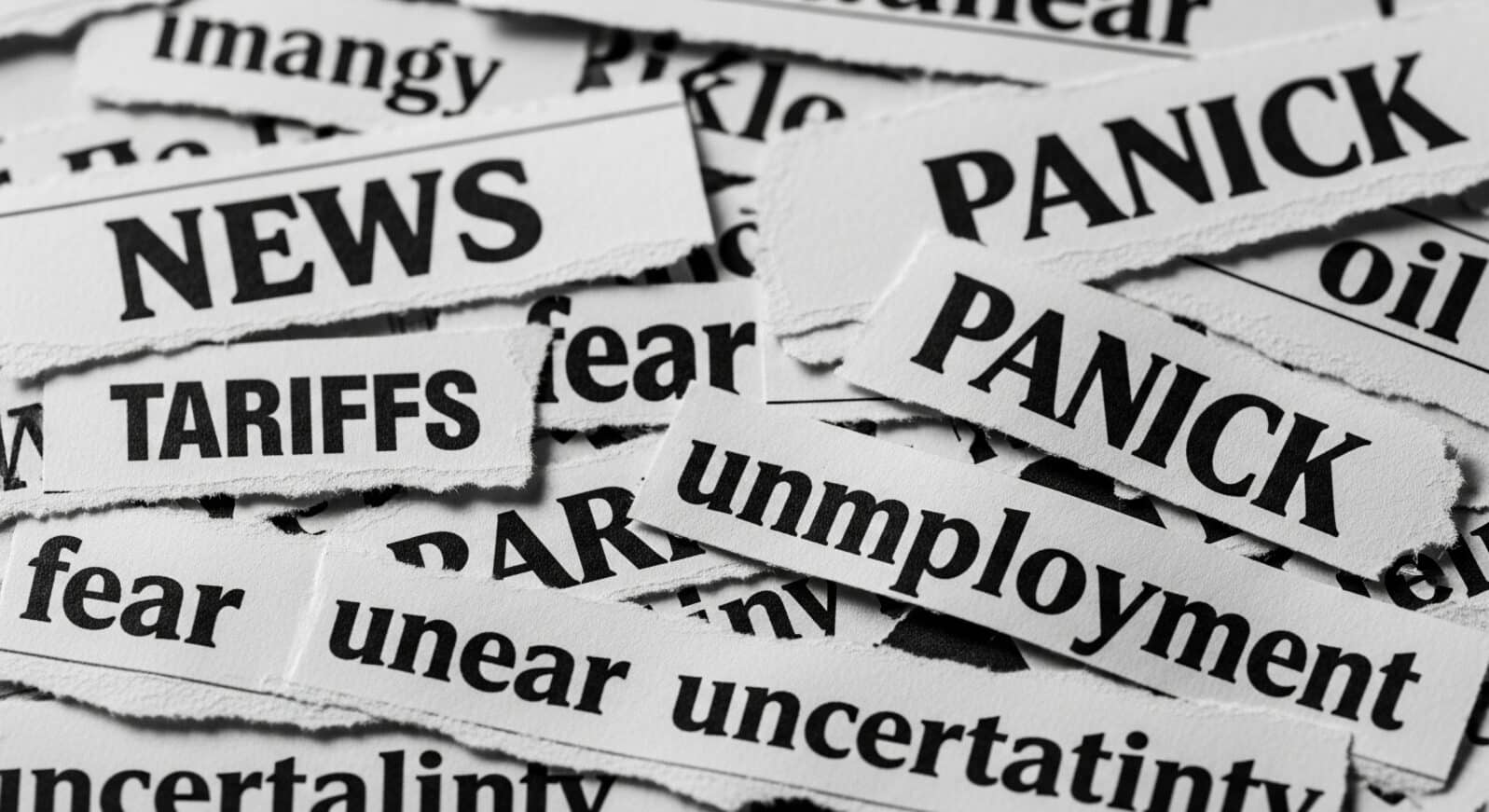 Image Credit: mod -
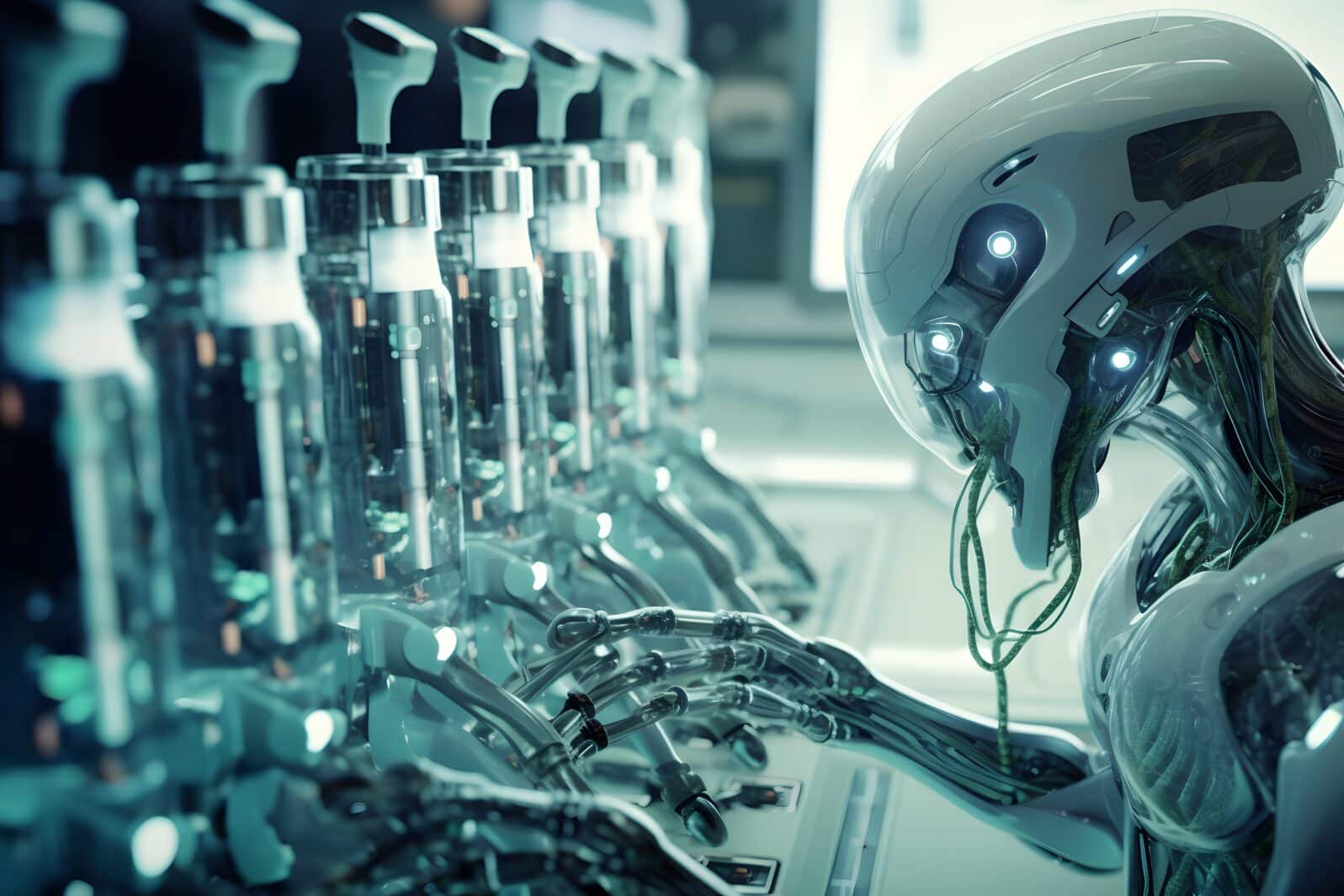 Image Credit: whitehoune -
