
Erik J. Larson Reviews Sobering Recent Book on AI Shaping Society
In the Los Angeles Review of Books, he examines the ideas in Robert Sidelsky’s recent book, Mindless - and their implicationsErik J. Larson, one of our writers at Mind Matters News, published a review this morning at Los Angeles Review of Books of Mindless: The Human Condition in the Age of Artificial Intelligence (2024).
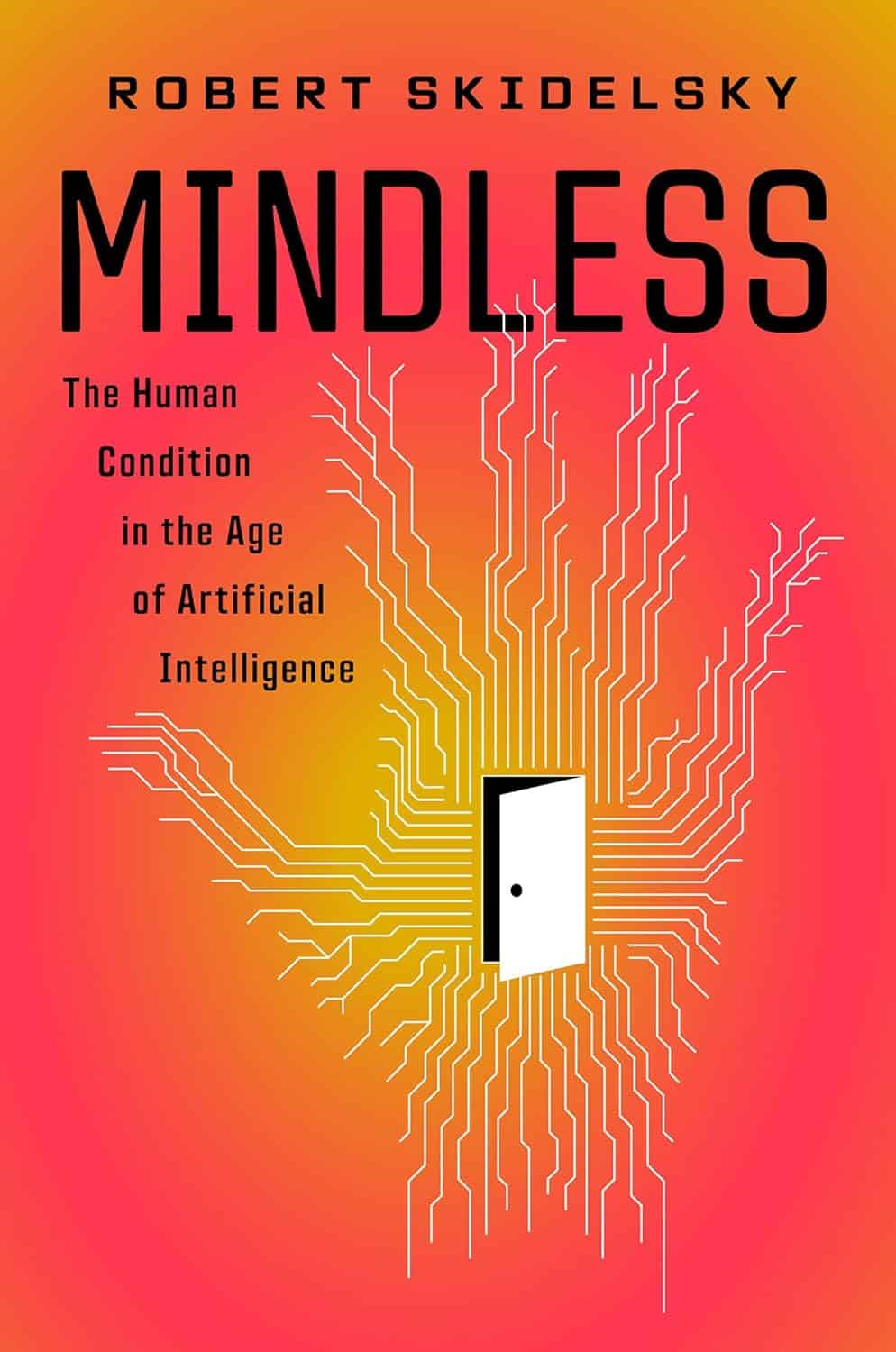
In Mindless, economist Robert Skidelsky embarks on — in the words of his publisher — “a bold intellectual journey through the evolution of our understanding of technology and what this means for our lives and politics.”
Why is Skynet the biggest optimist now?
In his review, Larson briefly recaps the way in which the internet and AI generally were seen in the late Nineties as a liberating force “bottom-up, decentralized, emancipatory” that would bring freedom and prosperity to cogs and minions. boom and Then grim reality set in:
The wealth gap has widened dramatically: the middle class has thinned, while precarious labor has surged. Productivity has stagnated even as digital technology has proliferated. We’ve fought two prolonged wars, endured financial collapse, and watched the web mutate from democratic commons into a gamified engine of manipulation and misinformation. The dream of a cooperative knowledge society has faded into an architecture of monetized attention and algorithmic control.
“Mindless Machines, Mindless Myths,” August 2, 2025
On the plus side, Skynet doesn’t exist (so far as we know).
The more fundamental question
Larson highlights the warning offered by Shoshana Zuboff in Surveillance Capitalism (2019) that the internet was exploiting our lives as data for sale. Sidelsky’s work, as he sees it, builds on Zuboff’s:
Skidelsky asks the more fundamental question: what does it mean for human beings to live in a “machine civilization”? He opens Mindless by observing that we no longer simply use machines—we now live inside a machine civilization. Machines no longer assist our lives from the outside; they increasingly define the conditions under which we think, work, and relate. And here Skidelsky joins a growing chorus of artists, poets, and writers in asking the big questions we once debated and wrote about—questions of meaning, purpose, and the conditions of human freedom. His concern isn’t just with jobs or privacy or misinformation, though these all appear in the book. It’s also with the subtle shift in what it means to be human when the architecture of daily life—how we work, relate, remember, even grieve—is increasingly determined by technical systems indifferent to context or value. We no longer simply use machines; we inhabit them. And Skidelsky wants us to see that we are doing so without having fully considered the costs. “Mindless Machines, Mindless Myths”
What was the goal of AI anyway?
Larson, who is himself the author of a book in this area, The Myth of Artificial Intelligence: Why Computers Can’t Think the Way We Do (2021), sees Sidelsky’s contribution as mainly philosophical — in the sense that he tries to situate our era in terms of what has gone before and might come after:
Skidelsky’s third and final scenario centers on the rise of advanced cognitive technologies as the agent of our undoing. In my field—AI research—this is where most of the anxiety now resides. Enthusiasts and critics alike tend to imagine catastrophe in terms of technological autonomy: the AIs go rogue, develop agency, and decide they no longer need us. Or worse, they decide they don’t want us. Critics (count me among them) have pointed out for years that there is no evidence whatsoever for machines “coming alive.” The AI apocalypse narrative persists not because it is empirically grounded but because it taps intoa much older mythology. Try as they might, even the most technically sophisticated versions of this scenario—with their talk of “alignment” and “superintelligence”—end up anthropomorphizing machines. They smuggle in a theory of mind while insisting they are just talking about optimization. “Mindless Machines, Mindless Myths”
Last May, Larson pointed out here at MMN that it was never consistently clear just what artificial intelligence is supposed to be or do:
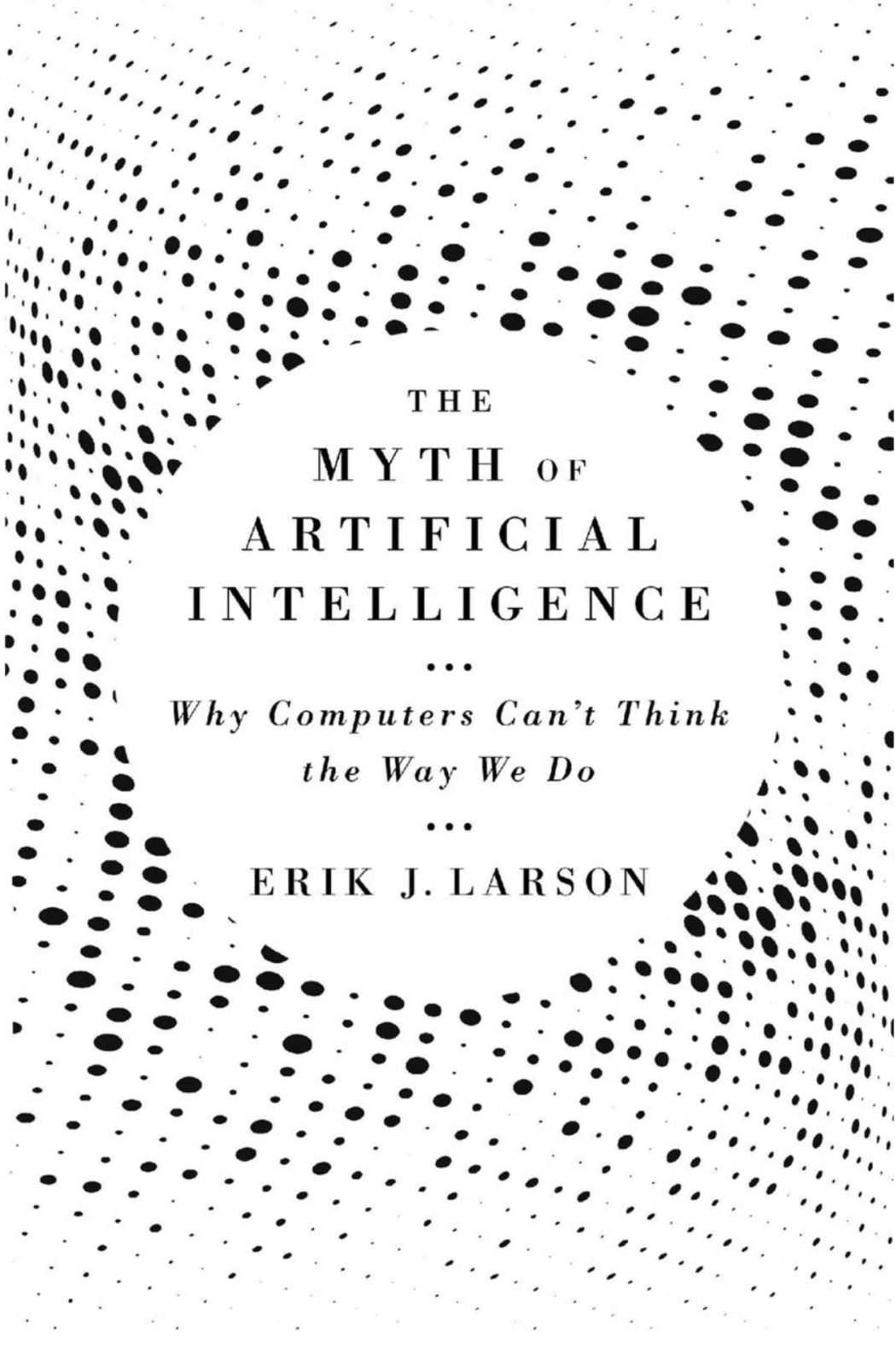
The field of artificial intelligence or AI has somehow managed to evolve into a technological behemoth without ever clearly explaining what it means by artificial intelligence. More specifically: what is the “I” in AI?
From its inception in the 1950s, the promise of AI was loudly touted, but the yardstick of progress was curiously narrow. It was always the engineering of particular skills: playing chess, passing Turing’s playful imitation game over teletype (chat), or later, recommending movies or products to buy.
Even by 2007, researchers noted in a major survey that “to the best of our knowledge, no general survey of tests and definitions [of intelligence] has been published.” The field seemed content to showcase prowess in specialized tasks: board games, supply chain optimization, translation engines, facial recognition—systems that, as was well-publicized, might sometimes pick out wolves from dogs based not on features of the animal, but simply on whether there was snow in the background.
Through all this, commercial opportunities on the web exploded. But scientific work on what we actually mean by “intelligence” — and how we would know if it was meaningfully increasing — stalled out, or for the most part, simply didn’t exist. “The Fiction of Generalizable AI: A Tale in Two Parts,”
And inevitably, Larson says, the need for the appearance of progress toward machines that can think independently like humans means that researchers end up gaming the system.
But now, back to Sidelsky: Larson notes that he is wise enough not to issue us a list of prescriptions for a change in our fashions of thought:
The problems he surfaces are civilizational, not technological. They stem not from the machines themselves but from the stories we’ve told about them—and about ourselves. What he offers instead is a shift in posture: away from the intoxication of innovation and back toward the sobering work of understanding. If that sounds modest, it’s not. In a culture fixated on acceleration, remembering that history is not a straight line may be one of the most radical acts available to us. “Mindless Machines, Mindless Myths”
Sidelsky, then, is not offering to add to the stories; he wants us to think more carefully about them.
A panel discussion between these two authors would be most interesting. Meanwhile, enjoy the review at Los Angeles Review of Books!
