
Some Tech Bros Want To Found States That Exist Mainly Online
Trust folks in Silicon Valley to dream big. Some are flirting with abandoning nations and starting a Network State (or States)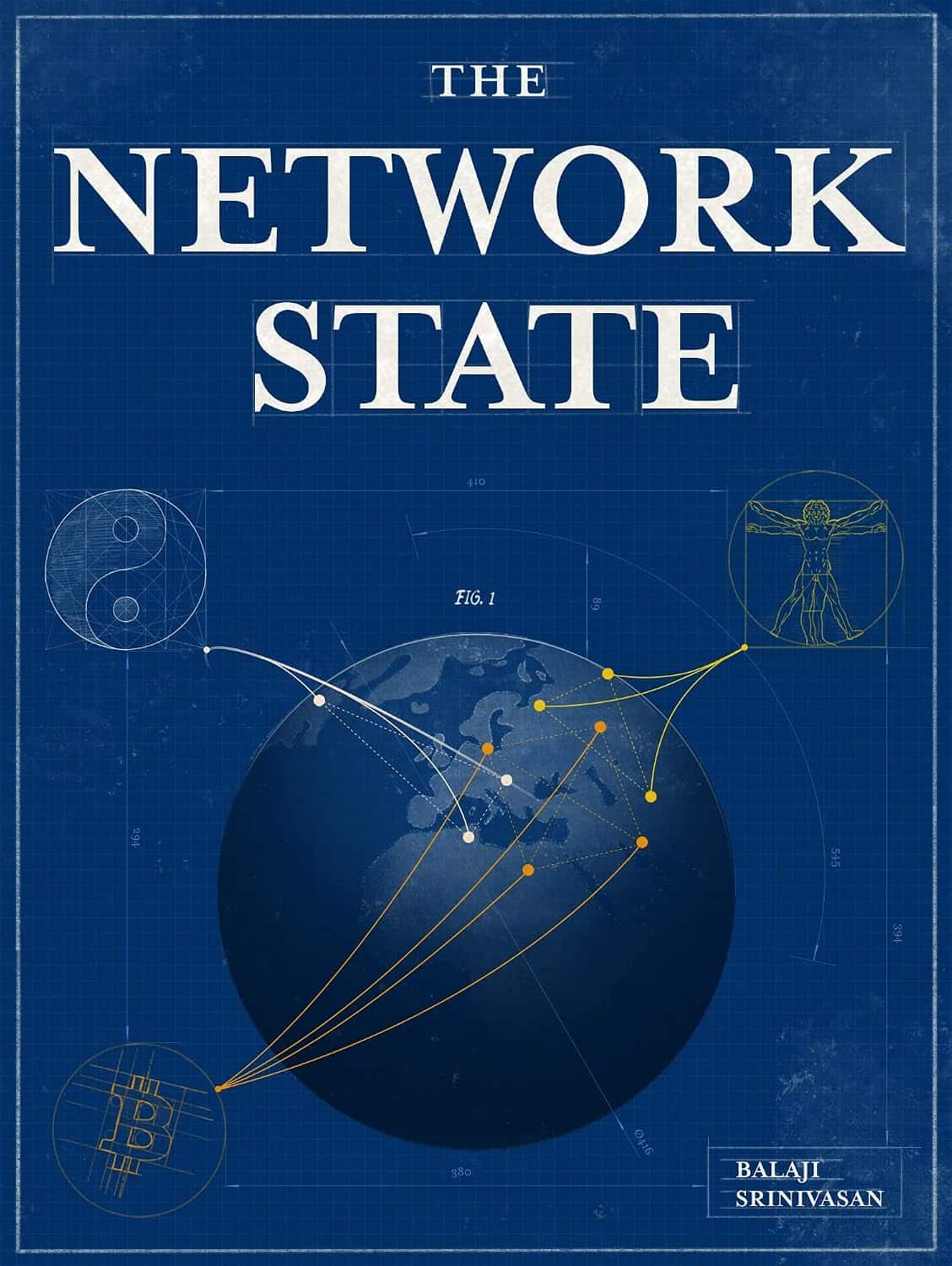
According to a 2022 book, The Network State by Balaji Srinivasan outlining the idea, “A network state is a highly aligned online community with a capacity for collective action that crowdfunds territory around the world and eventually gains diplomatic recognition from pre-existing states. “
Srinivasan is the former CTO of cryptocurrency exchange Coinbase and was a General Partner at Andreessen Horowitz.
He has left the United States for Singapore, abandoning his US citizenship. In a somewhat rambling post, he explained, “some tech founders think they can not just move to places like Singapore, but build a startup Singapore. Maybe they’re wrong, but these are founders of fairly impressive things, and it’s worth a shot.” (July 28, 2026)
How would a state work without fixed territory?
Srinivasan explains,
When we think of a nation state, we immediately think of the lands, but when we think of a network state, we should instantly think of the minds. That is, if the nation state system starts with the map of the globe and assigns each patch of land to a single state, the network state system starts with the 7+ billion humans of the world and attracts each mind to one or more networks. The Network State
At Forbes, Sebastian Widmann a sympathizer, offers a bit of background:
These states are not merely theoretical constructs; they represent a practical reimagining of how communities can organize and govern themselves in the digital age. In practical terms, this would require an online community to form a DAODAO+0.5%, or a decentralized autonomous organisation (sometimes referred to as a chat-group with a shared bank account) crowdfund enough capital to be able to set up a physical presence and from there work towards becoming a nation state pursuing sovereign recognition. Everyone can agree that it sounds simpler than the actual endeavour, but in today’s chaotic world – with geopolitical clashes, wars and an increasing digital economy – it sounds more realistic than ever before.
“Network States – Revolutionary Idea To Potential New Asset Class” (December 20, 2023)
Tech types are experimenting with the Network State in actual projects like Praxis (the Superintelligence State), Zuzalu (Own your longevity) and AnotherNation (“the first Web3 embassy in the world”).
The Valley’s mixed relationship with land-based government
Netscape software pioneer Marc Andreessen offered praise for Srinivasan’s book at Amazon: “Balaji has the highest rate of output per minute of good new ideas of anybody I’ve ever met, and The Network State may be his best.”
Andreessen’s support for exploring the Network State probably relates in part to his own frustrations with the government overreach that affected the Valley earlier in this decade, including government-sponsored debanking and censorship. Those moves, among others, resulted in a shift in some key Valley political allegiances from Democrat to Republican.
But that shift was not due, it should be noted, to any massive change in overall perspective. Rather, the tech bosses was beginning to see Washington as governing as if it owned the Valley’s allegiance. They are still quick enough to ask for Washington’s help, when it suits them.
The basic idea behind the Network State is half right but…
Of course, some worry that the Network State is, in the words of journalist Taylor Lorenz, “tech’s most bizarre and dangerous exit strategy.” But that’s assuming it gets anywhere near reality.
In the near term, the Networkers do get one thing right: The internet is making location much less important than it used to be. The current decline in urban centers like New York and Los Angeles is easier to understand in that context. At one time, the financial markets needed Wall Street and film-making needed Hollywood.
Not any more. The money isn’t pulling out because of the decay (or the politics around it); no, the money is pulling out because it no longer needs those venues so badly. The decay follows the loss of deep pockets naturally.
And now here’s what the Networkers get badly wrong: Digital entities may not need location but people do. We have to live somewhere physical. Why bother with a network state if you can live in a smaller, nicer, more affordable, more politically responsive place with 5G? Where you can run into the mayor while shopping or the police chief while attending a local concert? A Network State could very well be run by Skynet — and what are you going to do about it from your terminal or phone?
Perhaps the real value of an idea like the Network State is to set us thinking about what is changing — and what isn’t.
Note: The book is also available free as a pdf.
