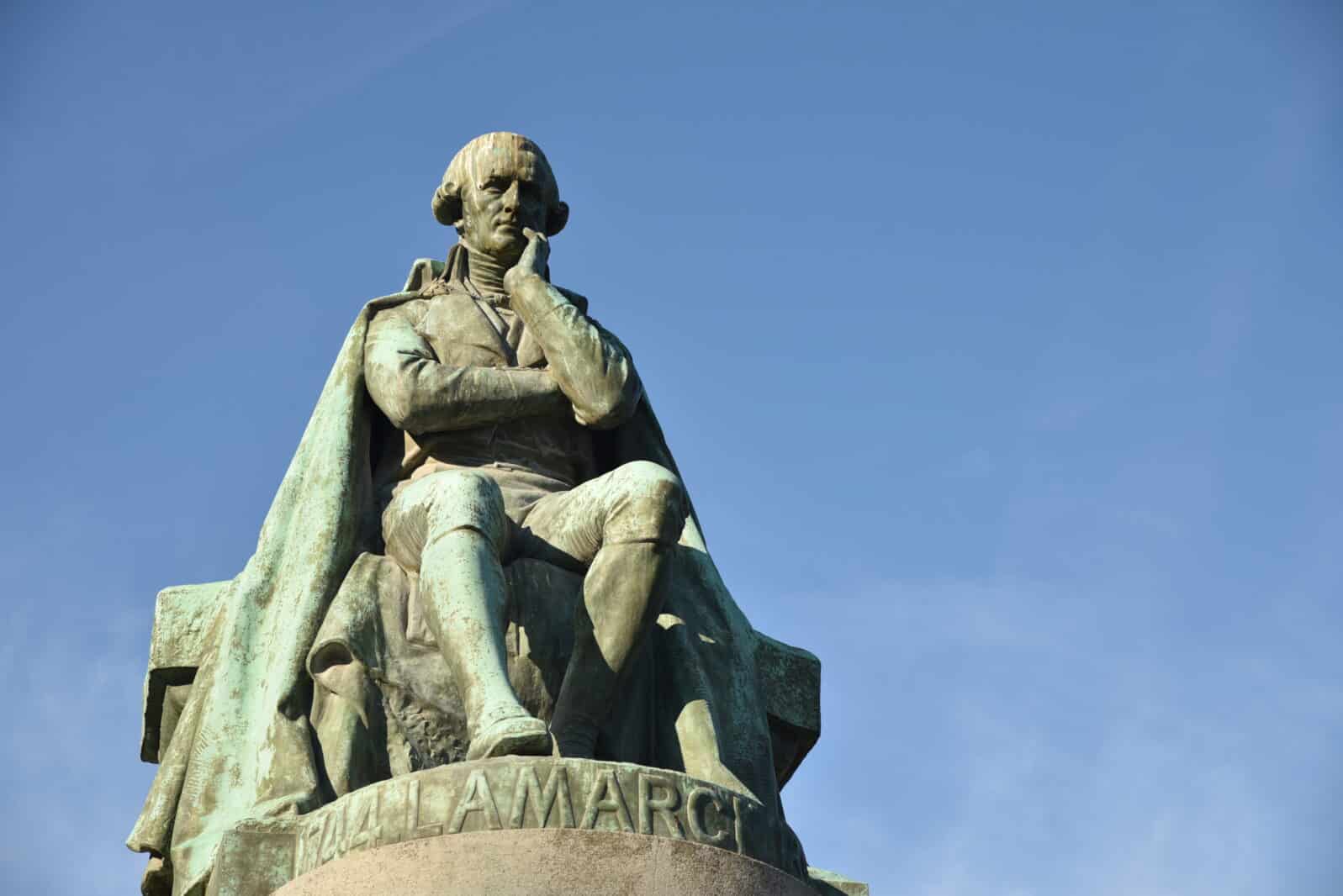
Change: Jean-Baptiste Lamarck Is No Longer a Figure of Fun
It is suddenly becoming acceptable for mainstream academics to platform alternatives to Darwin’s theoryRecently, we’ve noticed a distinct discomfort with Darwinism — the view that natural selection acting on random mutation explains all of life. For example, on its 50th anniversary, both Scientific American and Nature had issues with ultra-Darwinist Richard Dawkins’s selfish gene theory. They clearly want to move beyond it.
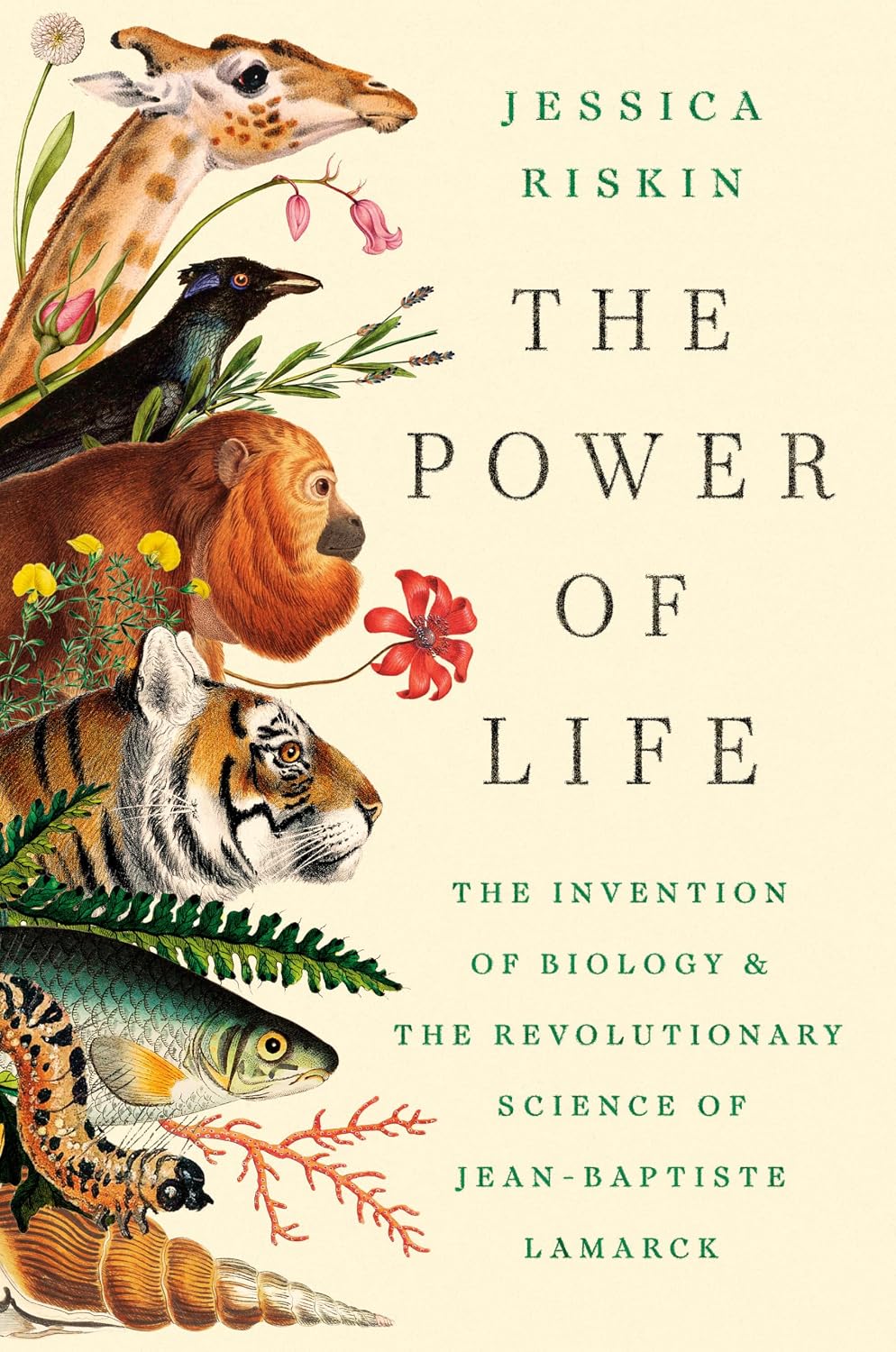
Now Stanford history professor Jessica Riskin has published a longform essay at Aeon that breaks the general media rule that thinkers must defend Darwinism — if only to prove that they are on the side of science.
But surely no one would go so far as to defend the widely ridiculed Jean-Baptiste Lamarck (1744–1829)? Yet that is precisely what Riskin has done, in her essay and in her new book, The Power of Life: The Invention of Biology and the Revolutionary Science of Jean-Baptiste Lamarck (2026).
Lamarck believed that “all living beings are constantly transforming themselves” and thus life forms shape their own evolution. For example,
“When a seal arrived in the menagerie of the natural history museum in June 1809, Lamarck watched the animal with fascination. Its obvious kinship with land mammals confirmed his idea that all mammals, and indeed all life, had originated in the water. He noticed that the seal used its hind limbs as a paddle when swimming. Yet the legs hadn’t fully joined together to become a fin because the seal also used them for seizing prey. The distinctive combination of uses for the hind limbs had produced a structure that could work either like a paddle or like a hand.”
“The self-making world” (November 2, 2026)
Generally, biology teachers have disposed of Lamarck by telling students that a smarter guy proved that his ideas were nonsense by chopping off the tails of several generations of mice. Of course, the tails did not grow back. Not that Lamarck had ever said they would; he was talking about internal changes, not amputations.
He coined the term biology
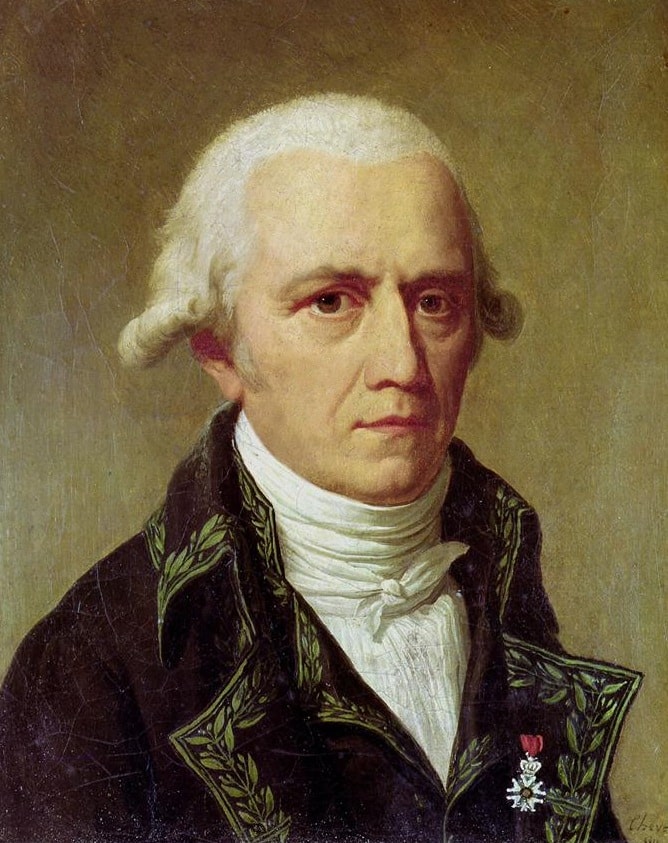
Indeed, you would never know from the biology teachers that Lamarck had coined the term biology (1802) to address the study of living things in general vs. non-living things. Or that he had identified and named more than 6,000 species, and taught a botany course that was so famous that even fictional characters attended it (in novels). Or that he had no problem with evolution as a concept, though he didn’t use the term. He lived through the Reign of Terror and the rise and fall of Napoleon, who hated him.
Riskin writes, “if you’ve heard anything at all about Lamarck, it’s probably how wrong he was.” His idea that giraffes might have developed long necks to feed on overhead vegetation made him a “laughing stock” His idea that organisms transform themselves and shape their environment “has drawn scorn for more than two centuries.” Why, exactly?
Lamarck’s erasure wasn’t Darwin’s own doing
Lamarck influenced Charles Darwin (1809–1882) but, she says, in the decades following his death, the neo-Darwinists rewrote the story:
… most people don’t know about Lamarck’s influence on Darwin because, around the turn of the 20th century, Darwin’s followers expurgated every trace of Lamarckism from their neo-Darwinist version of evolution, rendering living beings the objects of random variation and outside forces. For the neo-Darwinists, living things played no direct role in the evolutionary process. Evolution happened through random genetic variation and external environmental pressures. “The self-making world”
Indeed, she says, eradicating Lamarckism emerged as “the defining feature of neo-Darwinism.”
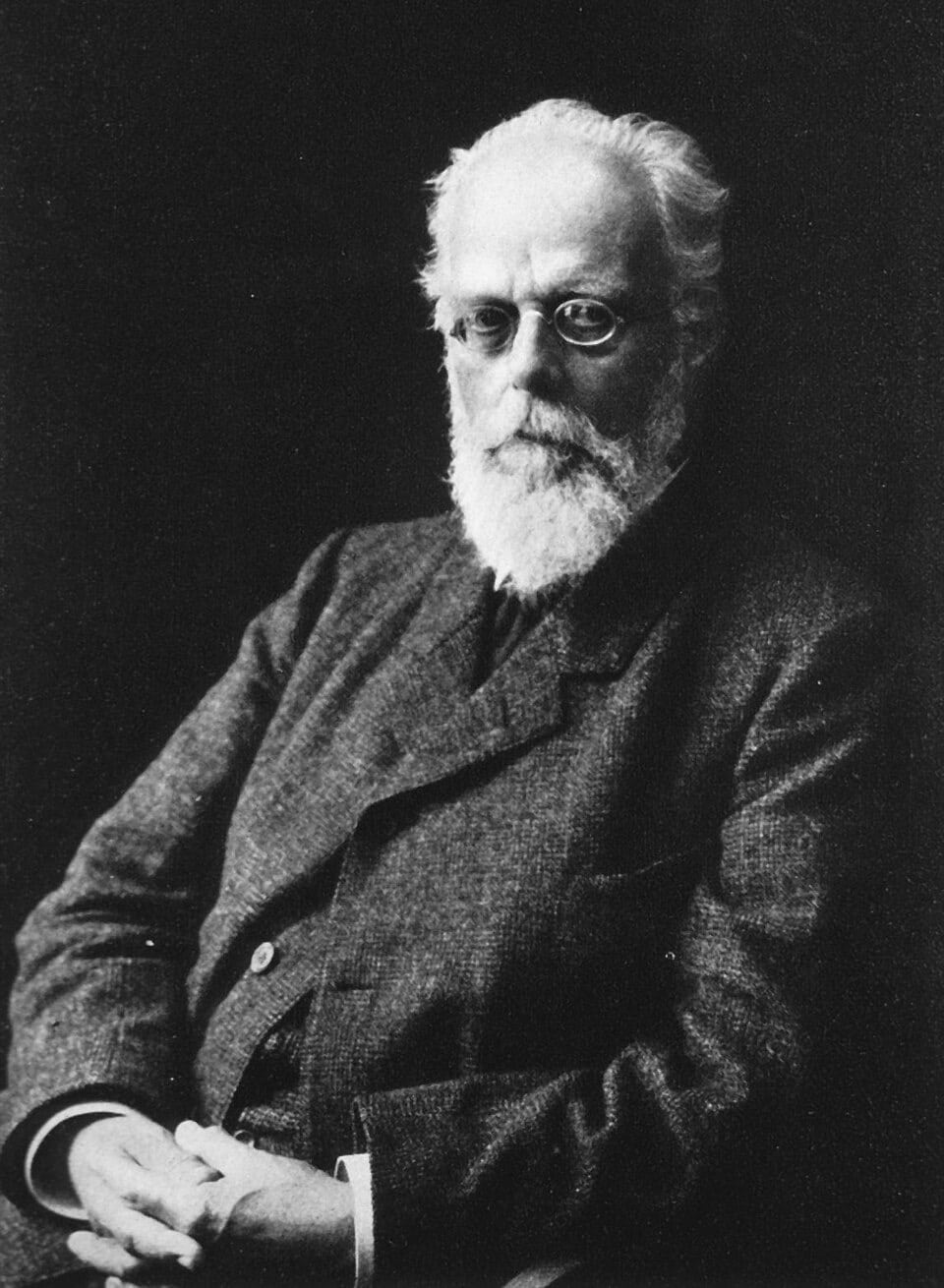
The neo-Darwinians insisted on the approach of German biologist August Weismann (1834–1914) who insisted that change goes in only one direction, from the reproductive cells to the body cells:
The ‘Weismann barrier’ – the exclusion of Lamarckian inheritance – became the central principle of neo-Darwinism. After the identification of the structure of the DNA molecule in 1953, Francis Crick restated the Weismann barrier as the ‘central dogma of molecular biology’: DNA transcription runs only in one direction, from DNA through RNA to protein, never in the reverse, from which Crick drew the implication that acquired characteristics could never be inherited. Nothing a living being did could make a difference to the machinery of inheritance. “The self-making world”
This assumption, of course, was one of the foundations of the eugenics movement. She writes,
Essentially all the neo-Darwinists of the early through middle decades of the 20th century were fervent eugenicists. Crick is an example. ‘Let us take up this whole question of eugenics,’ he exhorted his colleagues at a London conference in 1963. ‘I do not see why people should have the right to have children,’ he observed. He mused that it would be a fairly simple matter for a government to sterilise the whole population by putting some chemical in the food supply and then reverse the effect only for those people ‘licensed to bear children’. These were not fringe views; eugenic theories and programmes were mainstream in neo-Darwinist biology for much of the 20th century, and some still linger today. “The self-making world”
Imagine an academic actually admitting all this for honest discussion!
Many of us knew it from wide reading. But if anyone raised the matter, we were reassured that the real story is that Darwin was right and that these stories are told merely to discredit him. The fact that the neo-Darwinists had remade “Darwin” to suit themselves received little attention, of course.
Riskin sees Lamarck as battling powerful secular and religious forces, to which he posed a threat. No doubt, but in practice neo-Darwinism has ruled in science to a much greater extent than any of the rest of them and has stifled evidence-based opposition for many decades.
Lamarck is being rehabilitated now
Riskin says a Lamarckian approach is slowly coming into its own in three areas of biology. Epigenetics has shown that acquired characteristics can indeed be inherited. Animal behavior is being shown to help shape changes in offspring. And niche construction studies are demonstrating ways that animals co-evolve with their environments.
Given the history, if Lamarck is being rehabilitated, that can only be because neo-Darwinism is fading. She thinks so: “Neo-Darwinism, with its passive model of living beings, has been teetering on its throne. One current movement, known as the extended evolutionary synthesis, seeks to widen the evolutionary picture beyond the neo-Darwinist focus on random genetic variation and natural selection, in part by including behavioural and even cultural elements.”
Not with a bang but a whimper.
