
How a Prof Learned the Hard Way to Put Science First
The replication crisis forced him to grapple with the fact that he was too committed to ideology to assess truthAt Chronicle of Higher Education, University of Toronto psychology professor Michael Inzlicht offers a confession: He allowed ideology to get in the way of science.
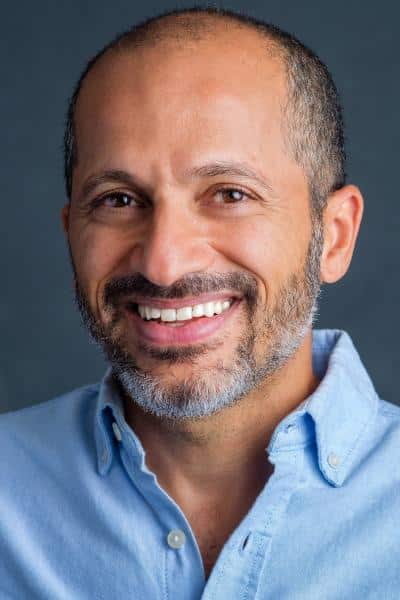 Michael Inzlicht, via University of Toronto.
He created his university’s first course on the psychology of prejudice. For nearly 15 years, he taught it, sure he was doing his bit to change the world.
What happened? The replication crisis hit. “Researchers do not obtain results comparable to the original, peer-reviewed study when repeating that study using similar procedures.” (Psychology Today)
He had the courage to accept some painful realities:
I came to realize that much of my past work was the product of questionable research practices, and I no longer trusted it. I’ve recounted this story many times, but there’s part of it that I only see now, in hindsight. At the time, none of it felt like cheating. And I can’t help but wonder if it felt fine because the cause was good.
My work was uplifting people, or so I told myself. Looking back, I suspect that feeling like I was on the right side of history was a kind of moral cover. Maybe I felt less wrong about the p-hacking because I was promoting social justice. The conclusions I drew were what the good guys already believed, after all.
However, a scientist who wants to change the world in a particular direction is no longer beholden to the truth.
“When Bad Research Feels Good,” July 24, 2026
Quite different goals
Risking a good deal in pursuit of truth, he came to discover that other academics had quite different goals. A joint report by Vanderbilt University and Washington University in St. Louis earlier this year found a troubling pattern in several humanities fields:
The authors stated that, in some cases, mostly left-wing political goals were prioritized over the pursuit of objective knowledge and understanding in these fields.
“Every field we have studied shows some signs of the pathologies sketched above: a deterioration in scholarly standards fueled by the substitution of political criteria for properly scholarly criteria in the assessment of research and a more general repudiation of long-standing ideals of rigor and objectivity,” the report reads.
The authors reported that mechanisms exist in some university departments to suppress conflict and to punish professors for publishing results unfavorable to certain political causes by stigmatizing them or preventing their tenure or promotion.
Corey Lochan and Rawnie Sun, “Vanderbilt- and WashU-commissioned report on politicization of humanities fields sparks controversy among faculty, cited professors,” Vanderbilt Hustler, June 20,2026
Of course, there was pushback. Fernando Villanea, professor of anthropology at the University of Colorado Boulder, opined “They were lazy, and the report is slop. And now that’s attached to the Vanderbilt name.” The American Anthropological Association “slammed” the report, as did the faculties at Vanderbilt and Washington University.
But the pushback is largely against the evidence
Inzlicht offers a current example of the problem:
Earlier this month the Princeton anthropologist Carolyn M. Rouse, who once delivered a lecture titled “F**k Free Speech,” sat for an interview with The Chronicle’s Stephanie M. Lee to defend her field. When Lee cited a 2022 survey in which anthropologists split almost evenly on whether biological sex is binary, Rouse waved it off: “I don’t believe in opinion research.” Say what? A survey of practitioners in her own discipline turns worthless the moment it returns an inconvenient number. For Rouse, teaching that sex is binary is like turning an astronomy department into astrology.
Set aside whether Rouse is right and pay attention to what she is doing. The evidence that supports her thinking is taken as fact; the evidence that undermines her thinking is contested. How have we ended up here?
How it plays out
One young academic whose work Inzlicht discusses learned what that means the hard way:
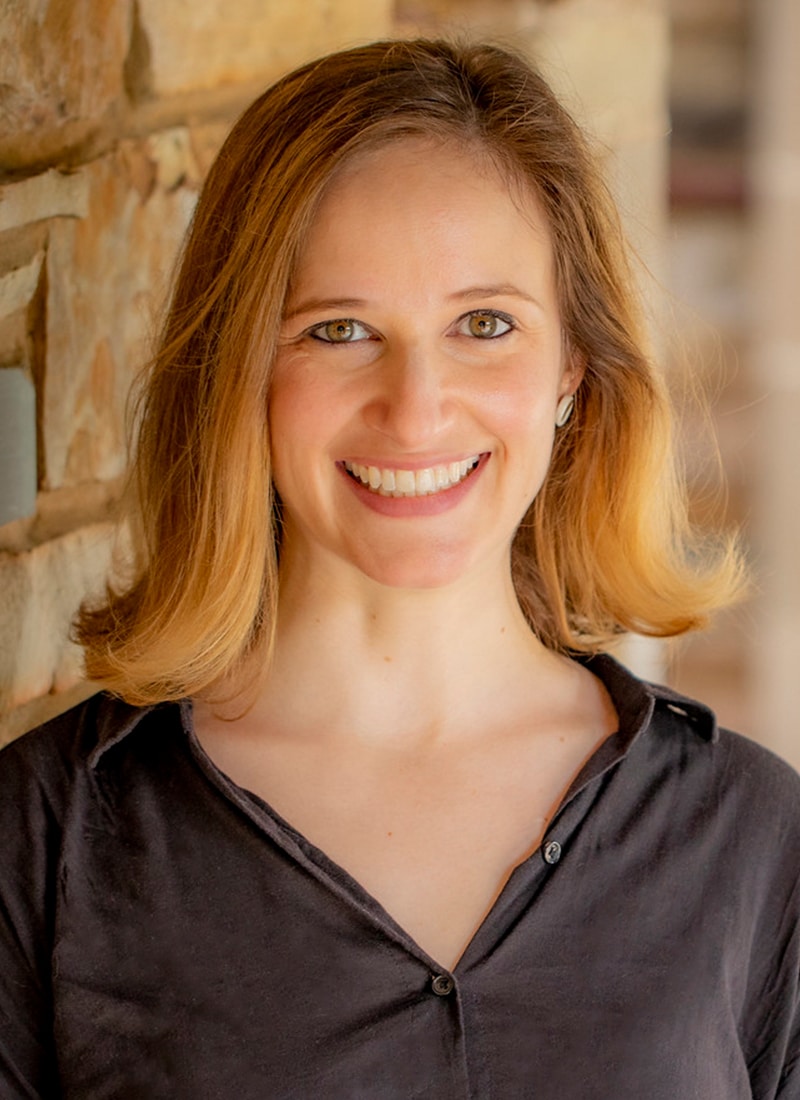 Rebecca Tuvel, image via Rhodes College
Rebecca Tuvel, an associate professor of philosophy published a paper in feminist journal Hypatia, “In defense of transracialism” defending the following thesis:
Former NAACP chapter head Rachel Dolezal’s attempted transition from the white to the black race occasioned heated controversy. Her story gained notoriety at the same time that Caitlyn Jenner* graced the cover of Vanity Fair, signaling a growing acceptance of transgender identity. Yet criticisms of Dolezal for misrepresenting her birth race indicate a widespread social perception that it is neither possible nor acceptable to change one’s race in the way it might be to change one’s sex. Considerations that support transgenderism seem to apply equally to transracialism. Although Dolezal herself may or may not represent a genuine case of a transracial person, her story and the public reaction to it serve helpful illustrative purposes.
Inzlicht notes, “It didn’t matter that her argument was logically sound: More than 800 people signed an open letter demanding retraction, and a majority of Hypatia’s associate editors apologized for publishing it. The stated objections were about vocabulary, citations, and the author’s identity. But everyone understood the real offense was the conclusion: If we accept Caitlyn Jenner, the same logic should extend to Rachel Dolezal.”
Last month, the Chronicle interviewed Tuvel and she sounds uncowed:
I think philosophy serves justice best by pursuing the truth about justice. And the pursuit of truth about justice requires exposure to a wide range of views on contested moral and political topics. That insight has given me a much greater appreciation of the importance of intellectual diversity.
Evan Goldstein, “Rebecca Tuvel Was Canceled. It Was the Best Thing to Ever Happen to Her,” June 26, 2026
Intellectual diversity is probably the major reason that the public is expected to heed (and often pay for) what academics say. Apart from that, a university would not differ from a sect.
Note: P-hacking is “the manipulation of data or analysis methods to falsely achieve statistically significant p-values, often leading to misleading or invalid results.” DataCamp, July 25, 2025
