
Elite Publisher Pulls Book Due to Fake Quote
The quote, in a New York University Press book, originates in a series of misrepresentations of something a Lehigh University biochemist had writtenIn an unexpected move, New York University Press has pulled the book Designer Science (September 9, 2025) because a quote that appears critical to its argument was fabricated: From Science & Culture Today:
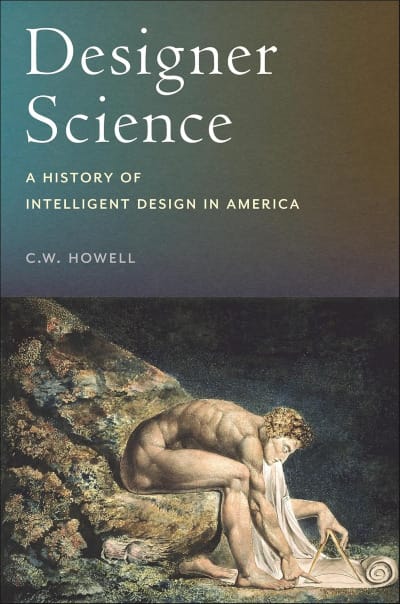
Less than a year after publishing its book Designer Science, elite academic publisher New York University Press is retracting the original edition because the book used a fabricated quote by Michael Behe to attack Behe and intelligent design. The publisher has volunteered to destroy all remaining inventory, completely remove two passages referencing the fabricated quote, and reissue both the physical and electronic editions of the book.
“NYU Press Pulls Anti-ID Book with Fabricated Quote from Michael Behe,” August 25, 2026
That’s bound to be considerable expense and trouble.
AI is not to blame for the chain of errors that led to the fabricated quote that was fatal to the current edition.
What happened here is something else, a sobering tale of what can go wrong when everybody in a chain misrepresents something only slightly, like the childhood game of Telephone. The statement that ended up in print was never uttered. Much worse, it went against what the researcher to whom it was attributed actually believes.
In that sense, this is a story about what’s going wrong in scholarship today.
How did it happen?
Briefly, Michael Behe is a Lehigh University biochemist, best known for books like Darwin’s Black Box (1996) and The Edge of Evolution (2007). He is an advocate of intelligent design (ID), the idea that there is a mind behind the universe — a position that has earned him scathing abuse in some quarters over the years.
C. H. Howell, a professor in the religion department at Duke University, wrote Designer Science as a critical exposé of ID and its supporters. His book was praised by knowledgeable scholars such as Francis Beckwith and Edward Larson.
But there was a problem. In the book, he quotes Behe, a witness at the famous Dover Trial (2005), as follows:
Ultimately, the most damning admission might have come from Behe’s mouth himself, when he confessed on the stand that the “plausibility of the argument for ID depends upon the extent to which one believes in the existence of God.” At root, Behe’s admission showed that there was something fundamentally nonempirical at the heart of ID, that it was based upon philosophical assumptions, on metaphysics, and on first principles. It therefore depended upon a prior commitment. (p. 132)
And it’s a fake quote. Behe never said that and does not believe what it implies. How did it end up in the book?
At Science & Culture Today, Casey Luskin explains,
To summarize what happened, this nightmarish game of bad-scholarship-telephone went like this:
● In 2001, Michael Behe writes an article claiming that ID is empirically based and doesn’t require any religious commitment.
● The ACLU then very badly misrepresents Behe’s article as claiming that “plausibility of the argument for ID depends upon the extent to which one believes in the existence of God,” and then the ACLU puts this distortion into a brief filed with Judge Jones during the Dover trial.
● Judge Jones then copies the ACLU’s brief with its misrepresentations into his ruling, but he makes things worse by adding the phrase “emphasis added” so it looks like those were Behe’s exact words. (Judge Jones still attributes those words to Behe’s 2001 article at least.)
● Then, finally, Howell brings the final piece of distortion: He claims that Behe said those words on the witness stand — a “damning admission” that “came from Behe’s mouth” no less! But the worst part is that Howell uses this fake quote in his book as a linchpin gotcha quote to basically claim that ID is more religion than science, etc.
“NYU Press Book Makes Fake Behe Quote a Linchpin of Its Case Against Intelligent Design,” August 26, 2026
Luskin notes that Howell may have been using Wikipedia as a source. If so, not a good idea.
In a followup article, Luskin offers that there are other problems with the book, problems that are worth noting but probably won’t be addressed by the publisher:
Howell’s failure is worse than one particular fake quote. It’s two decades of fake history. The blame here falls on Howell but also on all the academic reviewers who approved his book, a true system-wide scholarly breakdown. He makes his case less by error and more by omission — essentially choosing to just ignore a huge body of ID scientific research and literature that directly contradicts his thesis.
“Fighting a Battle That’s Over, and ID Won, Designer Science Omits Key Portions of ID’s History,” August 27, 2026
He plans a series, offering a more substantial history of the intelligent design controversy.
But “two decades of fake history” raises a question
How much fake history on all sorts of topics is received truth in today’s academic world? It’s a world where citing embarrassing or inconvenient evidence can get you or your paper Canceled.
As Luskin makes clear, Howell was only the last link in a chain of misrepresentations of Behe’s actual views. But that in itself makes clear that he is no one-off outlier.
Some might say I am reading too much into this. Behe, they will argue, is a special case. After all, many academics are hostile to the idea that the universe shows evidence of design — and some of them energetically seek to sideline any proponent thereof.
But no. Behe is hardly a special case. Many academics are just as hostile, for example, to the idea that human males are not females. And evolutionary biologists have certainly felt their wrath in consequence.
In an academic environment that permitted the Jason Arday tragedy/scandal at Cambridge, there is no reason to expect that nonsense, misrepresentation, and Telephone games would be unique to any one research area. On the contrary, philosopher of biology Nathan Cofnas, who was among the first to bring the Arday plagiarism allegations to light, was recently suspended from Ghent University in apparent retaliation.
It all speaks of larger problem, a profound rot in an academic system where evidence is merely a prop for ideology and not the foundation of sound learning. If science, or scholarship in general, can do better than that, now would be a good time to demonstrate it.
On that note, NYU Press’s withdrawal of the book, to be reissued in a corrected form, is a healthy sign. It shows a renewed commitment on the part of the publisher to scholarship. But that necessarily means listening to people who challenge conventional ideas instead of serially editing them. Time will tell if such a wholesome practice catches on again.
Over to Michael Behe…
We asked Behe whether he felt vindicated by the whole thing and he replied,
I think it will cause at least some people who get their opinions about intelligent design from secondary and tertiary sources to reconsider whether they have been misled. I also think the climate for reconsideration is a lot riper now than twenty years ago, after the Covid debacle and replication scandals have shown that the institution of Science is no more trustworthy than many other big institutions have proven to be.
“Vindicated” is a strong word. There were many problems with the Judge Jones opinion that were written about shortly after it came out, and those didn’t stop Darwinists and fellow travelers from castigating ID. That will surely continue. Nonetheless, I think a retraction by a major university press after time has passed to allow emotions to cool will indeed allow space for open-minded people to change their minds.
The publisher is so far keeping its word. The e-book has already been delisted at a number of sales sites. Information on it can still be found at the author’s site as of 4:00 pm PST.
