The Thin Spaces of Our Lives Where Strange Things Do Happen
At ID the Future, Andrew McDiarmid has been interviewing psychologist Alexander Batthyány and neurosurgeon Michael Egnor on terminal lucidity (TL) — the sudden lucidity often experienced by people who will shortly die — even people with dementia.
Batthyány wrote a book on TL, Threshold (2023), based on a study he had conducted. Egnor’s recent book The Immortal Mind: (2025) also looks at the mind’s mysterious au revoir.
But how to understand it?
Batthyány and Egnor agreed that terminal lucidity is a similar phenomenon to near-death experiences, where a patient is clinically dead but can be revived — and has a gripping story to tell. That’s the subject of Egnor’s forthcoming book (2027).
Egnor pointed out that four characteristics of near-death experiences that we must come to understand better are:
● their clarity (when the mind should be in a fog);
● their veridicity (the experiencer often learns things that can be corroborated later),
● their selectivity (generally, the experiencer only sees and communicates with people who are dead – but how does he know?), and
● the fact that these experiences commonly produce remarkable life changes.
Egnor: One thing I do note is, and Alex had mentioned that he was perplexed by the borderline phenomenon. Why are all these things happening at the border of life and death? And Thomas Aquinas [1225–1274] kind of addressed that a little bit. [21:33]
And he addressed the question of, in the intermediate state after death but before the resurrection of the body in Catholic theology, how is it that we see? How is it that we know? I mean, we don’t have a brain or a body or anything. How can we see anything or know anything?
And Aquinas commented, he said, “We see by divine light.” That it’s a divinely given power. It’s God’s light. And the analogy that he used, that I thought was an absolute breathtaking analogy, it’s a beautiful analogy.
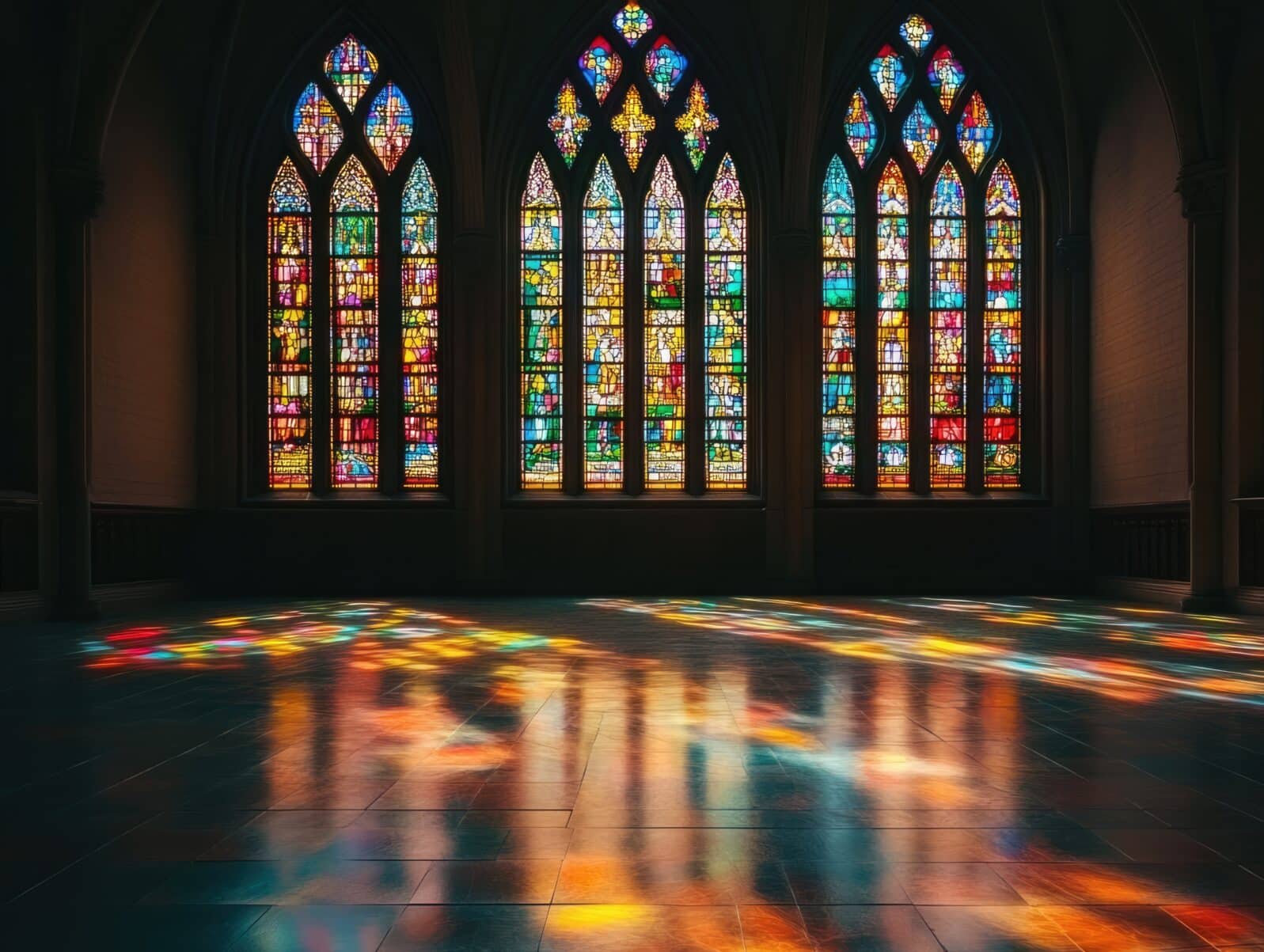
He said that it’s analogous to, as if your mortal life is inside a cathedral at night that’s lit by candles. So you’ve got these candles around the inside of the cathedral, but it’s nighttime and the stained glass windows just look sort of gray with vague colors on them and so on. So you can see, but it’s not that impressive. [22:32]
And that as the morning gets closer and you get closer to sunrise, that’s the time that you die. And then as the sun rises, you have the light coming in from the outside that illuminates the interior of the cathedral and you see things so much better. You see the beauty of the stained glass windows.
You see the beautiful light coming in. It says, “That’s divine light.” So I suspect that what happens to people with terminal lucidity and with near death experiences is what some theologians have called thin spaces, they call them — where eternity and our temporal existence, touch.
And so I think that people who are more lucid as they get close to death and people who have these remarkable experiences right after death are really very close to God in those circumstances. And what we’re seeing is divine wisdom and divine light coming through us.
Batthyány agreed with most of this but went on to express concern that the discussion risks being hijacked by popular but shallow New Age thinking. And that’s what we will talk about when we offer the third and final choice of excerpts tomorrow.
Some earlier excerpts from the interviews are here and here. Andrew offers his own thoughts here and here.
Next: Toward a true — and also scientific — picture of the human mind
