
How Sudden Lucidity at Death Became a Science Topic
Psychologist Alexander Batthyány and neurosurgeon Michael Egnor discuss the implications of clear consciousness despite deadly illnessA staple of literature through the ages is the last words of famous people. Many private people also remember the last words of someone close.
In an era where we are constantly told “the mind is just what the brain does,” claims about such terminal lucidity are easy to dismiss: “Those people didn’t really say that. They couldn’t have said it. Physiologically, it’s not possible, or at least not very likely.”
So, when social scientist Charles Murray wrote thoughtfully on the topic at the Wall Street Journal late last year, he was taking a risk. Harvard psychologist Steven Pinker promptly sneered in response, “When there is desperation to commune with a loved one, any glimmer of responsiveness can be interpreted as lucidity, exaggerated with each recall and retelling.” (Go here for quotes with no paywall.)
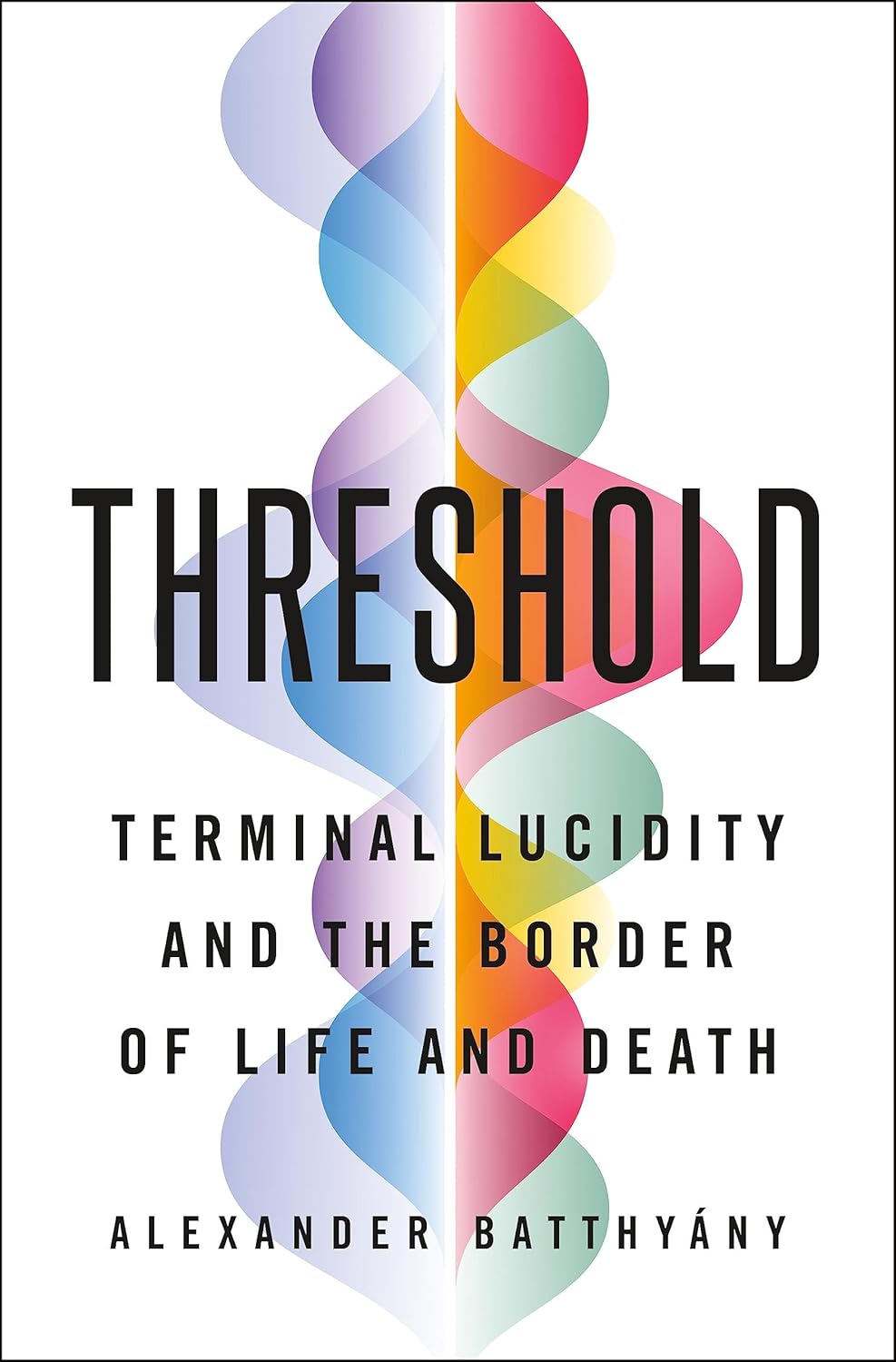
As it happened, Murray had cited psychologist Alexander Batthyány’s 2023 book Threshold, a careful analysis of that very topic.
And now, at ID: The Future, host Andrew McDiarmid is pleased to present Dr. Batthyány to shed a bit more light on this amazing but quite real phenomenon — one Batthyány has personally witnessed. Joining him is neurosurgeon Michael Egnor, whose 2025 book The Immortal Mind discusses TL, to talk about what we’re learning about it.
Batthyany notes that TL started to become a topic in the landscape of science in about 2009 or so (01:23). Long before that, of course, hospices workers would at times tell family members to come quickly, something has changed. So the family comes:
… they will come, but won’t expect too much because these are patients who didn’t recognize their daughters, sons, grandchildren for a long time. And then comes the great surprise. Often it happens that the nurse already tells them when they enter the home, something is totally different today. And then they come and they’re recognized. And you see it in the eyes. You see if somebody’s there or not. (03:48)
Ninety percent of the newly aware will probably die in the next 48 hours, he says.
Batthyány had himself encountered TL when he was a student in Vienna. His grandmother, who lived in Geneva, had lost the ability to communicate, due to strokes:
And one day my mother calls me — I think I was just writing my PhD thesis — and told me, “Call Geneva, call your grandmother. She’s back again.” And indeed she was. And she was … I mean, for a year we couldn’t talk because she wasn’t able to. And when I phoned her, there was very gentle, very elegant in a way, woman back once again. And I was utterly unprepared, of course, because the term terminal lucidity didn’t exist. (05:52)
As he admits, Batthyány wasn’t completely unprepared. He was, after all, a student of the works of Viktor Frankl (1905–1997), a concentration camp survivor who became a prominent psychiatrist and founder of an approach to psychiatry that emphasizes the importance of meaning in life, logotherapy.
Intrigued, Batthyány later collected about 450 cases — a drop in the bucket he suspects, but useful for beginning research. On that basis, he was able to author Threshold.
Egnor’s book, The Immortal Mind, quotes an Australian palliative care physician saying,
How many times have nurses told us at morning handover that early the previous evening one of our patients who seemed stable and had been sleeping peacefully most of the time in our palliative care centre had roused themselves to an alertness not seen for ages and asked the nurses to summon their family for a meeting? After a period of conversation, the patient has gone back to sleep, and died later that night. (p. 70)
The trouble is, the people who knew about this well were local palliative care nurses, not Harvard psychologists. Thus the non-materialist reality of TL was a very long time breaking through the glass ceiling. And prominent public intellectuals like Steven Pinker may be among the last to get the message.
Batthyány admits, with some deference, that his book was one of the factors that led Murray to ditch materialism for Christianity. In November, he was given the right of reply to Pinker in the Wall Street Journal, where he confronted the central problem:
A good scientific theory should predict and explain what is observed. Mr. Pinker’s materialism does neither. Terminal lucidity may or may not support dualist interpretations. But it clearly challenges the assumption that consciousness in dementia vanishes in lockstep with brain deterioration. Serious anomalies demand serious inquiry, not reflexive rejection.
“Setting the Terminal-Lucidity Record Straight,” Wall Street Journal, November 5, 2025 (paywall)
On ID the Future, Egnor offered Pinker a challenge:
Pinker, in his letter to the Wall Street Journal, said that he could get his grad students to simulate terminal lucidity on a computer very, very well. And that’s absolute nonsense. What Alzheimer’s disease is in a computer simulation is not a bunch of grad students programming the computer in detail. It’s pouring acid on the hard drive of the computer. So it’s progressively destroying the central processing unit and the hard drive of the computer. So I challenge Pinker that if he wants to develop a computer model of terminal lucidity, he needs to take his laptop, pour some sulfuric acid on the hard drive, and then run the laptop and see if he gets intervals where the computer works perfectly, which is not going to happen. (44:50)
If that event is ever filmed, Mind Matters News will do its best to provide coverage…
On a more serious note, Egnor adds,
Among clinical doctors and nurses and people who actually deal with patients, I think it’s taken very seriously. It’s accepted as real. I mean, it’s part of the care of these patients. I don’t think there’s anyone … In my view, no one who’s actually had experience with these situations and with these patients believes that these are just misunderstandings on the part of the family or surges of anything. And the people who believe that are people who haven’t seen it. And so yeah, I think the clinical people take this very seriously. And I’ve found that some of the deepest insights that people have of situations like this are the people at the bedside, the nurses who are doing the daily care, the nurses in the ICU, the nurses’ aides and so on. They see this in detail and I think they know more than the scientists know in many ways. (53:15)
While we wait for the scientists to catch up: Part 2 of the discussion will drop soon. Keep you posted!
