
This Is New: Top Thinkers Debate Terminal Lucidity
Steven Pinker tells Charles Murray at the Wall Street Journal that people are merely imagining a sudden gain in awareness before dyingFive years ago, who would have thought that political scientist Charles Murray, famous for social analysis books like Coming Apart (2012), would write Taking Religion Seriously (2025)? He now examines traditional religious approaches to the meaning of life on the assumption that they might actually be correct. A far cry from the usual effort to explain them away or patronize those who accept them.
For example, Murray writes about terminal lucidity — the sudden clarity that many people gain just before dying:
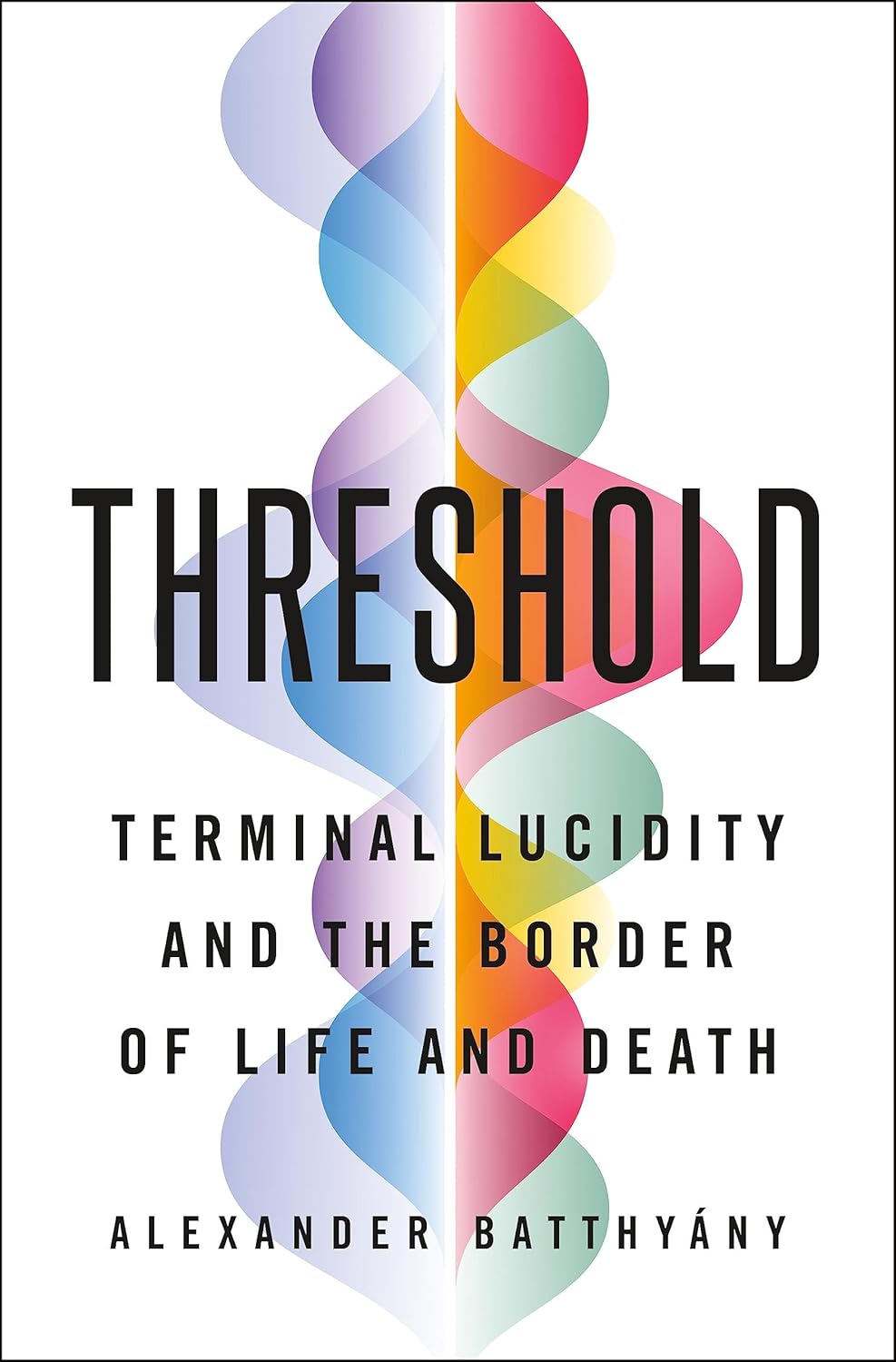
In the only systematic study with a large sample, described in Alexander Batthyány’s Threshold, about 20 percent of the cases involved nonverbal communication (e.g., gestures, gaze) or verbal communication that was semi-coherent. In the other 80 percent, people who had been unable to communicate anything were suddenly alert and “back” to their former personae. Terminal lucidity can last from minutes to a few hours. It is almost always followed by death within a day or so, with complete mental relapse in the interim. Seriously, p. 54
We’ve covered terminal lucidity here at Mind Matters News over the years:
Even people who might prefer to believe that terminal lucidity is just random brain noise admit that they are not sure. Science writer Jesse Bering tells us, “I’m as sworn to radical rationalism as the next neo-Darwinian materialist. That said, over the years I’ve had to ‘quarantine,’ for lack of a better word, a few anomalous personal experiences that have stubbornly defied my own logical understanding of them.” Similarly, at Discover magazine, “Neuroskeptic” offers readers a remarkable account of terminal lucidity from the early 20th century, stating, “I do not believe in miracles and this story didn’t change my mind on that score. However, unless we reject the whole story as a fiction, it is surely one of those ‘anomalies that neuroscience ought to be able to account for.’”
Excerpt from The Immortal Mind (2025)
But the critical question is, what does the verb account for mean? Further from TIM:
Well, yes. Neuroscience ought to be able to account for terminal lucidity. But why should that mean reassuring the world that someday we will prove that it is just random brain noise? That’s the trouble with materialism as a foundation for neuroscience. It comes to mean an endless search for materialist explanations that don’t really fit the evidence instead of seeing what we can learn from the evidence. Excerpt
And, wouldn’t you know it, a famous materialist figure fell right in!
The Empire strikes back
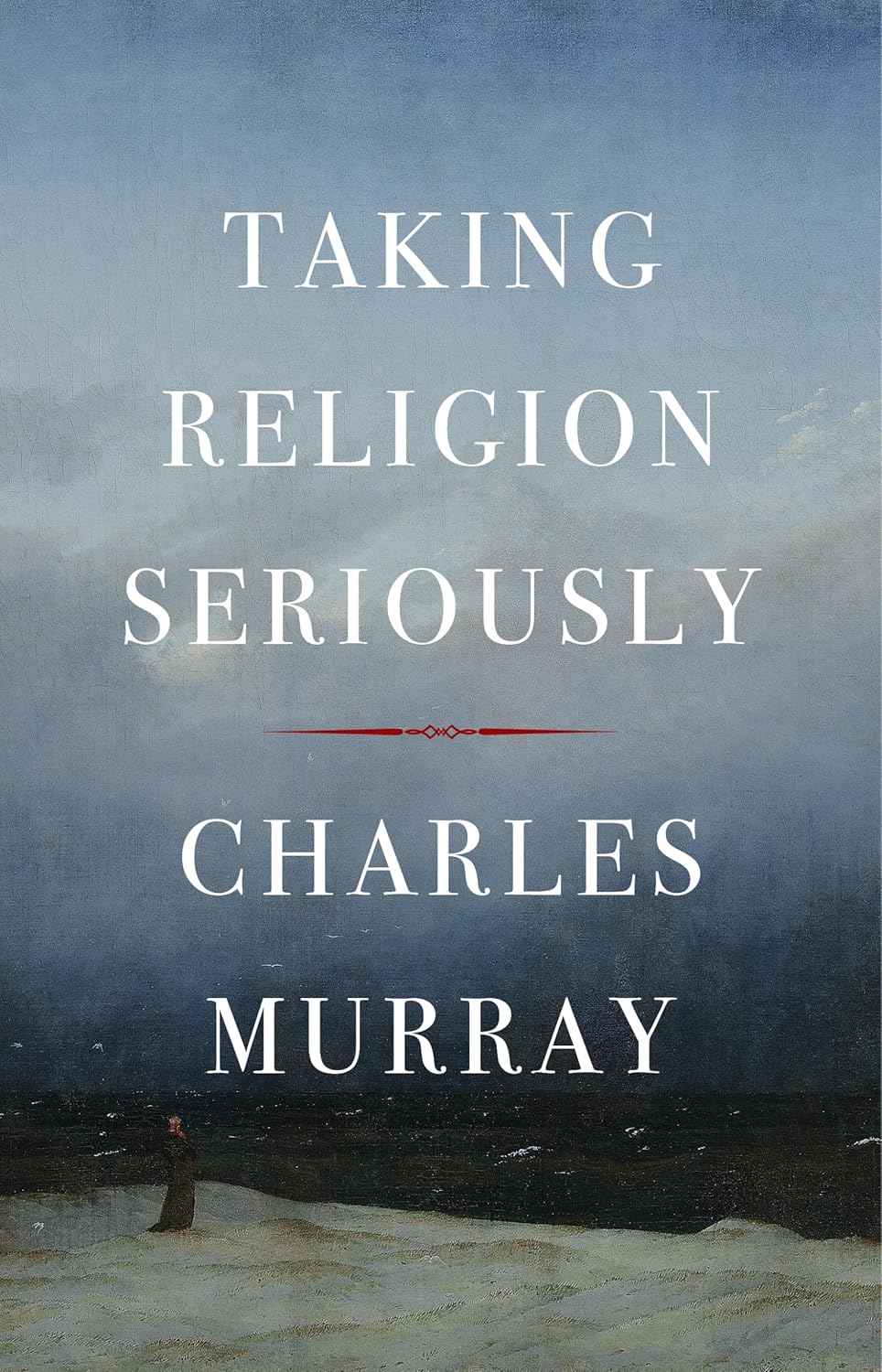
Murray had also aired his views in a recent piece in the Wall Street Journal (October 16, 2025). There, he noted, “I see the strict materialistic view of consciousness as being in roughly the same fix as Newtonian physics was in 1887, when the Michelson-Morley experiment proved that the speed of light doesn’t behave as Newton’s laws said it should. It took 18 years before Einstein’s theory of special relativity accommodated the anomaly.”
Well! Cognitive psychologist Steven Pinker, a champion of materialism, jumped in to reply,
Psychologists know that people are credulous about the cognitive abilities of those who matter to them, overinterpreting simple responses as signs of cogitation. In the 1960s, a primitive chatbot that mindlessly aped a therapist had people pouring their hearts out to it. With “facilitated communication,” parents were convinced they were liberating the trapped thoughts of their autistic children through a keyboard, unaware they were manipulating their children’s hands.
When there is desperation to commune with a loved one, any glimmer of responsiveness can be interpreted as lucidity, exaggerated with each recall and retelling. What Mr. Murray doesn’t report is documentation of any objective indicator of intelligence in these patients, such as a neurological battery or a test of verifiable autobiographical details.
“Charles Murray’s Unscientific Case for the Soul,” October 29, 2025
So we are all just imagining all that? It’s true that we may just imagine some things. And memories can be altered over time. But Pinker’s approach sounds far too much like global gaslighting to contribute much to the discussion.
Maybe that’s the end game for materialism today.
But now, the bigger picture: Modernism vs. post-modernism
Some forces at play in the world today are more dangerous than materialism. Materialism can be — and is being — refuted by evidence. But newer currents of thought discount evidence.
Pinker himself is fresh from getting a book tour Canceled by a humanist group. He’s apparently not one of the atheist heroes any more. That is not because he is insufficiently materialist. Rather, like Richard Dawkins, he insists that humans are biologically sex binary. But that fact is not fashionable now.
Thus, many atheist thinkers are currently casting off the very champions who defend their view — Richard Dawkins included — because they refuse to embrace a variety of non-fact-based beliefs.
But why? Why are they Canceling their champions? Philosopher Nancy Pearcey offers a hint at X:
Materialism is a modernist philosophy.
Transgenderism emerges from postmodern philosophy.
The Western mind has been split in two.
Essentially, materialist atheism is a modernist philosophy. It rejects traditional values like belief in God in favor of scientism (we can learn everything through science).
Post-modernism is very different from modernism. It is “characterized by broad skepticism, subjectivism, or relativism; a general suspicion of reason; and an acute sensitivity to the role of ideology in asserting and maintaining political and economic power.” (Britannica)
A post-modernist, armed with “a general suspicion of reason,” rejects all that oppressive nonsense about facts! He will surely accept terminal lucidity — but only on the same basis as he accepts transgender kiddies and Stone Age cosmologies. The quest to root the human experience in science, as the medics who study terminal lucidity do, is part of what he explicitly rejects.
We can only hope that the modernists and the post-modernists so distract each other in their senseless fight that the rest of the world can carry on with good science.
