Part 2: What If We Apply Harris’s “No Lies” Rule to Warfare?
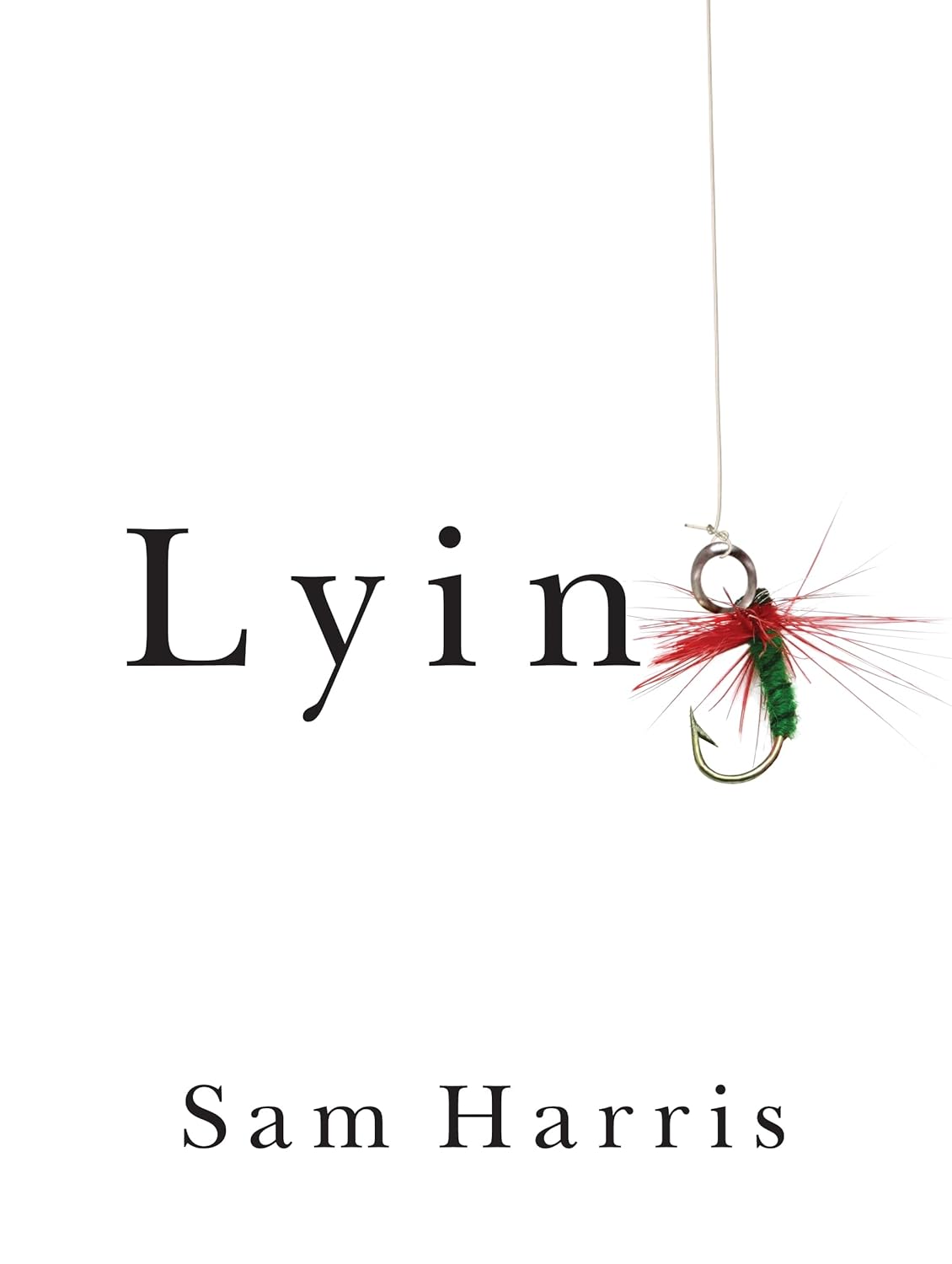
As a former defense contractor, let me offer a view from realityAs we saw last week in Part 1 of my essay, neuroscientist Sam Harris wrote a book about the evils of lying, Lying (2011). But when the outcome really mattered to him in 2020, he violated his own logic about the importance of telling the truth.
He didn’t, as most of us might, make a one-time exception in extraordinary times. He revealed something more devastating: that his apparent absolutism about truth was always riding on unspoken caveats. The pragmatic impulse was there all along. He just hadn’t been cornered into admitting it.
Harris still hasn’t addressed the contradiction
Readers and viewers of his podcast (I count myself among them) would search in vain for a way to square his circle. It’s clear to me that he simply didn’t think through the consequences of his own position. Thus the way to square Harris’s circle is that he never believed what he said before.
The mistake here is a fundamental tension in what he once proposed, and frankly it’s a contradiction at the heart of his philosophy. Don’t hold your breath for the revised edition of Lying or clarification of what now counts as morally acceptable deception. Harris just said things he didn’t really believe. Or perhaps he thought he believed them until he was challenged by reality, which is the only reason we lie — or don’t lie — in the first place. Aye. Reality.
A view from reality
I’m a former defense contractor. Without clearance I can only generate more smoke than fire about that world. But we all know enough already. Let’s compare Harris’s celebrated book Lying to anything real.
Perhaps saying that your spouse looks great when you don’t believe it will create later complexities. But how, relative to the alternative? Protecting a nation, or anything for that matter, is a different order of moral calculation entirely. Compare Harris’s Kantian puritanical vision —or fantasy, it turns out — to the world of intelligence and national security, domains where deception isn’t a moral failure, it’s a professional requirement.
CIA officers, for example, lie to protect state secrets, secure lives, and manage long-term risk. The best ones do so with full awareness of the ethical weight involved. They know that lying represents more of a minefield than the philosopher’s slippery slope. The difference is: they don’t pretend otherwise. For that matter, nearly everyone in a position of responsibility and authority has to lie to protect the people who rely on him or her.
During World War II, Allied intelligence created an elaborate deception campaign known as Operation Fortitude. From the start, it was a giant lie. The Allies wanted the Nazis to believe the D-Day invasion would hit Pas-de-Calais instead of Normandy, as intended. They staged fake armies with rubber tanks, planted false radio traffic, and sent double agents to feed Hitler misinformation. It worked: German troops stayed pinned at Calais long after the real invasion had begun. That single lie — coordinated, deliberate, strategic — saved tens of thousands of lives and probably shortened the war. Did it avert an atrocity? Impossible to know. But still, as intended, the enemy went to the wrong place.
The Anne Frank question is a useful dilemma both for grad students and Sam: Would you have lied to protect her from the Nazis? But what about the conditions that keep universities and philosophy departments safe in the first place? Are we really prepared to say that our leaders shouldn’t spy, when spying itself is, by definition, a form of strategic lying for the greater good?
How long could Harris — or the rest of us for that matter — live happily with his family in Los Angeles if the nation itself was put in jeopardy because we managed to have the only intelligence apparatus in the history of nations that “could not tell a lie”?
What underlies the sudden shift?
His vision was clearly bullshit, though it may make a certain sense for situations of far less importance and scope, like our relations with friends and family. Not a very far-reaching philosophy, bro.
Here’s the problem: Harris is committed to treating every lie as if it predictably spirals into atrocity. But in practice, we rarely know outcomes in advance. Most lies are judged against uncertain futures, not guaranteed horrors. That’s the terrain where real moral calculation actually takes place — and where his absolutism evaporates.
Let’s unpack this, because his internal contradiction is teeth-shattering. If considered for more than a few seconds, it is nearly impossible to dismiss. What makes Harris’s position so brittle is that for years, he insisted that any compromise with the truth was cowardice. But when confronted with a scenario whose outcome mattered to him emotionally, he folded.
It’s this weird lack of self-awareness and shame that fascinated me about Harris and now sometimes repels me. It’s as if the stakes finally gave him permission to say what he once condemned: outcomes justify means. In those “troubled years” that should have tested his theory but instead unraveled it, he made a stark argument that he himself was, by his own principles, full of shit. This is a man who deserves a slap on the back.
The failure of prudence is itself a moral tragedy. And Sam seems to have rediscovered prudence, but only after telling the world it didn’t matter.
I like Sam Harris. I’m even a fan, in some constrained sense. But if your entire philosophy rests on truth-telling, and you later say truth no longer applies when the stakes are high, then you never believed what you claimed in the first place. Being a public intellectual for decades is no doubt difficult. But walking straight into a contradiction this fundamental, and never reckoning with it, is hard to ignore.
