Mind Matters Natural and Artificial Intelligence News and Analysis

TagStandard Model (of physics)

supernova-galaxy-8k-hype-realistic-spiral-galaxy-in-space-ba-559012559-stockpack-adobestock
Supernova Galaxy 8k hype realistic. spiral galaxy in space background. background of supernova nebula and stars, glowing mysterious universe. Space texture illustration. Generative ai

Physicist: “Bad Philosophy” May Spur Search for New Physics

Carlo Rovelli points out that revolutions’ in the history of fundamental physics are more conservative than they are often depicted

It may not just be bad philosophy. It may also be a determination to believe in a universe that the evidence does not support.

Read More ›

butterfly-on-a-glass-ball-on-the-beach-refecting-the-lake-and-sky-stockpack-adobe-stock
Butterfly on a glass ball on the beach refecting the lake and sky

Physicist: Life After Death Is Incompatible With Physics

In 2011, Sean Carroll wrote an essay for Scientific American on why — from a science perspective — our minds must be extinguished at death

Back in 2011, particle physicist Sean M. Carroll wrote a guest blog at Scientific American, dismissing the idea of life after death or the immortality of the soul. He began by responding to astrophysicist Adam Frank’s reflections at NPR: For myself I remain fully and firmly agnostic on the question. If ever there was a place where firm convictions seem misplaced this is it. There simply is no controlled, experimental verifiable information to support either the “you rot” vs. “you go on” positions. In the absence of said information we are all free to believe as we like but, I would argue, it behooves us to remember that truly “public” knowledge on the subject — the kind science exemplifies — Read More ›

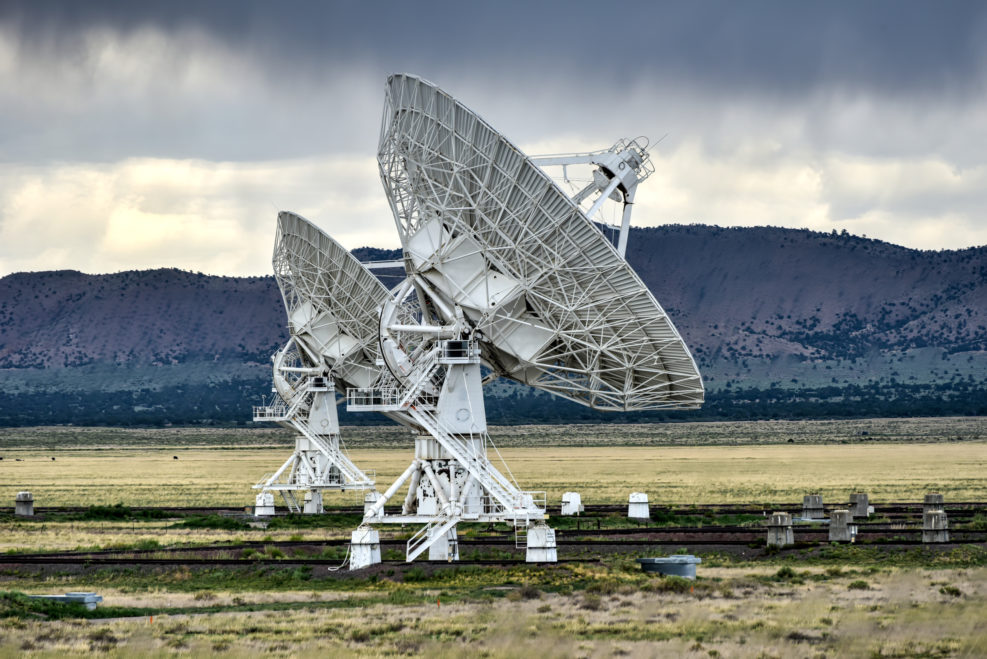
very-large-array-new-mexico-stockpack-adobe-stock
Very Large Array - New Mexico

The Drake Equation at 60 Years: The Second Most Famous Equation

After Einstein's e = mc squared. New technology is improving our ability to search the skies for signs of possible extraterrestrial civilizations

Last year marked the sixtieth year of the iconic Drake Equation, developed by astronomer Frank Drake aimed at stimulating the public to think about the prerequisites for life on other planets. Seth Shostak at Search for Extraterrestrial Intelligence (SETI) says it is the most famous equation after e = mc2 and offers a bit of its history: The Drake Equation was cooked up by astronomer Frank Drake in 1961 to serve as the agenda for the first meeting on the topic of SETI. In 1960, Drake had conducted a pioneering search for extraterrestrial signals – a several-week long effort he named Project Ozma. Somewhat unexpectedly, this modest experiment attracted a great deal of attention, and Drake was encouraged by J.P.T. Read More ›

the-universe-within-silhouette-of-a-man-inside-the-universe-physical-and-mathematical-formulas-the-concept-on-scientific-and-philosophical-topics-elements-of-this-image-furnished-by-nasa-stockpack-adobe-stock
The universe within. Silhouette of a man inside the universe, physical and mathematical formulas.. The concept on scientific and philosophical topics.  Elements of this image furnished by NASA.

Philosopher: Panpsychism Is Not in Conflict With Physics at All

Responding to criticism from physicists Sabine Hossenfelder and Sean Carroll, Philip Goff points out that panpsychism is not a dualist perspective

Philip Goff sees panpsychism (consciousness pervades all nature) as offering a simpler view of physics than dualism, with fewer gaps than materialism.

Read More ›
space-cosmic-background-of-supernova-nebula-and-stars-field-stockpack-adobe-stock
Space cosmic background of supernova nebula and stars field

Leading Astronomer Gets It All Wrong About Free Will and Destiny

Logic and reason aren’t laws of physics and therefore they transcend physical properties

Harvard astronomer Avi Loeb, has recently written an essay in which he considers whether human beings have free will and how long the human race will survive. Loeb is a prolific and often quite thoughtful scientist who has a refreshing propensity to think outside the mainstream. However, his recent essay in Scientific American, titled “How Much Time Does Humanity Have Left?”, is well off the mark. I think he profoundly misunderstands human nature and human destiny. Loeb opines on the question of human free will: The Standard Model of physics presumes that we are all made of elementary particles with no additional constituents. As such composite systems, we do not possess freedom at a fundamental level, because all particles and Read More ›