
Where did a concept like “malinformation” even come from?
At Unherd, Jacob Siegel offers an answer to an urgent question, “How censorship seized America,” noting that “Big Tech did the government’s bidding”:
In Joe Biden’s presidency, two great forces pushed the information state to the limits of its power. The first came from the administration’s response to the Covid-19 pandemic. The second came from its decision to use the arsenal of counterinsurgency against American citizens accused of domestic extremism. Both relied on the vast public-private apparatus of censorship and surveillance, originally built to combat foreign disinformation, to wage political battles at home.
The pandemic dumped jet fuel into the growing counter-disinformation machine while extending its controls into the physical world. That brought the information state into people’s everyday lives. “April 10, 2026”
The Covid lockdowns enabled governments to explore how much control they could assert without a Convoy response.
The term originated at Harvard
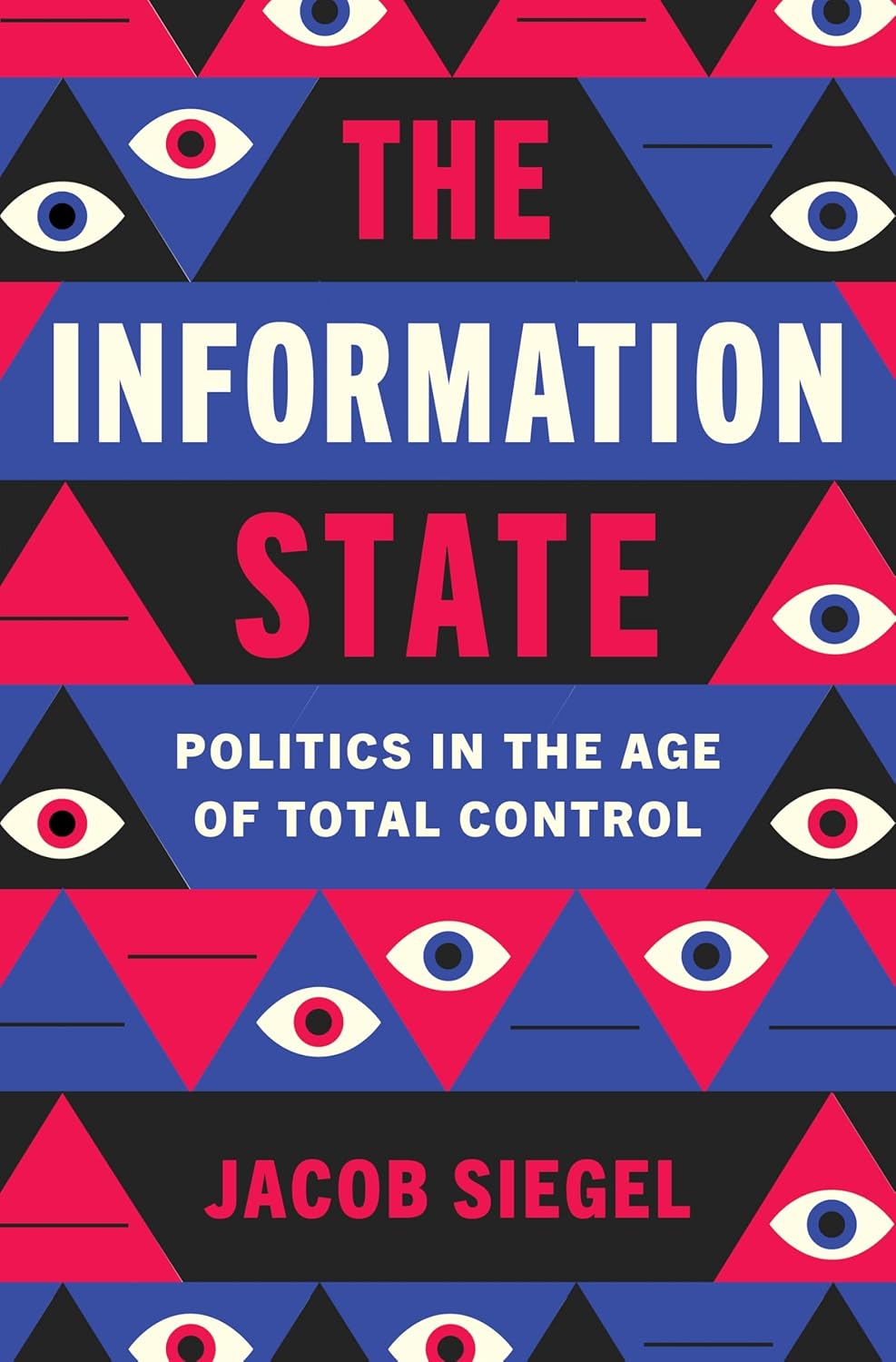 Published by Henry Holt and Co.
The government got lots of support from an academic elite that was anxious to introduce Newspeak terms like “malinformation”:
Back in 2017, two academics affiliated with Harvard had created a novel category to describe speech that was factually true, but undermined official interests. They called it malinformation and defined it as speech “based on reality, used to inflict harm on a person, organization or country”. Could constitutionally protected criticism of the US government be classified as malinformation? Only the information regulators could say for sure since all power rested in the authority to define the terms. The government seized the opportunity. In the very first month of the Biden administration, CISA rewrote its mission from focusing on foreign disinformation “to focus on general MDM”, an acronym for misinformation, disinformation, and malinformation — a three-part classification developed by the 2017 Harvard paper that coined “malinformation”. The machinery of the information state had completed its inward turn. Rather than defensively protecting critical infrastructure from outside attack, the agency would now “be responsive to current events” inside the US. “April 10, 2026” [Paper here.]
Siegel is author of The Information State (Henry Holt 2026), which explores a looming question: “We’re often told that disinformation is everywhere and that it’s endangering our democracy. But what if the war on disinformation itself is really just a weapon to squash any and all legitimate dissent?” Sample.
X contributor Skepticalifornia, comments,
It’s not an accident that the censors are enamored of these neologisms for forbidden speech, because the syntax is perfect Newspeak.
“malinformation” is as close as they can get to “ungood” or “thoughtcrime” without actually saying it.
“It was intended that when Newspeak had been adopted once and for all and Oldspeak forgotten, a heretical thought should be literally unthinkable” [from Orwell’s Nineteen Eighty-four]
So far, the information controllers have not succeeded in getting people to incorporate concepts like disinformation and malinformation into the English language. But not for want of trying.
