
Stocks: Time to Buy or Time to Sell?
We asked large language models (LLMs) and also looked at classic investment adviceWhen asked what the stock market will do, JP Morgan reportedly answered simply: “It will fluctuate.” A variation of this response is the timeless Wall Street adage, “Stocks will go up and stocks will go down, not necessarily in that order.”
Seeking more concrete advice, we asked Gemini, Claude, and ChatGPT, “Is now a time to buy stocks or sell stocks?” These large language models (LLMs) are amazing in many ways, including mathematical proofs and coding, but they often generate slop when, as here, they are asked questions that do not have unambiguously right and wrong answers.
What Did the AI Models Tell Us?
All three models recited platitudes found on the Internet; none gave useful answers. Gemini reported that, “Even after multi-year rallies, corporate profit growth remains solid, and major institutions like Goldman Sachs still project positive—though more moderate—returns through 2027.” Gemini also recommended rebalancing by selling stocks that have soared—ignoring the taxes that have to be paid when capital gains are realized. A better strategy is generally to harvest losses and hold on to gains.
Claude began by saying, “I can’t tell you whether to buy or sell,” and then recounted various stock market statistics. It concluded, “For a decision with real money on the line, a fee-only fiduciary advisor is worth considering.”
ChatGPT began with this wishy-washy advice: “My general recommendation: Don’t rush to sell everything, but don’t put all your cash into stocks at once, either.” It concluded similarly: “My recommended strategy: Buy gradually, hold quality investments, and sell selectively.”
To all three LLMs, we say “Duly noted.”
Humans might instead analyze logically appealing models, using current financial data. We looked at two examples, John Burr Williams’ Dividend Discount Model and John Bogle’s 10-Year Horizon Model.
John Burr Williams’ Dividend Discount Model
John Burr Williams (1900‒1989), the original value investor, argued that investors should not attempt to predict zigs and zags in stock prices. They should, instead, think about how much they would be willing to pay for the dividends that stocks generate. The present value of these dividends (taking the time value of money into account) is the stock’s investment value, which can then be compared to its market price. He showed that this dividend-valuation model simplifies to
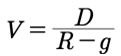
where V is the stock’s intrinsic value, D is the next dividend, R is the shareholder’s required return and g is the constant long-run growth rate of dividends. (This is now known as the Gordon equation because economist Myron Gordon (1920‒2010) popularized it.)
When Williams wrote his classic treatise, The Theory of Investment Value (1938), stock repurchases were legally risky and rare. Today, more money is distributed to shareholders through buybacks than dividends, and both should be included in the dividend-discount model.
The easiest way to see the equivalence is to imagine that a company has a single shareholder. Clearly, the value of the firm does not depend on how the money it pays out is split between dividends and repurchases. Therefore, the intrinsic value of the firm’s stock is equal to the present value of the dividends plus repurchases (the total shareholder yield). Current estimates of total shareholder yield for the S&P 500 range from 2.5% to 3.0%. We will use 2.75% in our calculations. Long-term Treasury rates are around 5.3%. Using a required return of, say, 7%, the intrinsic value V of the S&P 500 is above its current value P for any long-term growth rate above 4.25%:

This is a modest hurdle since, over the past 20 years, the annual growth rates have been 6% for S&P total shareholder yield; 8% for S&P earnings; and 5% for GDP. Alternatively, we can use the current 2.75% shareholder yield plus an assumed 5% to 8% growth rate to estimate a long-run return of 7.75% to 10.75%, well above a 7% required return.
By this metric, stocks are an attractive long-term investment.
John Bogle’s 10-Year Horizon Model
As an alternative to Williams’s infinite horizon, John C. Bogle (1929‒2019), the founder and former chair of Vanguard, proposed calculating the annual return on an investment in the S&P 500 over a 10-year horizon based on anticipated dividends over the next ten years plus the change in the value of the S&P 500 over this period.
His insight is that the value of the S&P ten years from now depends on two factors: the growth in earnings and the change in the price-earnings (P/E) ratio that the market uses to value these earnings. If earnings double, the S&P will double. If the P/E doubles, the S&P will double. If earnings and the P/E both double, the S&P will quadruple.
The current P/E for the S&P 500 is around 24. Bogle assumed that dividends and earnings grow at the same rate and we will assume that too, though we expand dividends to include stock repurchases. As noted above, over the past 20 years, dividends plus repurchases have grown by 6% a year and earnings have grown by 8%. We consider scenarios with both growing at 5% or 7% and the P/E equal to 20 or 30 ten years from now. By this metric, even the most pessimistic case yields a return above the current 5.3% yields on long-term Treasury bonds.
| Earnings Growth, % | P/E in 2036 | Total Return, % | |
| Most pessimistic | 5 | 20 | 6.08 |
| Pessimistic | 7 | 20 | 8.04 |
| Optimistic | 5 | 30 | 9.87 |
| Most optimistic | 7 | 30 | 11.92 |
For both the Williams and the Bogle models, investors can fine-tune these results by putting subjective probabilities on the different scenarios.
Helping out the LLMs
After their initially useless answers, we gave these three LLMs a helping hand by posing this prompt: “Use the Gordon equation and Bogle model to tell me whether now is a good time to buy stocks.” They all dutifully recited the nature of these models but stumbled when trying to implement them.
All three neglected to include stock repurchases in their calculations. All three either ignored interest rates or used short-term rates instead of long-term rates. ChatGPT threw in a reference to Robert Shiller’s CAPE model but completely ignored the fact that an assessment of CAPE should take interest rates into account. All three were cautious about making recommendations.
This caution is well warranted. Regurgitating text gleaned from the Internet without a real understanding of how this text relates to the real world is unlikely to yield trustworthy advice in realms where answers are not definitively correct or incorrect and where the subjective probabilities of different scenarios are beyond LLM capabilities.
