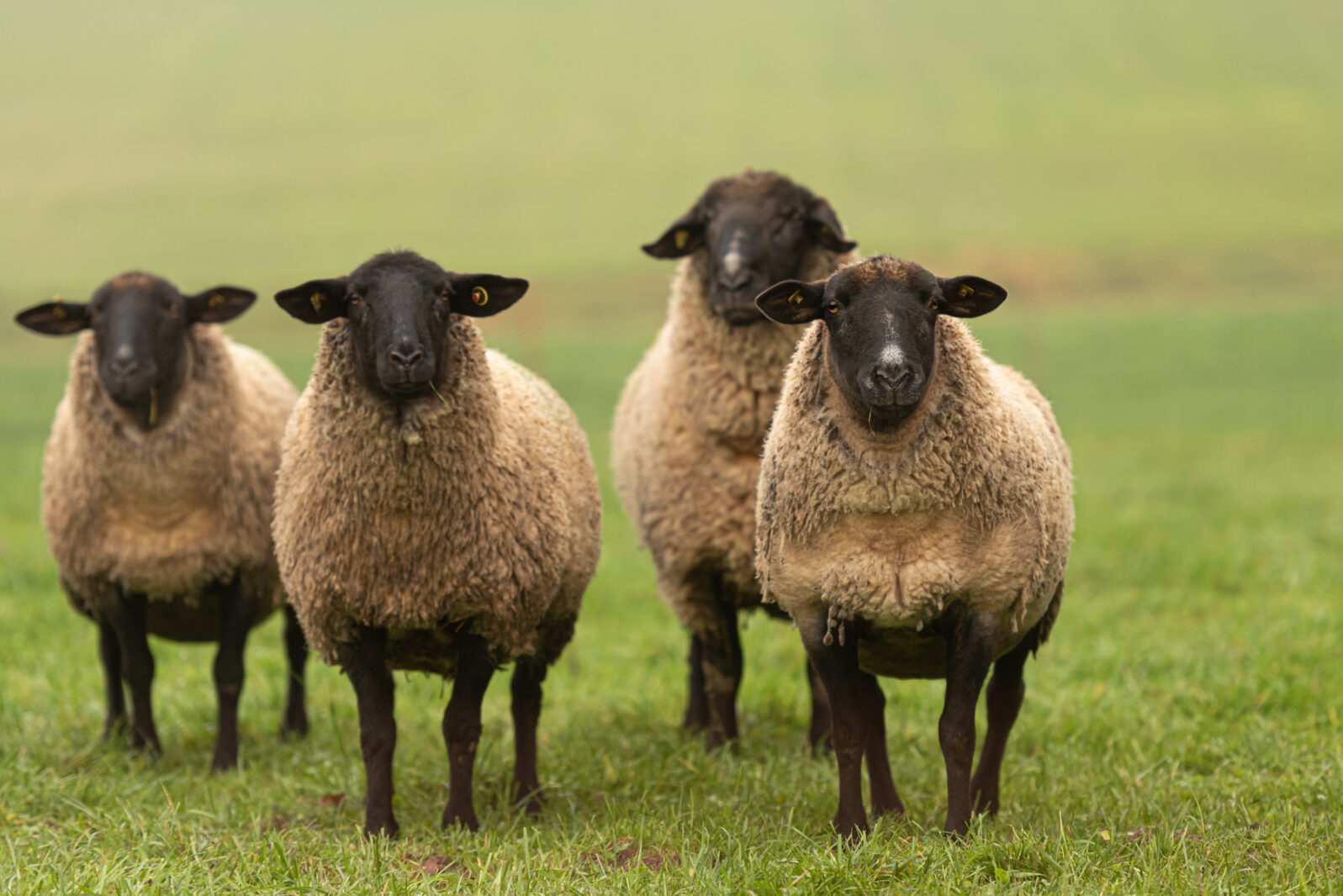
WHY THE ‘BLACK SHEEP’ GETS THE DIRTY END OF THE STICK
Slightly like the hive mind, Mimetic theory seems to nail social interactionsMimetic theory (not to be confused with Memetic theory or Mimesis) is a concept developed by French Catholic anthropologist René Girard (1923-2015). Girard noticed that human desire is not individual but collective, and/or social, and this has led to conflict and violence throughout human history. (For a more detailed understanding of the theory click on the following: Home – Mimetic Theory). Girard said:
Man is the creature who does not know what to desire, and he turns to others in order to make up his mind. We desire what others desire because we imitate their desires.
This concept points to a desire being merely an imitation of another’s desire, and the desire only happens because others have viewed something as worthwhile because of societal ideas and herd mentality and is not based on personal preference.
But I want to focus on the scapegoat and ‘black sheep’ aspects of Girard’s theory. I saw this first hand in all its social ugliness during the Covid Lockdowns’ reign of terror. Anyone who questioned the then narrative was shunned, ridiculed, scapegoated, and ostracized.
And because I refused to wear a face mask, I was banned by my late mother from visiting her. After a lifelong bond with her that was close and loving, she became distant from me, as TV news hosts and celebrities/influencers 24/7 terrified her into wearing a mask and urging viewers to take multiple booster jabs.
Apart from not entering my mother’s house, people in stores gave me dirty looks and places refused me entrance for not wearing a mask. I also felt like a misfit for not worshiping at the altar of Dr Anthony Fauci. So much for ‘My body, my choice’.
Regarding the family scapegoat: A member of a family is regarded as the ‘black sheep’ or the scapegoat who bears the collective sins of the rest of the family, thereby acting as a release mechanism, a catharsis, for unresolved problems. From the article “How Narcissistic Parents Scapegoat Their Children” in Psychology Today:
The rotating scapegoat role can become institutionalized in a family with a controlling mother. This mother leaves little to chance; she’s a perfectionist who believes that there’s a “right” and a “wrong” way of doing things, and she wants everything “just so.” When things don’t go as planned or as she imagined them taking place, she both needs a reason for what she considers a disaster and a person to blame it on, other than herself.
Family scapegoats can occur among the normie, hive-mind siblings; even a child can project his or her problems onto a parent(s), the same situation occurs amongst groups outside the family. Think about the average workplace and see it in all its clone-like, narcissistic glory.
I’ve experienced this many years ago in the corridors (not all) of some broadcast and print journalism nests of clones, as well as academia. It’s also alive and kicking in the Vatican (Church HQ) and the world’s dioceses (Church outposts), but it has nothing to do with The Church, which is The Magisterium, Bride of Christ. Speaking of Christ: Jesus was scapegoated because his words expressed the Truth, and the Truth hurts those who crave carnal pleasures.
Mimetic theory also touches on politics, and the way certain families vote for political parties, sometimes going back several generations, while scapegoating the opposition parties, and having feelings of hatred, even psychological violence, towards them.
On the topic of violence: In the classic 1971 movie Dirty Harry, starring Clint Eastwood, Harry Callahan, a good cop seeking justice and a man who is impervious to corruption, is with his partner cop Conzales, who says, “No wonder they call him ‘Dirty Harry’, always gets the s**t end of the stick.”
Harry, the ‘black sheep’ in the police force, is nicknamed “Dirty Harry” because of the unpleasant jobs he’s assigned are of the worst possible kind and he is willing to use violent tactics to achieve justice by breaking the rules.
Feeling scapegoated amongst his hive-mind peers, Harry eventually quits his job after fatally shooting a rapist murderer called ‘Scorpio’, who the force’s liberal district attorney earlier said, when Harry previously pursued the psychopathic injuring him, “That man had rights,” to which Harry replied, “Well, I’m all broken up about that man’s rights.”
As for herd obnoxious behaviour and ‘keeping up with the joneses’ types, their rights are about as relevant to me than a scorpion’s rights who tries to nest in my boot while I’m sleeping in my tent in the woods.
And as for a place with some of the greatest woods in the world, Sweden has to be one of the good examples of a hive-mind, collectivist country where not toeing the party line will result in one being scapegoated. Since the 1950s, incrementally, Sweden was/is a society that actively discourages all signs of individuality. In his book, The New Totalitarians (1971), author Roland Huntford’s message is:
The political and social climate of the early 1970s, Sweden, resembling Aldous Huxley‘s Brave New World, is a kind of Totalitarianism with a smiley face run by Social Democratic Party of Sweden for over 40 years. The main thesis was that the Swedish government relied upon subtle persuasion and touchy-feely manipulation in order to govern its people and make its laws. The influence of the state and official ideology were most visible in the most private of matters; where little or no consciously political control had stretched before.
Nowadays, the situation in Sweden, despite its dominant collectivism amongst indigenous Swedes, is not the same country culturally compared to the 1970s, due to mass immigration of Muslims, Asians, and African people, who also scapegoat any ‘black sheep’ fellow members of their ethnic groups if they don’t comply to their cultures/religious mores.
In a nutshell: When one refuses to follow the herd and ask questions about the validity of the current narrative, be prepared to lose friends and family members en masse. Being an individual seeking Truth is being in a lonely place.
