
Most Published Research Findings Are Still False…
Says Stanford prof John Ioannidis — and AI is making it worse. A different Stanford prof offers a very ambitious idea for reformStanford epidemiology prof Ioannidis is best known for a 2005 paper, “Why most published research findings are false.” His open-access paper argues that “Simulations show that for most study designs and settings, it is more likely for a research claim to be false than true. Moreover, for many current scientific fields, claimed research findings may often be simply accurate measures of the prevailing bias.”
His findings have been disputed. But the prevailing research climate — where replication is in a state of crisis, retractions have increased five-fold and citations overwhelm useful discoveries — suggest that he is not off the mark.
Recently, Ioannidis did an interview at IAI.TV with editor Alasdair Craig:
Alasdair Craig: You’ve said that “we need to fight against medicine. It’s becoming really dangerous.” Why did you say that?
John Ioannidis: Spending on health in the United States is close to 20% of GDP, and in other countries it’s also increasing. We have about three million papers published in biomedicine every year. Most of them are probably subpar. Many of them are false or misleading. One study estimated that 5.8% of biomedical papers published in 2023 were entirely fake, and the proportion is increasing. Another study has found that among 1,567 medical interventions, only 5.6% had high-quality evidence supporting their benefits (that is, over 94% lacked high-quality evidence supporting their benefits).
We have lots of discussions that are misinformation and full of very weird thinking about medicine. So we’re entangled in a mess that is not leading to better health. In fact, life expectancy in the United States has not really increased or has even gone down. We see the same experience in many other countries. We are not getting what we should out of an enterprise that includes some amazing researchers and some very well-intentioned people. [citations omitted]
“Why most published research findings are still false,” October 14, 2026
How is AI making it worse?
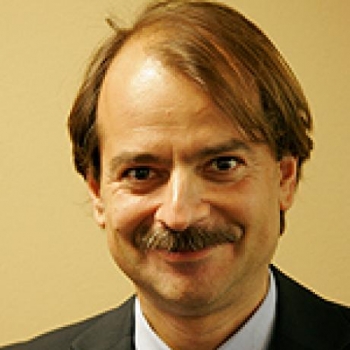
John Ioannidis: And there is fraud that is probably getting worse, especially with the advent of artificial intelligence. We have a very large number of papers now that can be generated by AI, and that can be entirely false and fraudulent and fake—besides the classic fraud that we had in the past. A recent study found that scientific fraud is currently growing at much faster rates than the scientific enterprise as a whole.
So there are multiple threats to the research ecosystem that are making it very difficult to obtain reliable evidence. [citation omitted] “Still false”
Of course, the AI contribution only spikes an established fraud problem, which is sometimes abetted by compromised journal editors. The production of papers becomes far more important to a researcher’s career than the production of useful findings.
What changes might help?
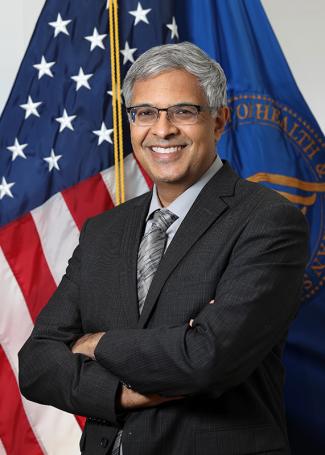
Another Stanford epidemiologist, Jay Bhattacharya, has also weighed in recently. Bhattacharya, currently the director of the US National Institutes of Health (NIH), dreams big. He wants a second scientific revolution:
At the root of the scientific revolution was the idea that there was not and should never be a scientific authority. For centuries, a small number of ecclesiastical powers had decided such questions as whether the moons of Jupiter move. The scientific revolution placed these questions in the hands of a lot of very smart scientists, including those with telescopes. Unfortunately, we find ourselves back in a situation today, as demonstrated a few years ago by the Covid lockdowns, mask mandates, and vaccination requirements, where a relatively small number of people—directors of government agencies like the National Institutes of Health, heads of international agencies like the World Health Organization, and editors of prestigious journals—have the power to say what is true or false in science.
“Launching a Second Scientific Revolution,” Imprimis, May 2026
In his remarks, delivered at a Hillsdale College Leadership Seminar, Bhattacharya acknowledged the many historic achievements of NIH. But he went on to identify a number of changes he thinks are needed, including this:
First, we must recognize that most scientific papers, far from introducing new ideas, rely on old ideas. I once collaborated on a study that looked at every word and phrase published in biomedicine in 1940 and 1941. When we subtracted all the 1940 words and phrases that were published in 1941, we were left with the ideas introduced in 1941. Doing this for every subsequent year up to the present produces a kind of history of biomedicine. What we see in that history is that in the 1990s, about 55 percent of NIH funded research was based on new ideas—zero-year-old or one-year-old ideas—and that research in which the newest ideas were ten to 30 years old received much less funding. And that is as it should be. The NIH is supposed to fund ideas that are on the bleeding edge of science. But what has happened since then—especially since 2000—is a collapse in NIH support for new ideas.
In addition to this, the average age at which scientists receive their first NIH grant has risen from the mid-30s in 1980 to the mid-40s today. This is not a good development, given that younger scientists are the most likely to have new ideas. In a 2019 paper, Mikko Packalen and I showed that the probability of trying out new ideas declines monotonically with career age. “Second Scientific Revolution”
One must hope it works. It will surely be more interesting.
