
Neuroscience and Philosophy: Limits of Cutting-Edge Brain Science
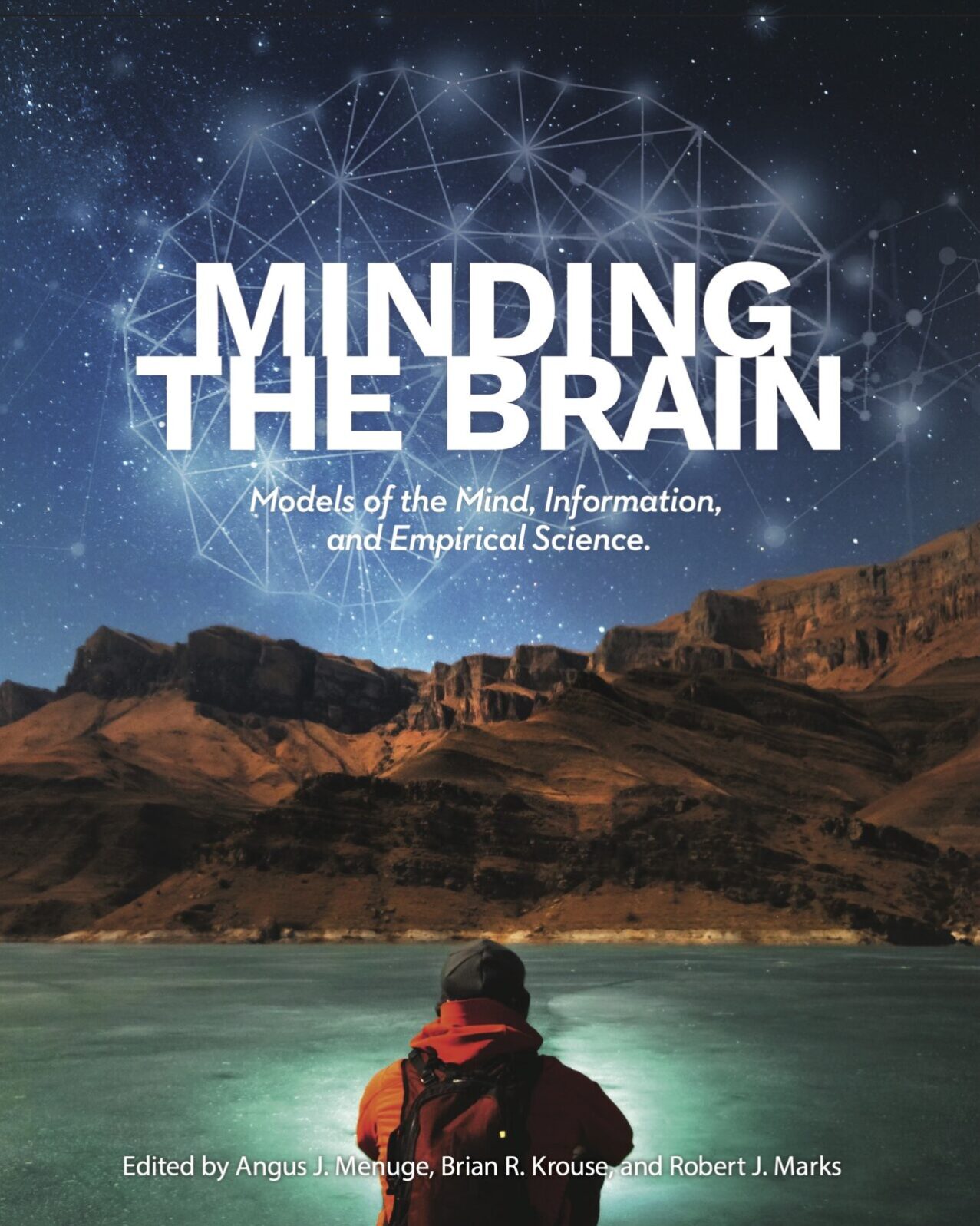
Neuroscience topics like self-consciousness, social interaction, agency, and the binding problem sit at the intersection of science and philosophyOn this week’s Mind Matters podcast, computational neuroscientist Dr. Joseph Green* focused on ideas from his chapter, “On the Limitations of Cutting-Edge Neuroscience” in the book Minding the Brain (2023).
The conversation, led by Robert J. Marks and Brian Krouse, explores how modern neuroscience is helping us understand human consciousness. But it also shows where neuroscience explanations still fall short. Dr. Green focuses on three major topics that may help bridge neuroscience and philosophy: self-consciousness, social interaction and agency, and the binding problem. Together, these areas reveal both the promise and the limitations of studying the mind through the physical brain alone.
Self-consciousness: Awareness of “I”
Dr. Green begins with self-consciousness. He describes it as more than just a sensation. It isn’t simply “there is pain,” but “I am in pain.” This awareness of ourselves as subjects — as individuals who experience, think, and feel — is a defining feature of being human. While other animals show forms of awareness, the depth and complexity of human self-consciousness raise major philosophical questions.
From a neuroscience perspective, researchers study self-consciousness by looking at how the brain constructs a “self-model.” This self-model depends on many components:
- Interoception: sensing what is happening inside our bodies
- Memory: connecting present experiences to past ones
- Motor planning: guiding our actions
- Social feedback: interpreting the reactions of others
- Attention and awareness: focusing on certain experiences
Neuroscientists often divide self-consciousness into smaller components. One such component, for example, is proprioception (knowing where your body is in space). Thus each part can be studied experimentally. Although this “divide and study” method helps scientists understand individual components, it cannot fully capture the philosophical richness of self-consciousness. Green stresses that breaking self-consciousness into pieces risks losing what makes it meaningful in the first place. Still, the effort is scientifically useful even if it doesn’t solve the whole mystery.
Not necessarily a materialist project
Importantly, Dr. Green argues that studying self-consciousness scientifically is not necessarily a materialist project. Understanding the brain mechanisms behind awareness does not rule out the possibility that consciousness has non-physical or dualist aspects. Instead, neuroscience may reveal the physical correlates of mental life while leaving open deeper philosophical questions about the mind.
Social interaction, agency, and free will
Green next turns to social consciousness, an emerging idea that suggests that some aspects of our mental life depend on interactions with others. Recent studies have shown surprising forms of neural synchronicity, where the brain activity of two people becomes synchronized during conversation or shared experiences. Though debated and still exploratory, this research suggests that our sense of identity may be shaped not only by our own minds but also by our relationships.
This leads naturally into a discussion of agency — the ability to choose and act freely. Neuroscience can identify circuits involved in decision-making and even show how certain decisions can be influenced or perturbed. For example:
- Addiction shows how chemical signals in the brain can drive behavior against a person’s better judgment.
- Experiments raise questions about whether external stimulation could force actions someone does not truly choose.
These findings spark philosophical debates about free will. Are we fully in control of our decisions, or are we partly driven by neural mechanisms outside our awareness?
Brian Krouse connects this to famous studies by Benjamin Libet (1916‒2007), which led to the concept of “free won’t” — the ability to veto an action the brain has already prepared. Robert Marks gave a personal example of quitting smoking by repeatedly refusing the urge, eventually rewiring his brain through neuroplasticity. This example illustrates how mental choices can shape the brain’s physical wiring, a point supported by cognitive behavioral therapy and research on treating disorders like obsessive compulsive disorder (OCD).
These examples show that neuroscience and philosophy can illuminate each other: neuroscience reveals how choices take shape in the brain, while philosophy explores what choice and responsibility really mean.
The binding problem: The unity of experience
Finally, Dr. Green discusses the binding problem, a classic challenge in neuroscience. The problem derives from the fact that different senses are processed in different parts of the brain:
- visual signals in the visual cortex
- sounds in the auditory cortex
- touch in the somatosensory cortex
Yet our experience of the world is unified. When you talk with a friend, you don’t separately process the friend’s face, voice, and gestures — you experience your friend as one coherent person.
Neuroscientists offer models that describe how information might come together, but these models remain incomplete explanations. This unity of experience raises philosophical questions about perception, reality, and the nature of consciousness: Are we seeing the world as it truly is, or only through the unique “lenses” of our own minds?
Conclusion
Dr. Green’s insights show that neuroscience is making remarkable progress in understanding the brain. Yet many of the deepest questions about the mind remain open. Topics like self-consciousness, social interaction, agency, and the binding problem sit at the intersection of science and philosophy. While neuroscience can explain the mechanisms behind certain mental processes, it cannot fully explain the meaning and richness of human experience.
For students of the human mind, this conversation highlights an exciting frontier where two disciplines must work together to better understand what it means to be conscious, to choose, and to be human.
*Note: “Joseph Green” is a pseudonym.
Additional Resources
- Book: Minding the Brain: Models of the Mind, Information, and Empirical Science
- Part 1 of this conversation: How Humility and Curiosity Can Help Neuroscience Mature
- Part 2 of this conversation: Bridging the Gap Between Neuroscience and Philosophy of Mind
