The Problem of Smith: When Mind Uploading Multiplies Identity
Mind Matters News is pleased to present a thought experiment by Tyler Bauer on transhumanist Ray Kurzweil’s idea of attaining immortality by uploading the mind into AI. Bauer holds a PhD in philosophy, theology, and ethics and serves as a professor at Christ College and Palm Beach Atlantic University. You can find more of his writing at The Classical Thinkery.
xFamed inventor and futurologist Ray Kurzweil suggests that we will achieve digital immortality by 2045. Upload your mind, download it into a new body, and cheat death. It’s an alluring vision — until you “multiply” it.
The imaginative models offered by transhumanism, especially the kind that Kurzweil espouses, envision our surviving death through mind uploading. This mind uploading features in pop culture; think the 2015 movie Self/less:
In the film, Damien Hale (played by Ben Kingsley), wants to transfer himself into a new body. His consciousness is moved to a new, younger body (played by Ryan Reynolds). Hale is not merely copied into a new body; he is moved into a new body. Hale maintains continuous consciousness throughout the process.
The problem imposed by physicalism
A problem arises for transhumanists who aim to in achieve this kind of transfer due to their ardent physicalism. Kurzweil, and many who follow him, are patternists. They argue that our personal identity is comprised of various mental “patterns,” such as our thoughts, beliefs, desires, intentions, and memories. This approach equates human personal identity to the memory and device settings, or patterns, on a computer. As such, the thought goes, just as I can move a computer’s patterns around to new substrates, I should be able to move human patterns to new substrates.
Why does this patternistic view create a problem? Imagine Smith, a forward-thinking individual who has decided to undergo the mind-uploading procedure. He enters the lab with the understanding that his continuous consciousness will be transferred to a new, optimized body, and his old biological body will be discarded. Smith falls asleep as the technician activates the Brain Uploader 3000.
The Uploader works flawlessly. It creates a perfect digital replica of Smith’s electrochemical signature — every memory, every intention, every quirk of personality captured with absolute fidelity. This pattern is then downloaded into a newly constructed body, optimized to be a superior version of Smith’s aging frame.
When this new Smith, whom we’ll call Smith₂, wakes up, he has every reason to believe the procedure succeeded. He remembers falling asleep in the lab. He has all of Smith’s memories, feels like Smith, thinks like Smith. As far as Smith₂ is concerned, he is Smith waking up in his new body. Mission accomplished, right?
Not quite.
But why only Smith₂?
Here’s where things get philosophically interesting. Unbeknownst to the original Smith, Dr. Jones (the technician running the procedure) has also been running an unauthorized experiment of his own.
Jones didn’t just download Smith’s pattern into one new body; he downloaded it into two identical new bodies, in separate rooms.
At the exact moment as Smith₂ wakes up, so does Smith₃. Like Smith₂, he has all of Smith’s memories. He believes he successfully underwent the mind-uploading procedure and he too is convinced he’s the real Smith. Smith₂ and Smith₃ have equally strong claims to being the genuine continuation of the original Smith who walked into the lab.
But wait, there’s more. Due to a technical malfunction, the original biological Smith, whom we will hereafter refer to as Smith₁, didn’t die during the procedure as expected. He wakes up at the exact moment as the other two, in his original body, with all his memories intact.
Now we have three Smiths. Three individuals, each with an equally legitimate claim to being the “real” Smith. Each has complete psychological continuity with Smith’s past. Each believes himself to be Smith. Each can produce identical answers to personal questions, share the same embarrassing childhood memories, and express the same preferences and values.
If we adopt the logic from Self/less, that mind transfer enables a person to be moved between bodies, which Smith is the real Smith? Where would the “real” Damien Hale be?
Consider the claims each Smith can make:
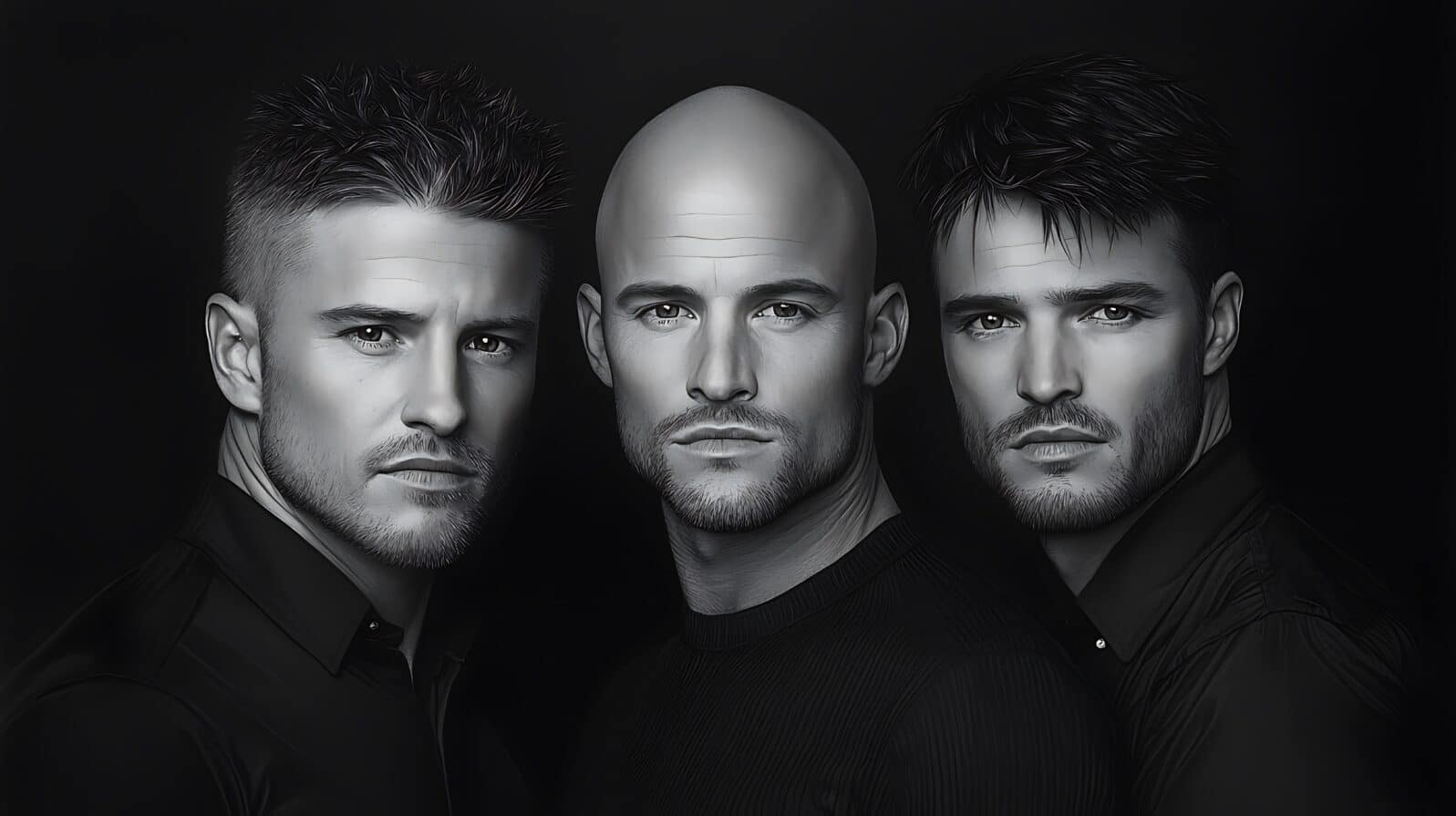 Image Credit: tonpreecha -
 Smith₁ (the biological original) has the strongest claim to physical continuity. His body is numerically identical to the body that walked into the lab. He has uninterrupted biological existence. Yet his deepest desire, to wake up in a new, optimized body, has been frustrated. He’s still stuck in his aging biological form.
Smith₂ (the first upload) has perfect psychological continuity with the original Smith’s intentions. When he wakes up, his experience matches exactly what the original Smith expected: consciousness continuing seamlessly in a new body. His subjective experience aligns perfectly with Smith’s plan. Yet he lacks any physical continuity with the original.
Smith₃ (the second upload) has an identical claim to Smith₂. Same patterns, same memories, same psychological states. He woke up in an identical body at the same moment. Neither Smith₂ nor Smith₃ can claim priority over the other. They’re functionally indistinguishable.
According to patternist theory, identity follows patterns. But if that’s true, then all three Smiths are equally “Smith”; they all possess the pattern that constitutes Smith’s identity. Yet, we know intuitively that one person cannot simultaneously be three different people in three different locations. How are we to resolve this “Problem of Smith?
Possible solutions
One move the Transhumanist could take to solve this problem is to deny that continuous consciousness is maintained during the uploading process. Smith (or Damien Hale) died during the transfer process, but his memories live on in a new body. This is, perhaps, the simplest solution, but it takes the wind out of the sails. Why bother with mind uploading if it merely means that my patterns can be copied? What’s the point if I don’t get to personally and consciously experience the new body?
Another option: accept that all three are Smith. But this violates basic logic. One person cannot simultaneously be three people. Or, the patternist could claim that only one is “real” based on some criterion. But which? Physical continuity? That contradicts substrate transfer. First to wake? Arbitrary. Original intention? That requires privileging non-physical factors, undermining physicalism.
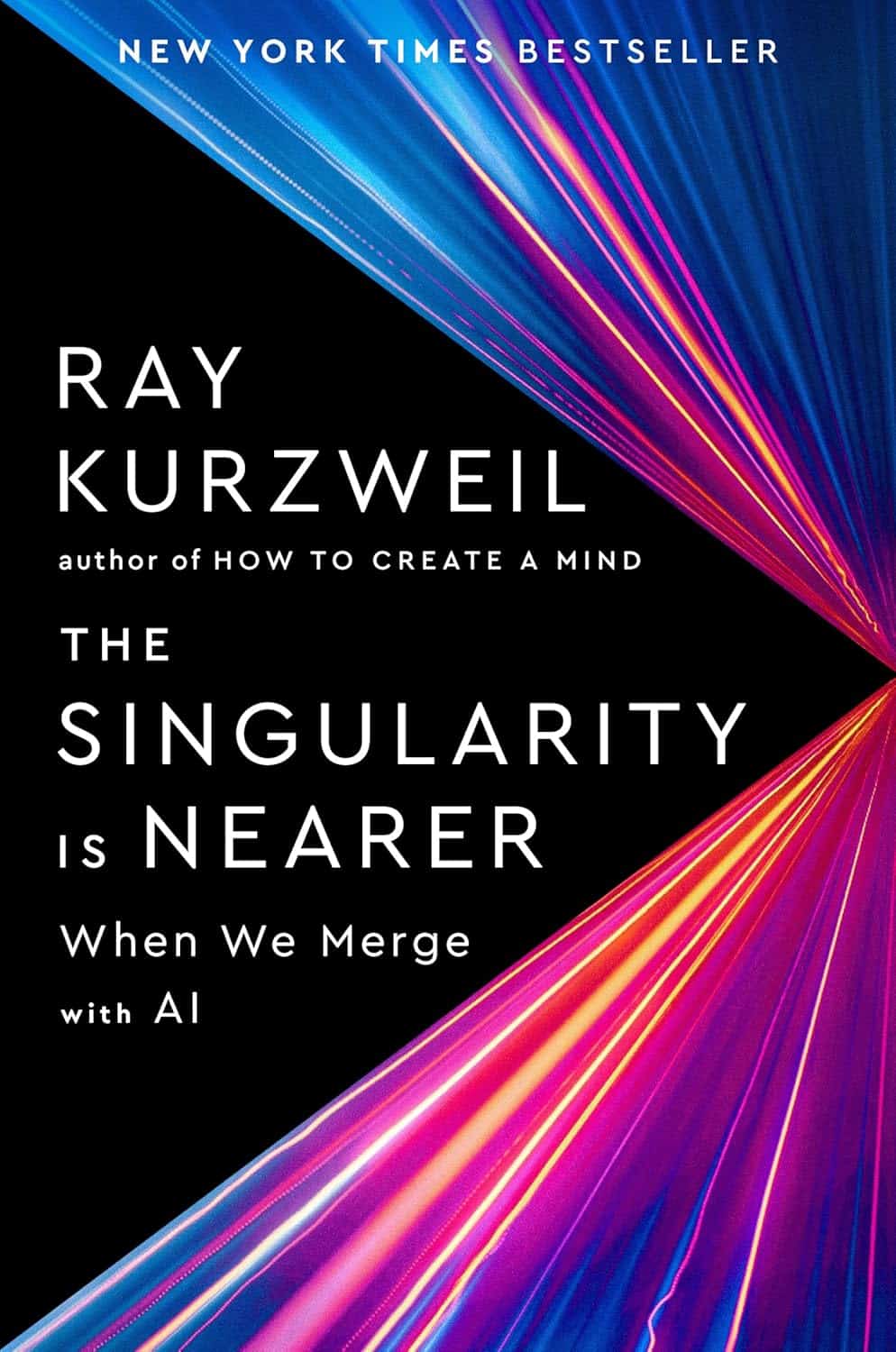
Kurzweil himself recognizes this problem. In The Singularity is Nearer (2024), his “You and You₂” thought experiment suggests that a copy probably isn’t really you. Yet he then claims that gradual neuron replacement would preserve identity. But if gradual transfer works but instant copying doesn’t, then identity can’t simply be patterns. Both preserve patterns perfectly. Something else persists through change while resisting duplication.
Where the concept of a soul comes in
Standing in line with the Great Western Tradition, I would suggest that that something is the soul. The concept of the soul, though not physical or empirically testable, offers the resources for explaining substrate transfer. If personal identity is grounded in an immaterial soul, the real Smith is the body that contains his original soul. The copies are new persons with Smith’s memories, not Smith himself. Souls, unlike patterns, cannot be duplicated.
Appealing to a soul also aligns with how we intuitively imagine ourselves. If mind uploading were possible, we intuitively think we’d be like Damien Hale, maintaining our unified selves, just waking up in a new body. The non-physical soul speaks to these intuitions in a way that mere physical patternism does not.
What the Problem of Smith reveals
The Problem of Smith reveals that we aren’t mere information patterns. At a commonsense level, we believe ourselves to be a unified self, a soul, that has patterns rather than being reducible to them. This self grounds consciousness, moral responsibility, and personal continuity across time.
This isn’t just ad hoc philosophy. Christian theology has always included something like mind uploading: at death, the soul separates from the body and enters an intermediate state, awaiting resurrection. Identity persists through radical change because it’s grounded in something that cannot be copied.
Kurzweil’s dream of digital immortality fails because it tries to preserve the soul while denying its existence. I intuitively recognize that I am more than my body or mental patterns. The ghost cannot be reduced to the machine. And, as the Great Tradition has long maintained, recognizing the importance of the soul is part of what makes being human meaningful.
