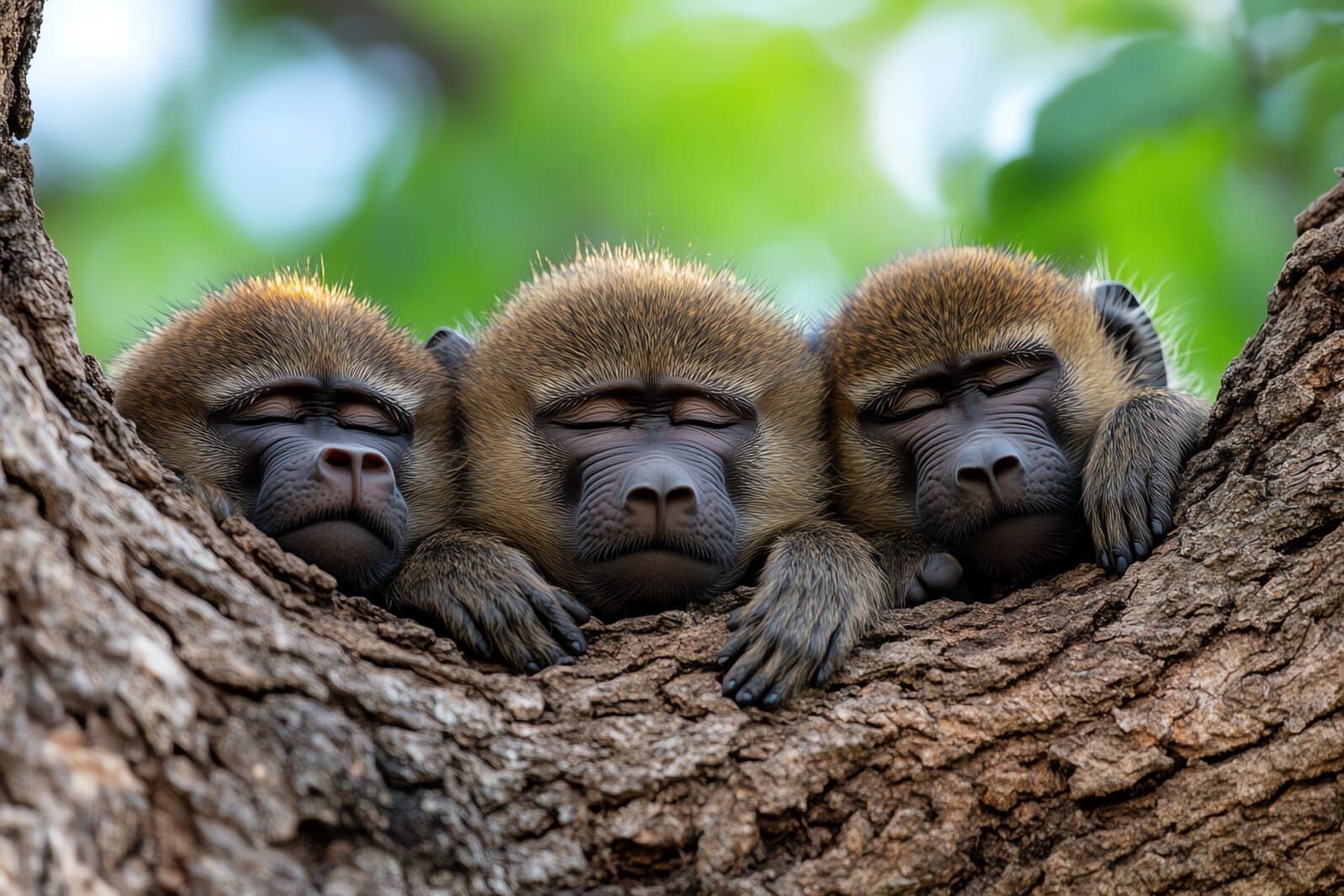
Baboons as the New Humans: The Disney Effect at work
As a recent review in Science shows, the Disney Effect allows even research scientists to ignore the differences between animal minds and the human mindThis article is republished from Creation–Evolution Headlines with the permission of the author, John Wise.
In my Introduction to Philosophy courses at East Stroudsburg University, I always began with the ancient Greeks — Socrates, Plato, and Aristotle. One of the most important lessons we learned was their method of definition by genus and difference. First, determine the larger group (genus) to which a thing belongs. Then specify how it differs (differentia) from the others in that group. For instance, what is a human being? In terms of genus, we are animal. What differentiates us? Rationality. Hence Aristotle’s famous definition: man is a rational animal.
Rationality, understood in its uniquely human sense, is not possessed by other animals. As we unpacked this distinction in class, it became the single most contentious claim of the semester. Some students (usually the most vocal) were astonished: “Are you really claiming animals don’t experience life as we do?” Their incredulity was my first glimpse of what I came to call the Disney Effect: a cultural conditioning so pervasive that the obvious is now heretical. What was once common sense is now “arrogance.”
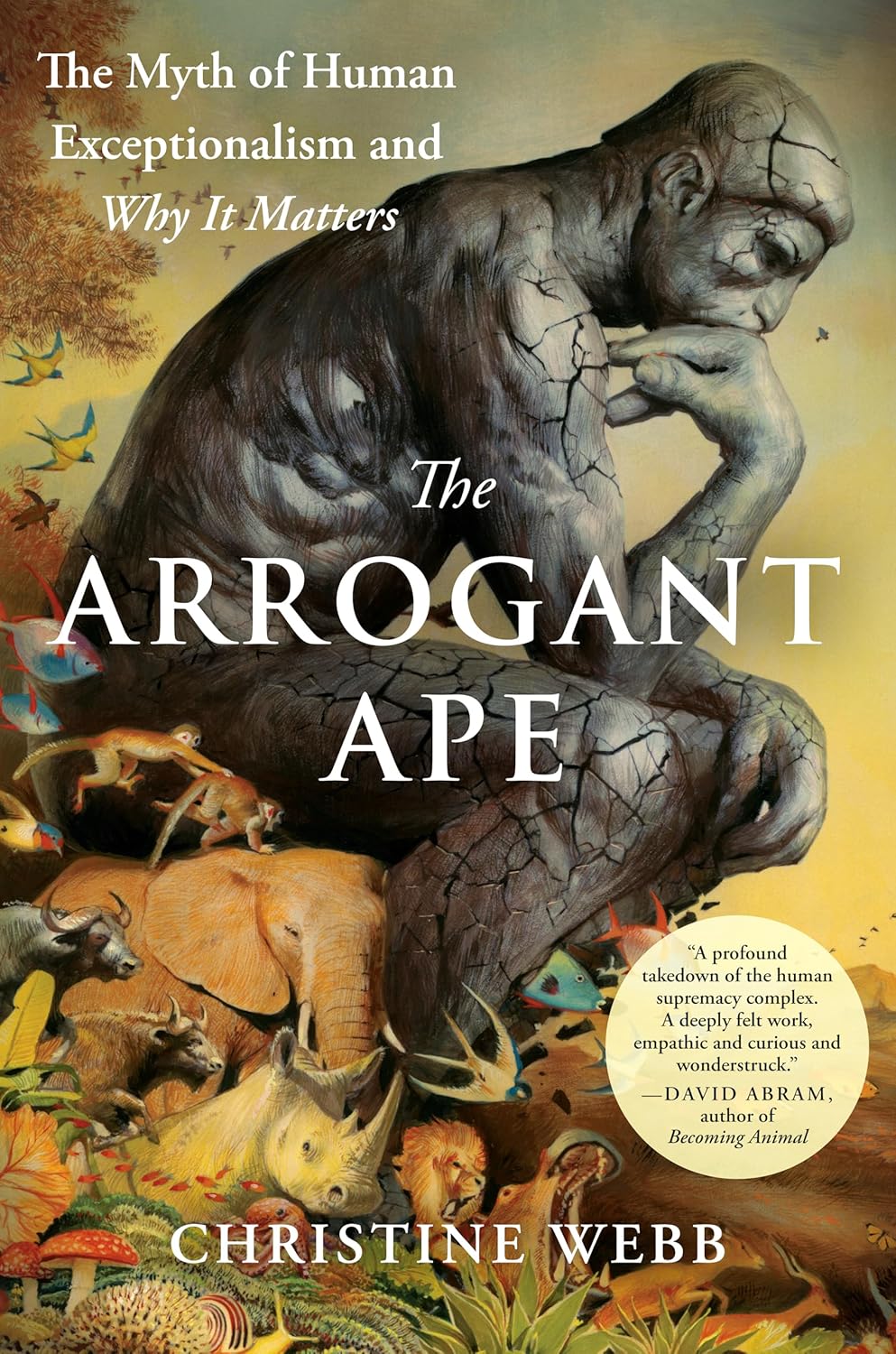
That thesis — human exceptionalism — has been under heavy assault for decades.* Primatologist Christine Webb’s new book, The Arrogant Ape: The Myth of Human Exceptionalism and Why It Matters, is a case study. It was reviewed recently in Science Magazine by anthropologist Barbara J. King. Her review is titled “The end of human exceptionalism: Anthropocentric worldviews harm us all, argues a primatologist” (Science, 4 September, 2025)
Both Webb and King are preaching from the same text, having exorcised Aristotle’s definition from their academic lexicons.
Ladies and gentlemen of the jury, we now present our evidence for The Disney Effect.
A laugh-fest of arrogance
Reading King’s review, I found myself laughing aloud more than once. My wife Jenny had to repeatedly ask, “What’s so funny?”
Where do I begin?
The blink epiphany
Webb describes a “transformative” moment in the Namib desert when she and a baboon compatriot blinked at one another. Suddenly, she was convinced the animal’s inner life was “as full, nuanced, and idiosyncratic as my own.”
Really? Something tells us that Christine was bringing more to the table than a shared glance with a fellow-primate. What we are witnessing is not science but projection: the Disney Effect at work.
The arrogance of supremacy
In a parenthetical inversion of my Disney effect thesis, reviewer King interjects:
Most of us grow up immersed in a worldview that centers humans as more than and better than other animals. Rather than being an explicit teaching, this perspective surrounds us so thoroughly that it requires effort to even become aware of it.
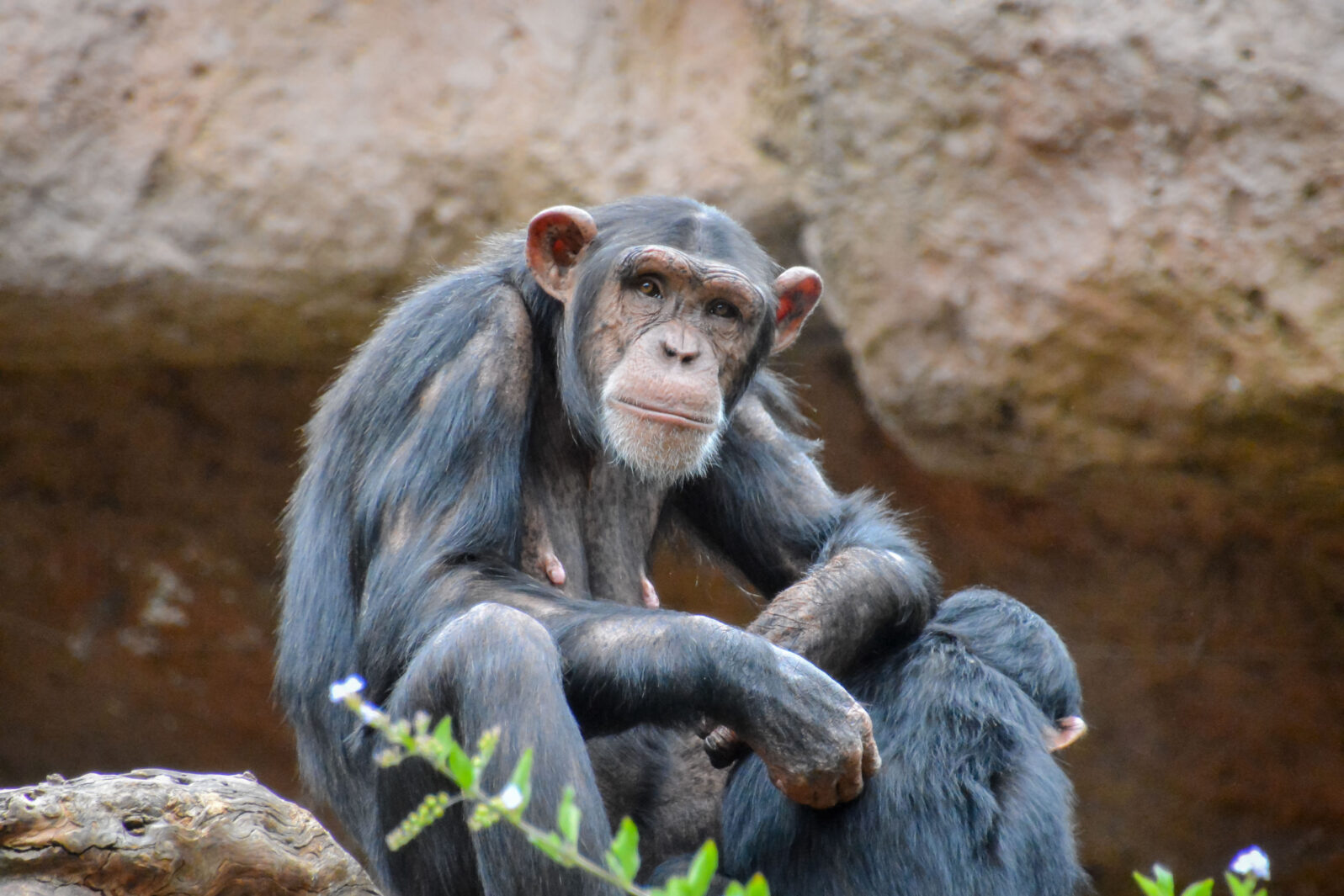 Image Credit: underworld -
 Again, really? The trend is the opposite, as my teaching experience reveals. The real opposition to her contention is nearly the entire history of mankind. Next,
Webb pulls no punches in offering her take on the arrogance of this assumed human supremacy. On page 1, she notes “the most prominent theme in the history of Western thought: human beings are the most clever, moral, and capable species on earth.”
Arrogance? Try evidence. No chimpanzee is critically assaulting the human race by writing a book called The Arrogant Ape.
And who makes that judgment? Dr. Christine Webb — speaking from the platform built by human intellectual history itself. We call it academia. Where is Chimp Harvard or Oxford? Chimp Socrates, Newton or Shakespeare?
A sermon on ecology
Then comes the sermon: human exceptionalism “dangerously amplifies our ecological crisis” and technology is the problem, not the fix. What is the fix?
We must find healthier ways of coexisting with, and protecting the well-being of, other animals — and plants as well.
Translation: humanity is earth’s pathology. What we think makes us exceptional — our rationality — actually makes us evil: destructive, immoral and unnatural. Hug a tree instead. Better yet, become a tree. O foolish, arrogant, rational human beings, know ye not that Gaia is god? It is She that has made us, and thus … we ourselves. We are the pond-scum of her warm pools, the pinnacle (?) of Her Process.
 Image Credit: EvgeniyQW -
 Nothing says ‘rational’ so much as denying rationality’s value!
Bezos, Musk, and their exit strategy
Webb next takes swipes at Jeff Bezos and Elon Musk for their spacefaring visions, calling them arrogant. Yet Musk’s “exit strategy” from earth’s impending implosion requires mathematics, engineering, and rockets — achievements made possible precisely by the rational faculties Webb denies are unique to humans. What’s her alternative? Pebble-playing baboons and ecological platitudes. If the choice is between Bonzo and Bezos (not that I’m a fan) I know which has a real chance of clearing Earth’s gravity.
Disney anthropology
Finally, Webb appeals to Indigenous peoples as if they escape the trap of human exceptionalism, living in perfect and humble ecological harmony with Mother Earth. This is Pocahontas Romanticism — Disney anthropology, if you like. Yes, some Indigenous groups cultivated sustainable practices, but they also drove buffalo herds off cliffs, torched prairies, and built empires that strained their environments. In other words, they were human, like all the rest of us. Despite science’s anti-biblicism, they are treated in this type of writing as an “Eden” myth, while the rest of the world retains the reality.
Does this picture include “the Fall”? You bet — it’s the thesis of human exceptionalism.
Webb’s pastel painting belongs in a coloring book, not a scholarly treatise. One can almost see young Christine twirling with crayons, determined to “paint with all the colors of the wind.” The real lesson? Indigenous peoples are “rational animals” just like us, and no less exceptional … and fallen. Throughout history, most people had ample exposure to nature.
A reviewer’s quibble
To add to the comedy, reviewer King gently scolds Webb for exaggerating when she claims modern city-dwellers only ever encounter Homo sapiens in the urban landscape. “Not so,” King notes — urbanites also meet squirrels, turtles, hawks, butterflies, and coyotes.
Tsk, tsk, Christine. Scholars ought not to be so flippant with their claims.
Punctuating the love-fest embrace of Webb’s book up to this point in the review, this critical response initially comes as a breath of fresh air. But then you realize what just happened. Dr. King, our esteemed reviewer, strained at a gnat and swallowed the camel — extracting the mote while ignoring the beam.
The real arrogance
The title The Arrogant Ape points its metaphorical finger at humanity. But in truth, the arrogance lies in denying the obvious — and nearly universal — judgment of humanity. It takes breathtaking hubris to ignore that we alone write books, compose symphonies, split atoms, explore the cosmos, debate our origins, and worship our Creator.
 Image Credit: evannovostro -
 Webb insists that human exceptionalism is a myth. The real myth is that blinking at a baboon, romanticizing Indigenous legends, and recycling ecological clichés can erase the gulf between man and beast. The Greeks saw it clearly. Common sense affirms it daily. Scripture declares it with authority: mankind alone is made in the image of God.
The arrogance, then, is not human exceptionalism. The arrogance is the anthropologist who denies its truth while proving it on every page.
Religion by evolution? Or evolution by the rejection of God’s Word?
No ad hominem
My satirical critique is not aimed at Drs. Christine Webb or Barbara King as people. Both are credentialed, intelligent scholars who have made real contributions to anthropology. I would willingly read their work and learn from them. King especially has had a distinguished career exploring animal cognition and grief. I do not doubt their sincerity.
But sincerity is not the same as truth. The problem lies in the lens through which they interpret the evidence. After Hegel and Darwin, our intellectual landscape inverted: what once seemed obvious — human exceptionalism — must now be “unlearned.” The evident must be denied and replaced with elaborate rationalizations.
The irony is inescapable. If our rationality is not transcendent, then, like truth itself, it is illusory, and so are the conclusions Webb and King defend as truth. Either reason is real and points beyond us, or it is mere flux—and in that case, why trust it at all? In this sense, Webb and King are as much victims as advocates of the reigning paradigm. Because they reason from false premises, what they intend as liberation from arrogance is, in truth, arrogance perfected.
* It has to be this way, as to allow even the smallest whiff of something outside the natural order is to admit the divine foot, and the whole edifice crumbles to the ground.
