
Part 3: A Wren Arrives — and Ruffles Many a Feather
Dr. Wren, a cognitive scientist, identifies a problem with assuming that adding another ten thousand pigeons to the project will produce novel designs...(Here’s Part 1 of my thought experiment, told as a story: Move over, AI. Bird brains are giving you a run for your money. And here’s Part 2: Have the Superbirds arrived? Are they taking over?)
Dr. Avian, riding high on his TED talk and a second NSF grant, begins to suggest — half in jest, half with an eerie sincerity — that artificial general intelligence (AGI) has already arrived with Coordinated Avian Models (CAMs). Not with a bang, but with a coo.
But the murmurs begin.
 Image Credit: anomalicreatype -
 Critics grow uneasy. The birds, after all, are not mindful — not even of the creative, never-before-seen designs they’re now producing. They have no concept of what they’re building. The system appears bounded by its inputs: raw materials, a finite library of feeder templates, and a behavioral training regime optimized for execution, not invention.
One particularly skeptical philosopher, Dr. Wren, publishes a biting rejoinder:
“Design requires inference. And inference requires mind. CAMs have neither.”
She elaborates: design is not mere pattern replication or behavioral induction. It demands an inferential capability — one that allows an agent to envision alternatives, imagine counterfactuals, and synthesize new possibilities not present in past samples. No amount of coordination or scaling turns behavioral training into imagination. The paper goes viral. Some accuse her of being “mentalist.”
Boosters guffaw in response. Someone invokes Darwinism. Someone else replies that we don’t have millions of years to prod bird flocks into inventing geodesic domes. The whole point of AGI, after all, is that it’s supposed to work now — or soon, anyway.
But the question does not recede. It looms larger: how do you get from scaling to imagining?
Poop! There it is…
A movement forms — dubbed “Bird Skepticism” by its critics and “Intelligence Realism” by its adherents.
Philosophers roll their eyes. “We’ve been here before,” one mutters, recalling Searle and the Chinese Room. And Fodor. And Polanyi.
Meanwhile, residents near CAM production zones continue to report soaring noise levels, molted feathers clogging HVAC units, and rising unemployment among human feeder designers. A coalition of trade schools and union architects files a formal complaint with the Department of Labor. A new think tank forms: the Institute for Human Design and Inference, committed to preserving the skills now slowly buried under layers of bird poop.
All the while, the birds keep building, building.
CAM 5o and the limits of execution
Chastened by a string of lawsuits, public protests over animal mistreatment, and mounting critiques from architects’ unions and animal rights groups alike, Dr. Avian retreats from the spotlight.
At a hastily organized press conference held beside a massive tarp-covered woodpile — accompanied by several visibly anxious interns — he announces CAM 5o: the next-generation Coordinated Avian Model. It promises enhanced throughput, broader design range, new logical powers, and — most important —“aesthetic flourishes.”
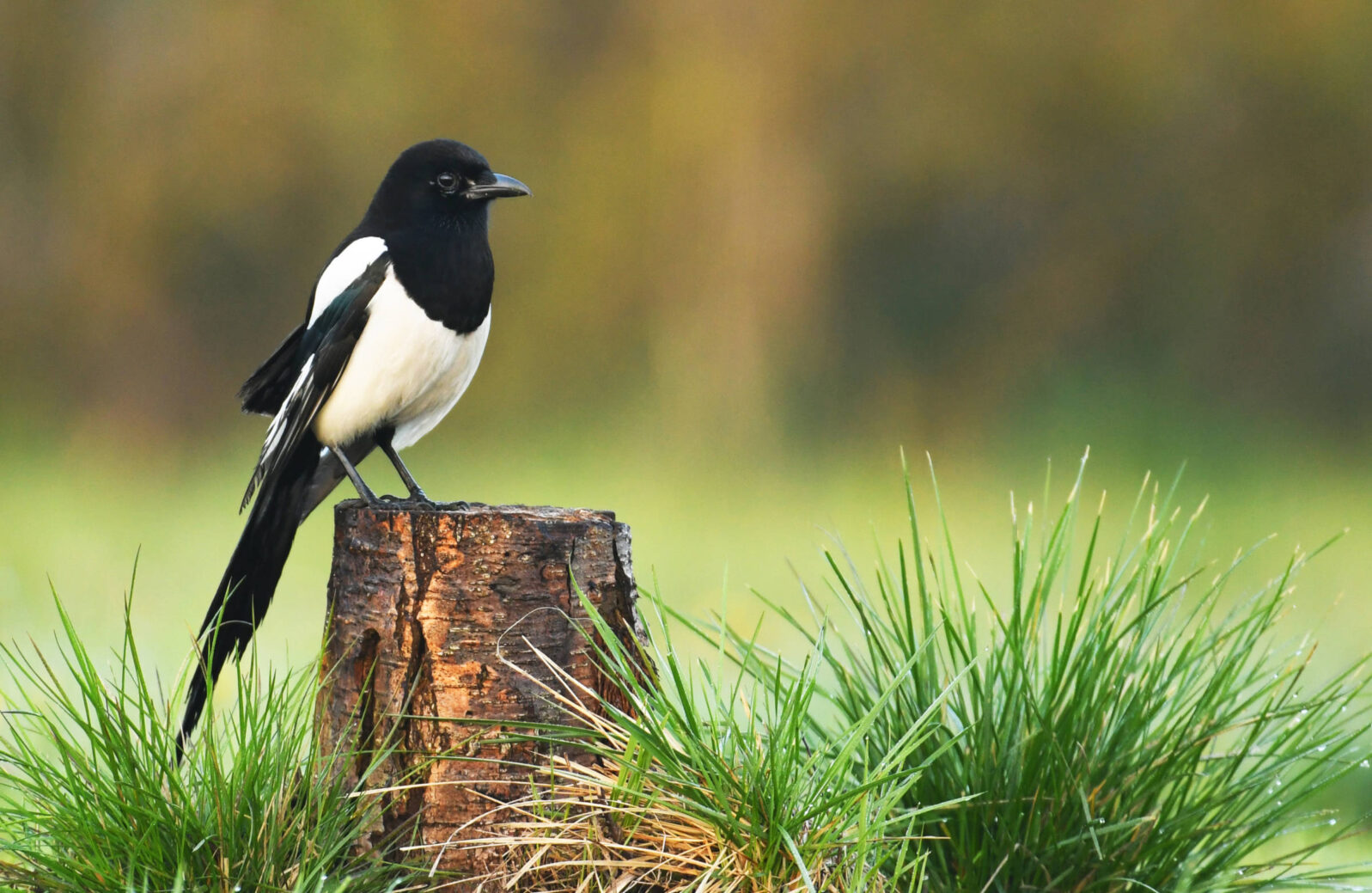 Image Credit: kwasny221 -
 The upgrades needed are modest, he insists. Just ten thousand more pigeons, 500 additional woodpeckers, and — his newest innovation — a squad of trained magpies. The magpies, he explains, are responsible for finishing touches: integrating “found materials” into the builds. Bits of foil, fragments of plastic, lost earrings. “Form meets function meets sparkle,” Avian proclaims, grinning with a bit of a mad smile. It seems like the haunted grin of a man now on the hook not just for construction contracts but philosophical positions.
This time, he promises, the CAMs will build not just birdhouses — but next-generation birdhouses. No one, even the writers at Wired, seem to know what they would be like.
Masquerading a mind
Pavlov’s dogs did not invent new ways to salivate.
CAM 5o never arrives. A devastating critique surfaces from Dr. Ada Wren, the cognitive scientist at NYU. She is a philosopher of mind with little patience for theatrics and less for pseudoscience. In a tightly argued, widely shared paper, she writes:
Design is distinct — and not reducible to iterative elements of execution, for the simple reason that design precedes execution. It must be supplied to the system, in this case in the form of example birdhouses.
Birdhouse variation does not require a theory of mind, but it does require a conceptual leap that no current CAM can make. There is no known bridge from behavioral processes that ensure execution of existing designs to the kind of mind that might conceive a new one prior to building. That mind, quite obviously, resides in the human components of the process: Dr. Avian himself, his graduate students, the Mechanical Turk-ified network of remote trainers and on-the-ground staff.
That we see variation and efficiency is expected: it is inherent in iterative training by example and reinforcement. Pavlov’s dogs did not invent new ways to salivate. The Avian program is not a breakthrough — it is a masquerade. A clever rebranding of a system that depends entirely on human intelligence while claiming to replace it.
What’s missing is the move from induction — extrapolating from examples — to abduction: the imaginative leap where possible designs are envisioned before they are selected for their artistic or functional fit. That leap is where intelligence begins. And there is no evidence that CAM 5o, or any next-generation CAM, will overcome this foundational limitation.
Birds of a feather may flock together — much like Hebbian training — but we are still, unmistakably, in search of mind.
In the end, CAM was never about birds. It was about the belief that complexity begets comprehension, that coordination can stand in for cognition, that scaling is a substitute for soul. But no matter how many pecking pigeons we parade, we remain confronted by the same old mystery: who, or what, imagines the birdhouse in the first place?
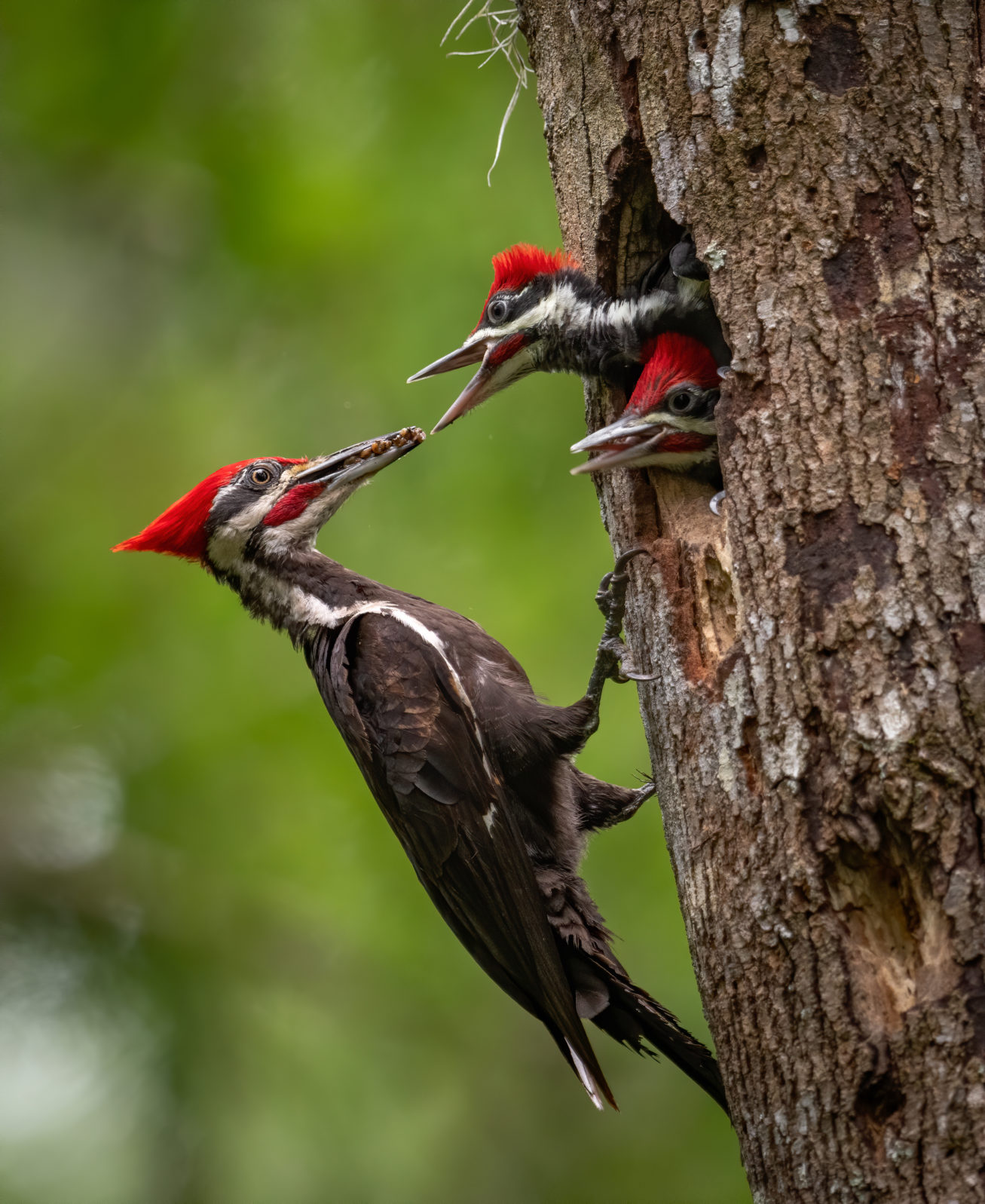 Image Credit: Harry Collins -
 Here are the first two parts of the thought experiment, told as a story:
Part 1: Move over, AI. Bird brains are giving you a run for your money. Could ten thousand birds develop a theory of mind just by scaling? A tale in three parts Dr. Avian was sure that he had found a formula for intelligence without anything like a human mind, and his program appeared to be working.
Part 2: Have the Superbirds arrived? Are they taking over? Dr. Avian now claims that his work with trained birds show that intelligence does not require inner models or internal representations, as formerly thought. Avian is perfectly clear: There is no mind at all in Coordinated Avian Models (CAMs). And yet, they’re behind a staggering number of new designs.
