
Ivy League Schools Are the Worst for Censoring Free Expression
The top five for freedom of expression were state universities, says intellectual freedom watchdog FIRE in its fifth annual report; some schools are improvingGreg Lukianoff, a CEO of FIRE — which advocates free speech at universities — reports based on the organization’s fifth annual survey, that the top five schools for freedom of speech in the United States are all state universities: 1. University of Virginia, 2. Michigan Technological University, 3. Florida State University, 4. Eastern Kentucky, University, and 5. Georgia Institute of Technology.
Only one Ivy League school placed in the top 200 (Yale at 155).
The five bottom schools out of 251: 247 Barnard College; 248 University of Pennsylvania; 249 New York University; 250 Columbia University; and dead last at 251: Harvard University
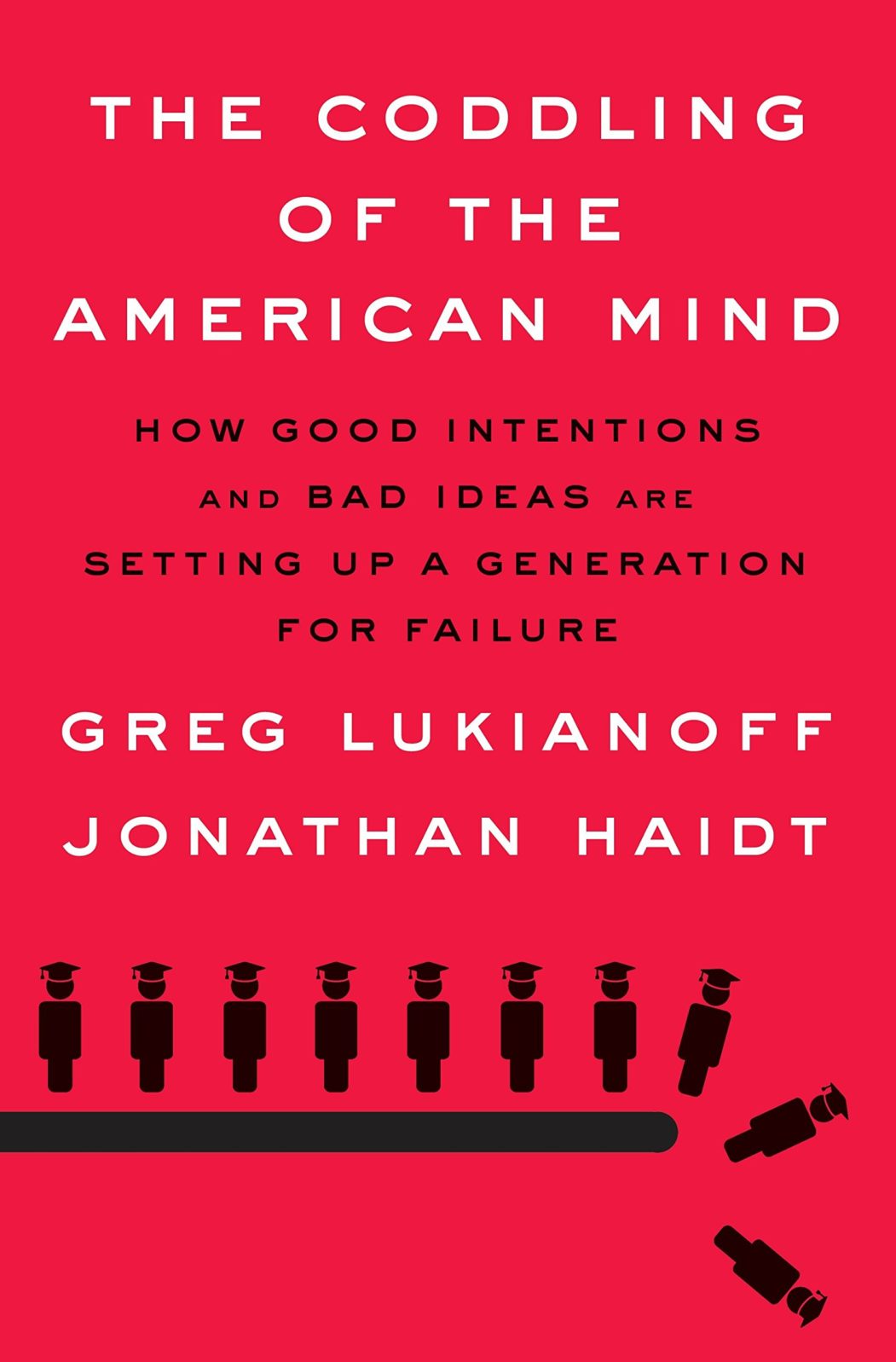
Lukianoff, author with Jonathan Haidt of The Coddling of the American Mind (Penguin 2018), notes,
All of the bottom five schools experienced a number of controversies involving the suppression of free expression. They also received significantly lower scores than the top five schools on “Administrative Support,” “Comfort Expressing Ideas,” and “Tolerance Difference,” which measures the strength of students’ favoritism when it comes to allowing liberal or conservative speakers on campus.
“Five quick takeaways from FIRE’s 2025 College Free Speech Rankings,” The Eternally Radical Idea, September 6, 2024
Some schools, he says, have improved dramatically
These include University of South Carolina and Virginia Commonwealth University:
Last year, the University of South Carolina ranked 246 out of 248 schools, with what we described as a “Very Poor” rating. This year, it’s 34 out of 251. VCU managed to go from 184 to 32. As the report explains:
One reason for their overall improvement is that both schools improved their score on “Comfort Expressing Ideas.” VCU moved from a ranking of 150 to a ranking of 108, and it ranks 18 on “Self-Censorship,” suggesting an improved campus speech climate. The University of South Carolina improved its “Comfort Expressing Ideas” ranking from 160 last year to 100 this year. It also improved considerably on “Administrative Support,” ranking 142 last year and 72 this year.
Lukianoff, 2025 College Free Speech Rankings”
He notes that Dartmouth, Vanderbilt, and Stanford appear to be trying to return to a more intellectual environment, which he hopes will show in the rankings next year.
Here’s the full report.
Why did universities start to become places where challenging ideas were not tolerated?
 Image Credit: freshidea -
 Mental Pivot, an site for budding entrepreneurs, offers book notes to Lukianoff and Haidt’s Coddling
In “The Coddling of the American Mind” by Greg Lukianoff and Jonathan Haidt, the authors dissect three pervasive yet insidious ideas infiltrating college campuses and society at large. These concepts, labeled the “Great Untruths,” subtly influence attitudes and behaviors, contributing to a myriad of individual and societal challenges:
The Untruth of Fragility: This notion, encapsulated by the belief that “What doesn’t kill you makes you weaker,” suggests that individuals are inherently fragile and should be shielded from adversity. However, research indicates that exposure to manageable stressors is crucial for personal growth and resilience…
The Untruth of Emotional Reasoning: This fallacy, advocating the mantra of “always trust your feelings,” elevates emotions above rational discourse. While emotions are essential aspects of human experience, decision-making based solely on feelings can lead to irrational behavior and hinder critical thinking…
The Untruth of Us vs. Them: This divisive narrative, characterized by the belief that “life is a battle between good people and evil people,” fosters tribalism and ideological polarization. Such thinking oversimplifies complex issues and hampers constructive dialogue.
Key Summary, February 26, 2024
It’s not hard to see how these ideas, widespread in our culture, would cause many young people to see intellectual challenges as threats — which, ironically, is the exact opposite of the mindset that universities are supposed to encourage. However, a decade-long decline in university enrolments (with worse to come) may leave some schools wondering whether recovering robust intellectual values might be part of a plan to secure their future.
You may also wish to read: Stanford’s academic freedom conference slammed by academics Opponents are angered by the fact that, although the conference will be live-streamed, it is by invitation only and no media are allowed. The choice to exclude mainstream media (MSM) is a sign of the times. There is no longer good reason to think that they necessarily support intellectual freedom.
