One Step Beyond: Two Cats Defy Mere Instincts
The kitten screamed. The queen stayed calm. Why?I’m so busted. The academic article, “Emotion regulation, procrastination, and watching cat videos online” (2015), found out my vice. Yes, I watch cat videos! But one video caught my eye because it triggers our frequent topic: The mind. In this case, the mind of a cat.
Basic online research uncovers our current knowledge about many cat behaviors considered “instincts”: Hunting, feeding, play, scratching, scent marking, territoriality, grooming, elimination, body language, fear/defense, social bonding, reproduction, maternal protection, climbing, hiding, perching, and stress responses.
Considering these facts, suppose a female cat (a “queen”), who has previously had kittens, comes across a stray kitten both terrified and raging defensive. How would the queen react instinctually? Fear? Defensive behavior? Territory protection? Various stress responses?
Watch this short video and see what happened in one case.
Several hours of research found no expert even hinting any behavior like this queen displayed toward the hostile kitten. If cats operate solely by instinct, this queen has a lot of explaining to do. I found no indication that any adult cat would:
🐱See and smell a stranger cat up close and not care.
🐱See and hear a stranger cat screeching up close and not care.
🐱See and feel the angry stranger cat’s standard instinctual body language and open clawed hits and scratches, ignore all of that, and move in to lie down quietly in a half-enclosed space next to the screeching stranger cat.
The Queen Chooses Compassion Overcoming Instincts
Known instincts aren’t happening here. The queen seems to want to calm this little scared screeching invader kitten down. Not once does she strike back or even meaningfully block any blows or scratches. She moves slowly, deliberately placing her body so that she doesn’t threaten the kitten. She risks a volley of scratches and bites. She half closes her eyes, Zen-like, at peace. She seems to know the kitten soon will understand she poses no threat.
And the kitten, too, doesn’t follow the known instincts. Facing this huge potentially dangerous stranger cat enemy, he screeches, arches, jumps in any direction to find the best defensive posture, and repeatedly smites the queen with razor sharp claws. But he finds the queen sacrificing her safety for peace. She exudes maternal patience and understanding of the kitten. She isn’t intimidated, she’s accommodating.
What’s the feline word for wow?! The kitten finally seems to realize he is not only safe, he is actually in the safest place in his life. He quiets down and cuddles up with his once-feared life-or-death enemy. Loved at last.
Love Neither Mechanical, Accidental, Nor Taught
Some experts say animal behavior is either “innate” or “acquired” by a learning process. As the queen’s behavior doesn’t match the known instincts, did the queen somehow learn what she did? If cats operate on instincts, no cat instinctively taught the queen this non-instinctual conduct. Likewise, the queen did not observe and imitate this behavior.
Current theories say animal behavior is merely the firing of neurons in brains. Even if so, the queen’s pattern of neurons firing must have come from a purpose and plan to cause physical actions, including the foresight to expect a kitten’s series of reactions and a final outcome. Evolutionary theories of behavior wouldn’t work because there is no reason to think this queen’s actions came from a history of millions of generations of other queens doing the same and passing down genes for that counter-instinctual behavior.
Somebody must explain how any of this is “instinctual,” that these cats have no minds or personalities or emotional intelligence. What sequence of lucky accidents of evolution gives rise to behavior unpredicted by instincts?
This video challenges accepted wisdom. The kitten’s fierce resistance followed by peaceful comfort should not happen, at least not according to common knowledge. Experts often warn that two cats in the same home may fight so persistently that you have to first separate them: Keep incompatible cats in different rooms for several days or weeks, with separate beds, bowls, and litter boxes, then reintroduce them gradually over several more days or weeks.
This queen and terrified kitten didn’t get the memo.
Feline Mind Beyond Brute Instinct?
From decades of research we know that human consciousness, much of the mind, is independent of the physical brain. Serious thinkers have concluded mammals such as cats may well have minds that go beyond mere instinct.
Thomas Aquinas, drawing from Greek philosophers, thought that higher animals have souls that are limited to sensing and reacting to sensations, while having no intellect to think about abstractions. Thinkers from the Enlightenment held a variety of views, with atheist David Hume notably declaring: “No truth appears to me more evident, than that beasts are endowed with thought and reason as well as men.” C.S. Lewis supposed that some animals may well have a limited sense of self and indeed “certain animals may have an immortality” through their masters, although don’t have independent immortal souls as humans do. (The Problem of Pain, Ch. 9)
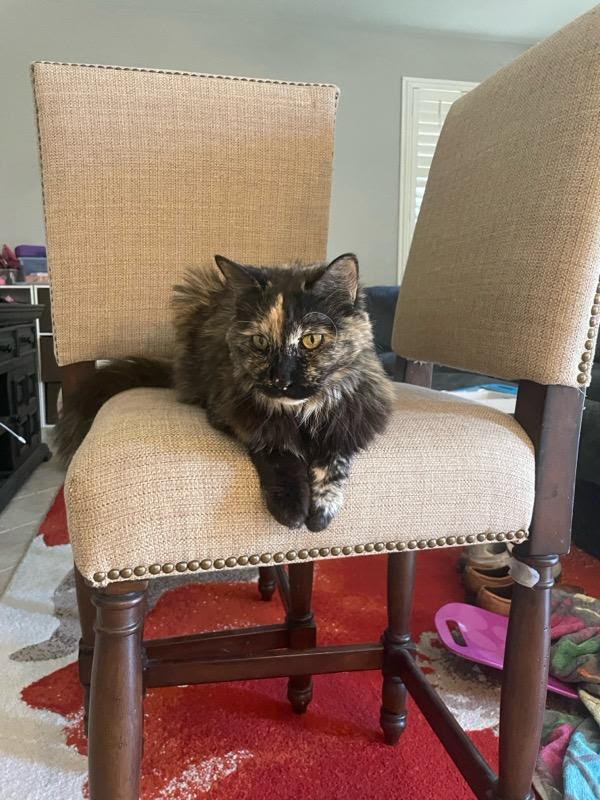 Image courtesy of Denyse O'Leary
Set the philosophers aside and watch the video again. To human observers, the queen had a purpose to calm the kitten. She had a plan to be as peaceful as possible, avoiding claw strikes in the face or eyes, but placing herself next to the kitten. She somehow expected her actions would succeed. And they did, with even the kitten changing mood entirely and snuggling the queen. Those kitties have minds of some kind, something above instinct-driven machinery.
I haven’t seen anyone show where behavior software is coded and stored in animals; there’s nothing to randomly mutate and naturally select. Some animal behavior defies a purely mechanical explanation. As humans have an immortal mind, might some animals have such a mind beyond biology, too? Countless cat and dog lovers say yes. Love going beyond instinct points to minds beyond matter.
(In memoriam: Sundance, 2012-2026)
