Six Theories of Consciousness
Everybody talks about AI becoming conscious, but no one ever defines what consciousness is.Below is a brief synopsis of six different models of consciousness. The first four are totally based on naturalism and basically assume we are computers made of meat interacting with the world.
Panpsychism is the view that some form of consciousness exists everywhere in nature. It says that even the smallest parts of the universe, like particles, have very simple mental properties, not just human beings or animals. Just like mass, shape, magnetism, and electrical conductivity, all objects are blessed with a little bit of consciousness. In this theory, even though I have had no conversation with them, my coffee cup and belt buckle both are conscious to a degree. One out of ten neuroscientists think this idea might help explain consciousness. The other nine think the one neuroscientist is just being silly.[i]
Emergentism says that consciousness is not something basic in nature but instead shows up when a physical system becomes complex enough. As the brain – or a computer – gains more organized connections and processing power, subjective awareness is thought to emerge, similar to how wetness appears when many water molecules come together. In short, if a system becomes sufficiently complex in the right way, consciousness will eventually arise. Integrated Information Theory (IIT) is a mathematically founded emergence model that claims that consciousness is identical to measurable integrated information (Φ). Michael Egnor and I recently published a paper critiquing IIT.
Neuroscientific evidence – such as the lack of precise brain localization for intellect and will, and observations from split-brain and near-death cases -challenges IIT’s assumption that consciousness is fully explained by brain processes. There are cases where a very large IIT results in a system which is obviously not conscious. (For more details, read our paper. We show that IIT is thoroughly marinated in nonsense.) Those who believe artificial general intelligence will arise from emergentism do so on nonevidential blind faith. There is no evidence that emergentism begets consciousness. George Gilder calls it “rapture of the nerds.”
Sims theory: The simulation (sims) theory of consciousness suggests that our reality -and our conscious experience might be the product of some kind of advanced computational system, like a very sophisticated simulation from some superior simulator being. In this view, the brain may act more like an interface within the simulation rather than the true source of consciousness. Supporters think this idea could help explain puzzling features of perception and the universe. But this just kicks the can down the road. Who gave consciousness and creativity to whoever or whatever is responsible for simulating us? And who simulated our simulator? Turtles all the way down. Surveys suggest that neuroscientists supporting sims theory might have been heavily influenced by viewing films like The Matrix, The Truman Show and the first Muppet movies.1 We wish those who support the sims theory of consciousness a speedy recovery.
Quantum consciousness is the idea that quantum mechanics might play a role in creating conscious experience. One famous version, proposed by Roger Penrose and Stuart Hameroff, suggests that tiny structures in brain cells called microtubules could support quantum effects that contribute to awareness. Supporters think this might help explain things like the unity of consciousness and why the mind seems hard to model with ordinary computation. In The Emperor’s New Mind, Roger Penrose argues that artificial intelligence cannot achieve genuine creativity because computers merely executes algorithms. Human creativity and understanding, he maintained, involves non-algorithmic processes. This led him to ask: where in the physical world might such non-computable processes occur? Penrose proposed that wavefunction collapse in quantum mechanics could provide the needed non-algorithmic element. He suggested this mechanism as a possible physical basis for consciousness.
Penrose’s book was published in 1989. Since then, there has been no serious traction on development of this theory. In fact, many are skeptical because the brain’s warm, noisy environment seems likely to disrupt delicate quantum states.
Idealism is the view that consciousness is the most basic part of reality. Instead of the mind coming from the brain, idealists argue that the physical world exists within or because of consciousness. Therefore the brain is more like an interface or representation inside consciousness rather than the source of it. Idealism suggest that individual minds are expressions of God.
Mind–brain dualism is the view that the mind and the brain are fundamentally different kinds of things. The brain is physical and made of matter, while the mind (including thoughts and consciousness) is nonphysical and cannot be fully explained by brain activity alone. According to dualists, the mind and brain interact closely, but one cannot be reduced to the other. The debate is old, dating back to before Descartes. When discussing the problem, Descartes basically called the mind the soul.
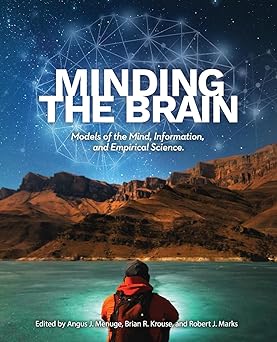
With Angus Menuge and Brian Krouse, I co-edited the book Minding the Brain, which examines the mind–brain question from the perspectives of multiple disciplines, including neuroscience, neurosurgery, psychology, philosophy, computer science, computer engineering, and cognitive science. The book shows that in modern times, there is growing scientific evidence that the mind is not the same thing as a brain. We are not computers made out of meat.
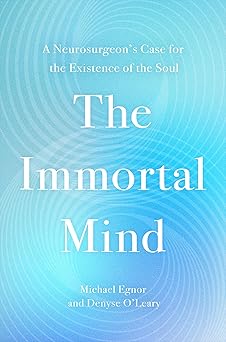
On this same topic, I would highly recommend the book The Immortal Mind by Michael Egnor and Denyse O’Leary.
So there you have it – six different models of consciousness. There may be more, but these are the six that I know of. Notice that the last two – idealism and dualism – are the only models that appeal to non-materialist perspectives. The others rest on naturalistic assumptions, including the often implicit premise that consciousness must ultimately have a material explanation. On a strict naturalist view, we would be biological meat machines interacting with a purely physical world.
We are more than that. We experience love, envy, serenity, frustration, embarrassment, guilt, admiration, resentment, surprise, loneliness, awe, irritation, trust, grief, anticipation, joy, fear, contentment, shame, compassion, anger, hope, jealousy, relief, despair, pride, disgust, amusement, gratitude, sadness, and happiness.
We are creations beyond the materialistic.
We are “fearfully and wonderfully made.”[ii]
[i] I made up these statistics to support my position.
[ii] Psalm 139
