
Philosopher: Memories Are Not “Stored” in the Brain
Memory is a function of time, not place, says Oxford's Victoria TrumbullOxford philosopher Victoria Trumbull weighed in recently on mind–brain issues, arguing that memories cannot be “stored” in the brain. We are accustomed to using that expression but she asks us to consider what we really mean when we say that:

The correlation between brain activity and memory reports doesn’t prove that memories are stored in the brain any more than the correlation between footprints and walking proves that walking is stored in footprints, or the correlation between the piano and a sonata proves that the sonata is stored in the piano.
“It does not make sense to say that we “store” the smell of coffee, the face of our mother, or the sound of a Mozart symphony “in” the brain.
When neuroscientists locate memory “in” the brain, what they’re really finding is that certain brain regions are active during remembering.
Victoria Trumbull, “Memory is not stored in the brain,” IAI.TV, November 17, 2025
The view that memory is “stored” in the brain (localization theory) is mostly an assumption, convenient for neuroscience research. But, she says, the assumption requires overlooking a number of things, including this:
What, then, are memory-images? First of all, it is important to note that the objects of memory are not like the objects of perception. They are neither visible nor tangible. The remembered thing or event is not found in the present, except somehow intangibly “in” the mind, while the perceived object is present physically and externally. Second, memory-images essentially bear the mark of “pastness.” They are attached to the past by their deepest roots, so that we immediately recognize a memory as distinct from a perception and thus know it as “memory.” “Not stored”
It doesn’t help, of course, that much of the research has been done on rats, sea slugs, etc, whose memories are not particularly sophisticated.
Her approach sees memory as a fact of time, not place:
Memory is, essentially, a fact of time—it is the persistence of the past—and, because it is a temporal phenomenon, it is fundamentally extra-spatial. To extend to memories, to a series of moments in time, the obligation of “being contained” in a place is to transfer to a temporal phenomenon a quality which applies only to the collection of material bodies perceived in space. And it is this series of observations which leads us directly to the reality of the mind: because the past overflows the present, memory overflows the brain; and because memory overflows the brain, mind overflows the body. “Not stored”
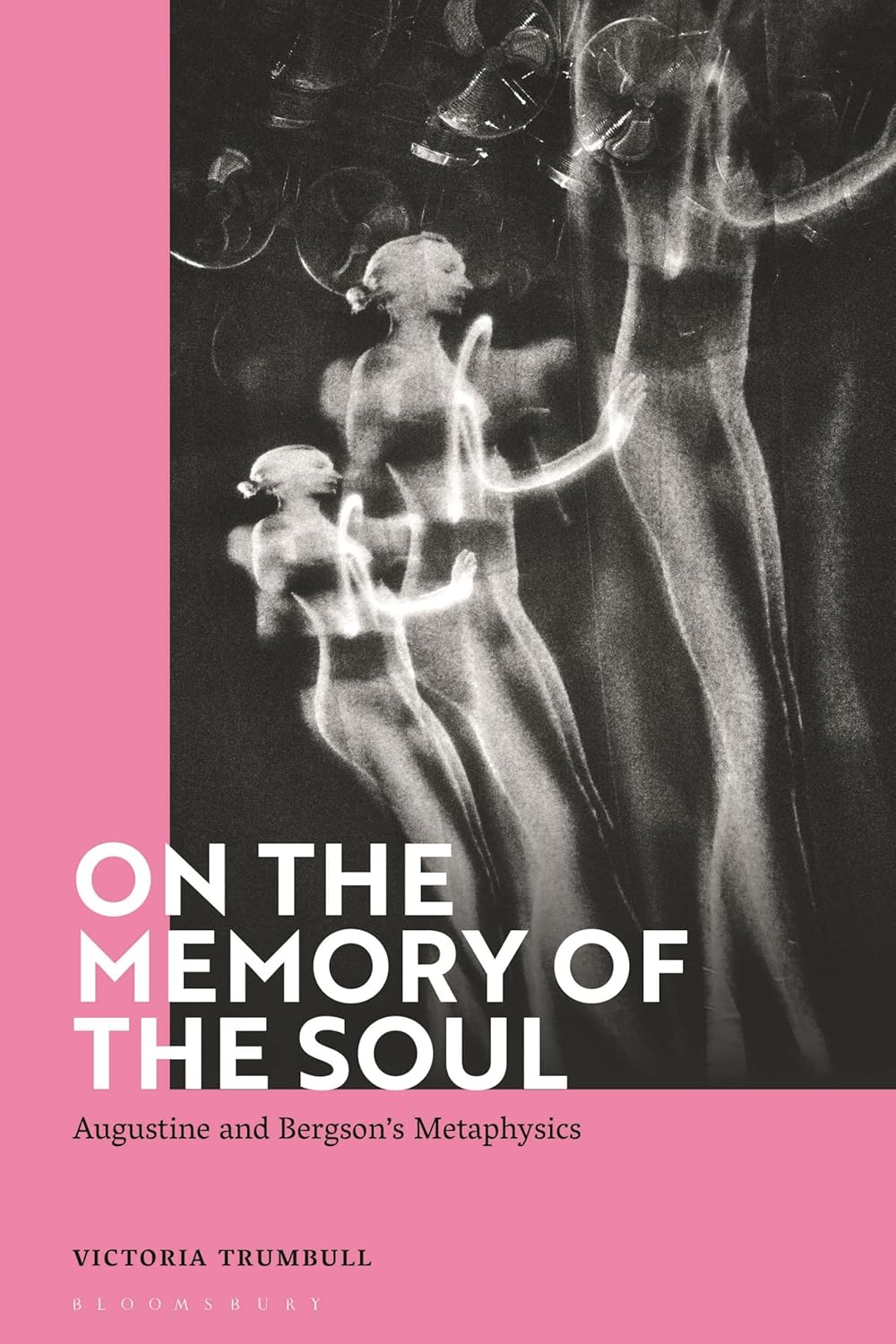 On the Memory of the Soul by Victoria Trumbull
She also notes,
Furthermore, if localization theory were true, and if memory-images are indeed “stored up” as cellular or neural traces, then the impairment of certain brain regions should definitely correspond to the destruction of certain well-defined recollections. But this is precisely not the case. For example, on a timescale varying from weeks to years, many patients who have suffered from a stroke come to recover their once-lost ability to speak and comprehend words. Similarly, certain objects or sound-based triggers can cause patients suffering from Alzheimer’s to suddenly recover memories that were previously lost in obscurity. Perhaps what we find to be impaired by brain lesions is the mechanism required to recall or express certain kinds of memories, rather than a firm and final destruction of the recollections themselves. “Not stored”
Here, she is referring to paradoxical lucidity — and possibly terminal lucidity — little-understood but well-established phenomena where people deemed lost in dementia suddenly begin to remember things.
Trumbull’s forthcoming book, On the Memory of the Soul (Bloomsbury, October 2026), is “a philosophical defence of the traditional assumption that human beings have a soul as their spiritual core.”
Why can’t our memories be “stored” in the brain?
As neurosurgeon Michael Egnor has pointed out here, the image of storing and erasing memories is popular due to computer technology but it is not relevant to how the human mind works:
Readers might ask, “Can’t brain damage ‘delete’ memories?” Certain kinds of brain damage may inhibit my ability to play chess or recognize my grandmother. Brain damage can inhibit all sorts of things. But that doesn’t mean that my “stored” memories have been “deleted” by brain damage in the same way that erasing a hard drive can delete the information stored on it. Storage and deletion are concepts that can be applied meaningfully to the state of electrons on a hard drive but they can’t be applied meaningfully to human memory. There they are just metaphors.
If brain damage interferes with my ability to play chess or recognize my grandmother, it merely means that due to brain damage I no longer know how to play chess or know what my grandmother looks like.
Michael Egnor, “Why Can’t Our Memories Be “Stored” in the Brain?”, Mind Matters News, February 26, 2024
Elsewhere, he notes,
There is no question that proper function of the brain is necessary for ordinary memories — that is, the ordinary acquisition of knowledge and its retention. Yet removal of major parts of the brain — including removal of entire lobes and hemispheres — does not usually remove memories. That should not be surprising if we assume that psychological things like memories are not the kind of things that can be cut out with a scalpel.
Michael Egnor, “Where, Exactly, Is Memory Stored in the Brain?,” Mind Matters News, February 1, 2024
Giving Trumbull the last word here:
If we assume from the start that everything mental must be reducible to something physical, then we close the possibility of understanding the mind on its own terms. We have consigned ourselves to translating the wealth of subjective experience into impoverished neural patterns, only to then realize that this has not helped us to “explain” memory in any meaningful sense of the word. “Not stored”
We’ll have more on her book later.
