
Was the Legendary Jane Goodall (1934–2025) the End of an Era?
Perhaps. A more realistic appraisal of the reality of human uniqueness is needed if we hope to prevent the extinction of chimpanzees in the wildOn October 1, 2025, iconic chimpanzee expert Jane Goodall died of natural causes in Los Angeles, where she had gone to help with the rebuilding after devastating fires.
Early in her career, she was an associate of Louis Leakey (1903-1972) and Mary Leakey (1913–1996), best known for their study of very ancient humans. Through them, she was able to launch her celebrated work with chimpanzees.
Many saw her work as placing chimpanzees on a more equal footing with humans. The tribute piece at Nature by Rachel Fieldhouse and Mohana Basu hints at that:
While studying for her PhD at the University of Cambridge, UK, in the early 1960s, Goodall broke with the scientific convention of using numbers to identify animals, assigning them names instead. She named a male chimp with silver facial hair David Greybeard. This change upset senior scientists at the time, but it is now common practice to use animal names.
“It was criticized as unscientific,” says Mireya Mayor, an anthropologist and primatologist at Florida International University in Miami, “but she proved that science could extend its boundaries without losing rigour.”
Goodall was among the first to show that animals had emotions, empathy and culture, traits that had been reserved for humans, Mayor says. Her research changed how animal studies were conducted, she adds.
Her discoveries in Gombe National Park “redefined humanity”, says Nick Boyle, executive director of Taronga Zoo in Sydney, Australia. Goodall challenged the idea that chimpanzees were herbivores, and showed that they ate meat, hunted and engaged in warfare, he adds. In 1973, Goodall observed a social divide between two chimpanzee communities that led to a four-year conflict and the deaths of all of the male apes in one of the communities.
“Jane Goodall’s legacy: three ways she changed science” October 2, 2025
Wait. Is it really true that no one before Jane Goodall thought that animals had “emotions, empathy and culture”? There is a vast literature on the subject, going back at least to Homer’s legendary weeping horses. Was science just catching up with traditional culture in Goodall’s day? Many traditional cultures knew, of course, that what animals lack is reason, not emotion.
Now, about redefining humanity…
Giving a name to an animal research subject is one thing; “redefining humanity,” as Nick Boyle puts it, is quite another. Much of the reporting on Goodall’s passing is heavily invested in promoting the latter idea. For example, Keith Schneider tells us at the New York Times,
On learning of Dr. Goodall’s documented evidence that humans were not the only creatures capable of making and using tools, Louis Leakey, the paleoanthropologist and Dr. Goodall’s mentor, famously remarked, “Now we must redefine ‘tool,’ redefine ‘man,’ or accept chimpanzees as humans.”
“Jane Goodall, Who Chronicled the Social Lives of Chimps, Dies at 91” October 1, 2025
And what find prompted such a thought?
On July 14, 1960, accompanied by her mother, she arrived at Gombe, and three months later, she watched as the big, handsome adult male chimp she named David Greybeard did something no human had ever expected of an animal.
“He was squatting beside the red earth mound of a termite nest, and as I watched I saw him carefully push a long grass stem down into a hole in the mound,” she wrote. “After a moment he withdrew it and picked something from the end of it with his mouth. It was obvious that he was actually using a grass stem as a tool.” Dies at 91”
So that is all it took to convince Leakey that we perhaps ought to think about accepting chimpanzees as human? Perhaps it was the sort of conclusion that he and many others, would favor.
The sharp line
But can it really be true that no one had ever before observed mammals or birds using objects to accomplish tasks? Historians will, perhaps address some of these issues later.
At AP, we are reminded that Goodall gave a TED talk in 2002 in which she said that “We have found that after all there isn’t a sharp line dividing humans from the rest of the animal kingdom.”
Actually, there is a sharp line and Goodall embodies it. She spent her life researching and writing about chimpanzees; no chimpanzee does anything of the kind with respect to humans. There is a gulf fixed, and they cannot bridge it, neither can we. We can only act in ways that are conducive to their welfare; they will never be able to return the favor.
It is a remarkable cultural blind spot among scientists of her generation that they appear entirely unable to see that.
Are things changing?
At Newsweek, Goodall’s death is described as the “end of an era.” If so, one can be grateful for her work and also hope that a new era will bring a more realistic appraisal of the reality of human uniqueness. Especially if we must make wise — and enforceable — decisions for the long term survival of chimpanzees as a species.
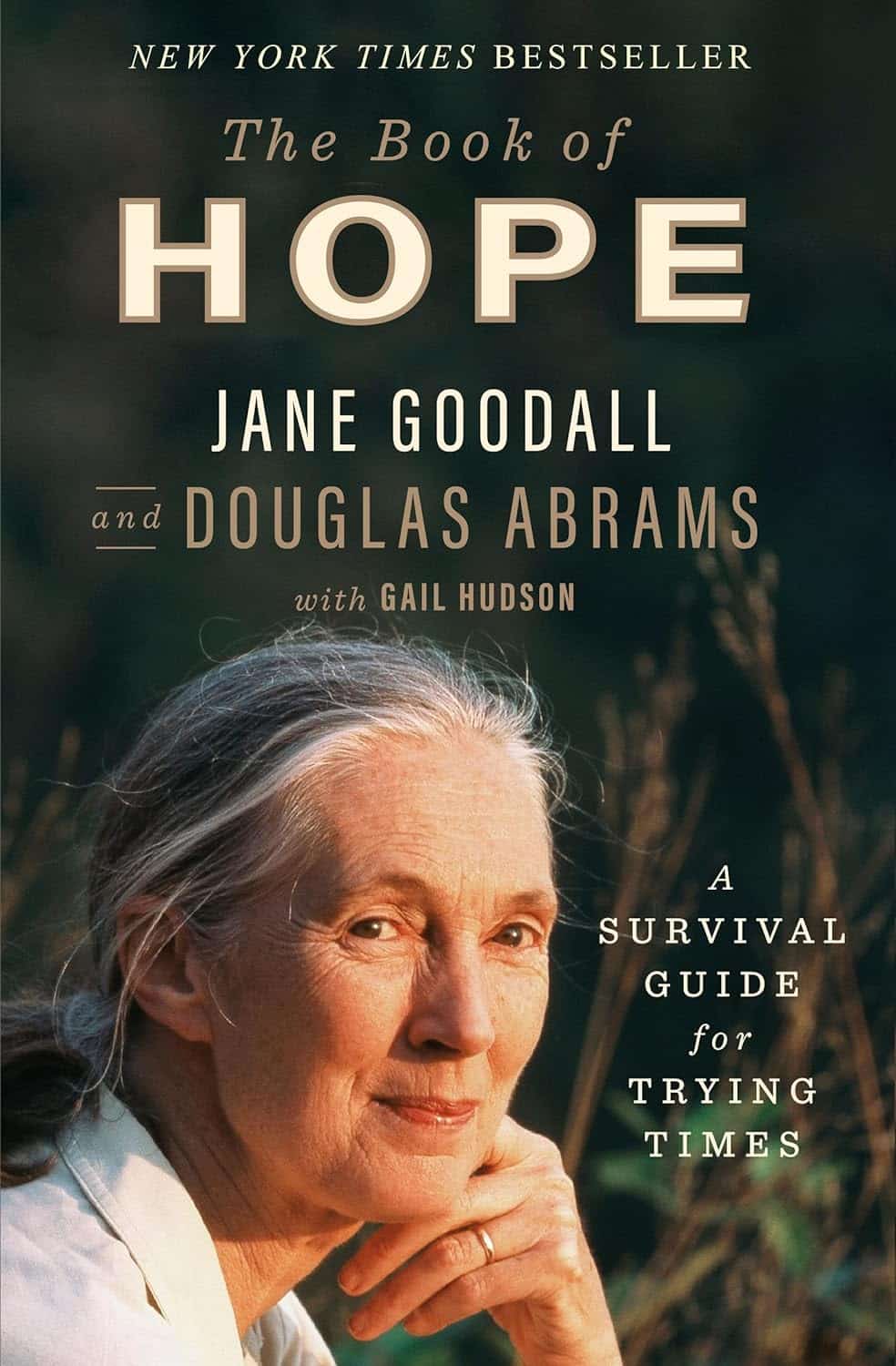
In her later years, Goodall switched from the study of chimpanzees to climate advocacy because she was witnessing the destruction of her chimpanzees’ habitat. Her last book, The Book of Hope (2021), with Douglas Abrams and Gail Hudson, provided a welcome change from traditional doomsaying on the subject. As the publisher noted, she sought to bring hope, not despair, about tackling environment issues. Perhaps that is the best thing she could have done for her beloved chimpanzees.
