
One Reason Why Near-Death Experiences Are Difficult to Study
Philosopher Bernardo Kastrup talks at Closer to Truth about the problem of trying to communicate experiences for which there are no wordsRecently at Closer to Truth, Robert Lawrence Kuhn interviewed Dutch philosopher and computer scientist Bernardo Kastrup on the topic of out-of-body and near-death experiences.
Neurosurgeon Michael Egnor has interviewed Kastrup on related topics here at Mind Matters. Notably, Kastrup has argued that consciousness cannot be just a byproduct of brain processing and cannot have just evolved. He also makes the case that a universal mind is a reasonable idea.
Idealism and near-death experiences
In philosophical terms, Kastrup is an idealist; that means that he thinks that ideas, rather than matter, chiefly underlie reality. Specifically, he is an analytic idealist.
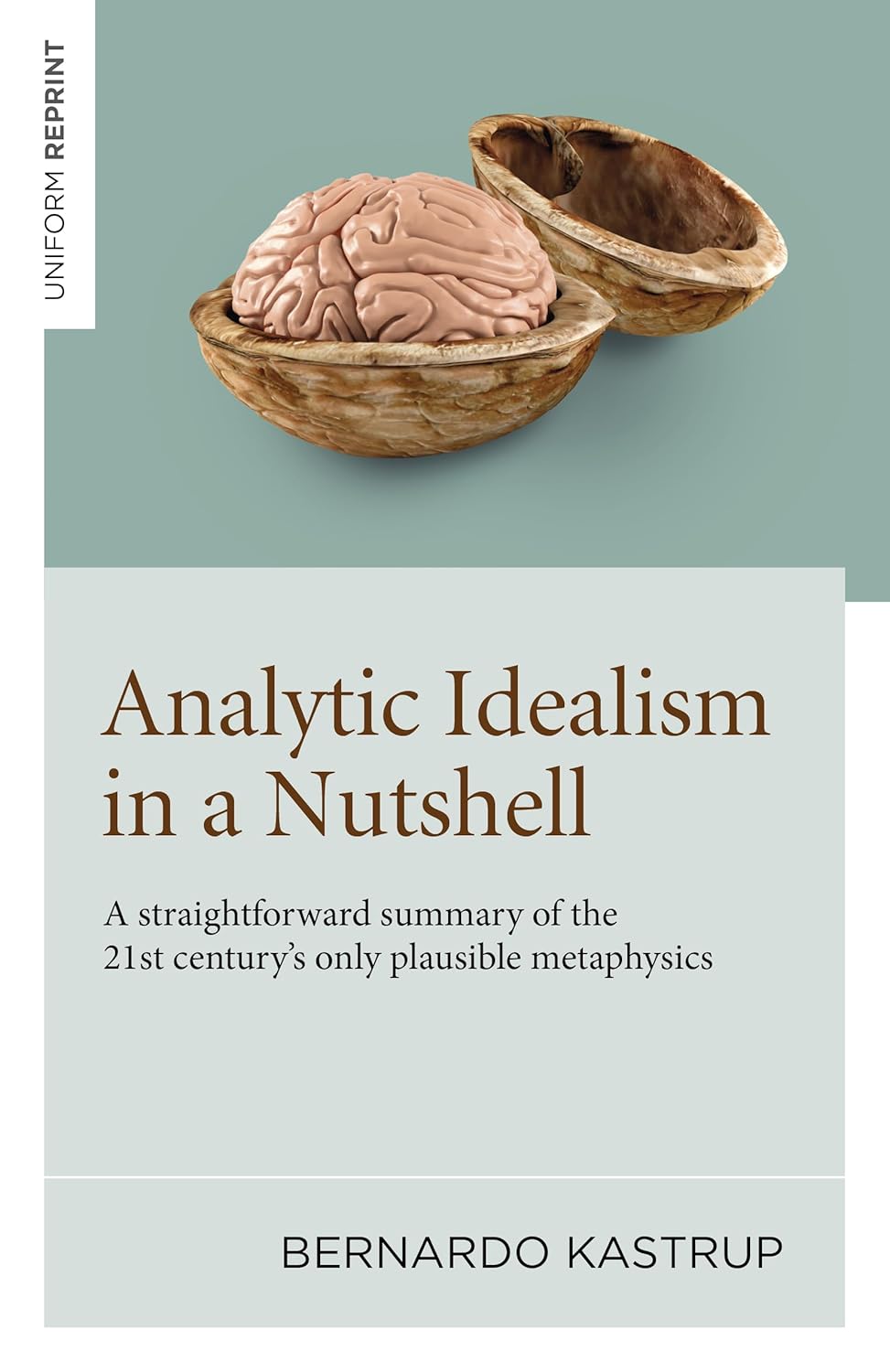
In a recent book, Analytic Idealism in a Nutshell (2024), he unpacks his thesis:
As the failures of physicalism begin to shake the confidence of even the most biased of its supporters, a new view on the nature of reality is establishing itself as the only tenable alternative: Analytic Idealism. According to it, there is a world out there independent of our individual minds, but such world is – just like ourselves – also mental or experiential. While being a realist, naturalist, rationalist, and even reductionist view, Analytic Idealism flips our culture-bound intuitions on their head, revealing that only through understanding our own inner nature can we understand the nature of the world. – From the Publisher
In short, like many thinkers today, he understands that physicalism and eliminative materialism are failing ideas, for an increasingly obvious reason: If our minds are merely the buzz of neurons, how can we establish the truth of anything? And yet we know that there is such a thing as truth vs. falsehood. So physicalism, once very popular, cannot be correct.
Fellow idealist philosopher Joshua Farris — who does not endorse all the directions in which non-Christian idealism leads — emphasizes Kastrup’s importance here at Mind Matters News:
The dividing line between philosophy and science continues to blur, as journalist Amanda Gefter argues in her recent reflection on experimental metaphysics at Quanta Magazine. This is due, in large measure, to the conundrum of conscious human experience. And, she’s right that consciousness, intuition, and experience continue to prompt new questions about the fundamental nature of the world and science.
Computer engineer and philosopher Bernardo Kastrup has been at the forefront of the gradual shift in conventionally accepted understandings of reality.
“Consciousness Blurs the Line Between Philosophy and Science,” December 22, 2024
In his article, Farris cautions: “In contrast to the New Age emphasis on self-realization as an end in itself, the theistic approach, Soul Science [his own view] sees self-awareness as a gateway to understanding our dependence on the divine.”
What words cannot convey
But now let’s look at Kastrup’s approach to near-death experiences (NDEs) in this short CTT video as an instance of dissociation from the body:
Kuhn: But as far as [3:35] near-death experiences, you would not dismiss all of it as, you know, bodily changes, oxygen deprivation or whatever else. So you think there is a possibility that is a kind of insight into the end of the dissociation? Or it’s a hint of that because you’re seeing this broadening kind of absorption back into a greater something?
Kastrup: Yes. And because what you experience [4:01] then is something we don’t have language for. Language that didn’t evolve for non-dissociated states. It evolved for dissociated states, under analytic idealism.
When we tell those experiences, we dress those experiences in the symbolic clothing of our own culture. Then each person may tell the same story in completely different terms, in that effort of interpreting it.
But the underlying themes are clearly common and I do take them seriously. I would prefer that things were simpler. But I’m too empirically committed to just dismiss that. No, I think something is going on there. And luckily, it’s something I can wrap my head around as an idealist.
Surely Kastrup is on to something here. When the mind is dissociated from the body briefly, it may acquire actual knowledge — as in NDEs where the knowledge acquired is later confirmed. But much that the experiencer learns cannot easily be expressed because there are no words for experiences that most people have only after they die.

Thus, a radiant entity may be described as having the attributes of a supernatural being from the experiencer’s native culture. Are those the “correct” attributes for that being?
Perhaps it would be better to say that those are the images one individual could see and understand. No others may be available. No words may be available either, except words developed for use in entirely different circumstances in the everyday world.
Perhaps the fact that no images or words can really describe the experience means that the ones eventually chosen may be best treated as part of a growing database. We can try to use them to gain a better understanding of a world that increasingly looks beyond the physical.
Note: Joshua Farris is the author of Idealism and Christian Theology (2016), co-authored by S. Mark Hamilton.
