Michael Egnor: Atheism as a “Foreign Influence” on Science
On the Ex-Skeptic show, the neurosurgeon — an ex-skeptic himself — discusses his journey with Jana Harmon, who studies atheists who came to believe in GodLate last month, Michael Egnor, first author of The Immortal Mind (Worthy, June 3, 2025), appeared on the Ex-Skeptic podcast, which features “unlikely stories of belief”:
In a story-driven, conversational podcast and a library of videos and testimonies, Jana Harmon interviews former atheists and encourages both skeptics and Christians to consider what motivates thoughtful, intelligent people to move from disbelief to belief.
Dr. Michael Egnor spent decades trusting science to answer life’s deepest questions. As a neurosurgeon and professor, he believed the brain held the key to understanding everything — including who we are. But over time, he encountered things science couldn’t explain: children thriving with missing brain structures, moral truths that couldn’t be reduced to biology, and a growing sense that materialism had serious gaps.
Dr. Egnor shares how philosophical honesty, scientific curiosity, and a surprising moment of divine encounter opened him to a new possibility that God not only exists, but that the Christian story offers the best explanation for the human mind, moral law, and the universe itself.
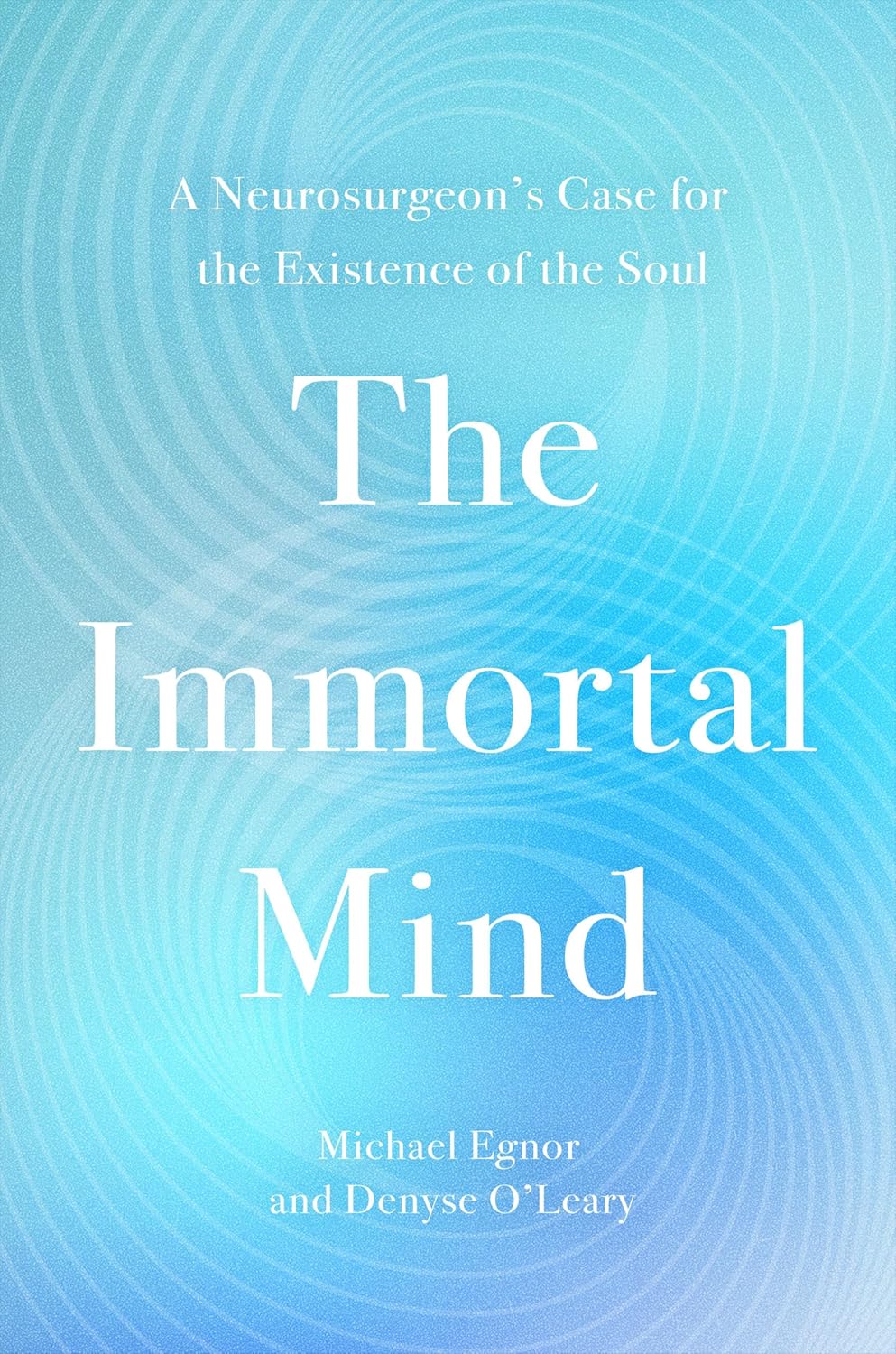 Published by Worthy Books
From the podcast:
Michael Egnor: [28:29] Christianity played an enormous role in the development of science. Isaac Newton (1642–1747 ) wrote more about the book of Daniel than he wrote about mathematics and physics. He was a passionate Christian, a little unorthodox in his own way, but he was passionately Christian.
If you look at the work of James Clerk Maxwell (1831–1879) or Michael Faraday (1791 – 1867) who pioneered the understanding of of electromagnetism. They were passionately Christian. These are these are people their faith was the center of their life. theoretical science, understanding the Big Bang, cosmology, physics, chemistry, that’s almost entirely from the Christian West. So, Christianity is the foundation of science.
Atheism … particularly in the 20th century, has moved into the scientific world and taken over parts of it. So, I see atheism as kind of a foreign influence on science and atheists have basically moved into the scientific profession and tried to get rid of Christians in the scientific profession even though modern science is essentially a product of Christian theology and Christian philosophy.
After all, why would you look for order and structure and purpose in the world if you didn’t believe that it came from a rational mind, from God’s mind. If you think that everything happened for no reason, why would you look for reasons? Why would you look at the natural world that way.
Egnor goes on to say that after he came to faith he wanted to explore the way that God’s mind was instrumental in creating the reality we live in.

How educated people come to doubt atheism
Harmon, a teaching fellow for the C.S. Lewis Institute of Atlanta, is also the author of Atheists Finding God (2023):
Data was collected through both survey and interview of fifty educated, skeptical atheists in the contemporary West who once held belief God and Christianity as implausible, unattractive, and irrelevant. Yet, they became utterly convinced that the Christian faith was true and good, worth personal life commitment.
These former atheists not only experienced a change of their worldview, but also a dramatic transformation of their ‘whole world.’ In-depth narrative analysis revealed the integrated, transformative nature of religious conversion in areas of sense-making, identity, experience, meaning and purpose, community, language, and spirituality. Overall, this book advances the case for using an inclusive, transformational perspective in future description, conception, and modeling for religious conversion of atheists to conservative forms of Christianity. – From the Publisher
Renewal of faith in science venues?
Harmon and Egnor appear to be onto something. At The Times, science editor Ben Spencer reports on a thought-provoking new book, coming out in mid-October in English, by two French authors:

Science and religion have never been easy bedfellows. As Thomas Jefferson put it in 1820, priests “dread the advance of science as witches do the approach of daylight”. Five centuries of scientific breakthroughs — from Galileo to Darwin to Crick and Watson — have eroded our belief in the divine.
But now, according to a new book, a “great reversal” is under way. Science, its authors argue over 580 pages, has come full circle and “forcefully put the question of the existence of a creator God back on the table”.
In a striking challenge to the academic consensus, two French authors, Michel-Yves Bolloré and Olivier Bonnassies, argue that the latest scientific theories lead to only one logical conclusion: an all-powerful deity created the universe and all life within it. “Does God exist? Modern science shows he must, bestseller argues” October 5 2025
More on the book God, the Science, the Evidence — which has sold very well in Europe — later. For now just this: the authors are computer engineer Michel-Yves Bolloré, a lifelong Catholic. and Olivier Bonnassies, a media entrepreneur who came to faith later in life. They emphasized to the Times that they are not so much interested in advancing religion as in dethroning materialism:
Instead, the authors have written a critique of materialism — the theory that all reality, including our origins, thoughts and consciousness, can be explained solely by physical matter and physical processes.
The materialist narrative for the beginnings of the universe and life on earth is so full of holes, he and Bonnassies argue, that every modern scientific advance increases the strength of the case that a “creator” is the only rational explanation. “Bestseller argues”
We do live in interesting times.
