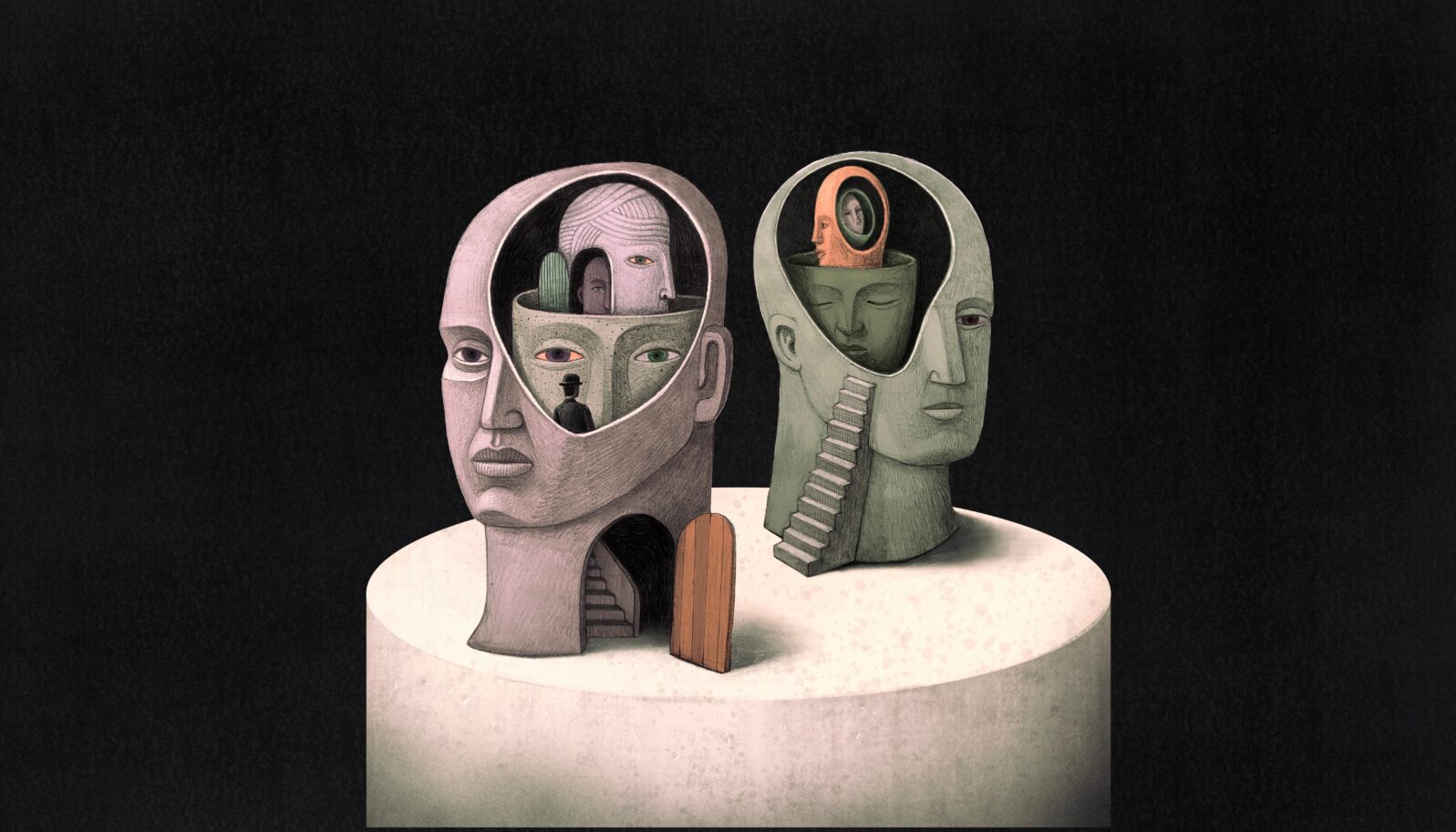
COSM 2025 Panel to Tackle the Hard Problem: Consciousness
Michael Egnor sees the failure to find a “material center of consciousness” in the brain as a science success, not failure. It points to an important truth about usThis year at COSM 2025 in Scottsdale, Arizona, a few hardy souls will tackle the perennial mystery of human consciousness.
At the 7:00 pm dinner on Wednesday evening, Microsoft engineering manager Walter Myers III, computer science professor Robert J. Marks and neurosurgeon Michael Egnor will make the attempt.
The central mystery of human existence
We each sense that we are conscious because that is our basis for knowing anything at all. We infer that the humans we interact with are conscious too. Everything we do that is explicitly human, mysterious or otherwise, depends on it.
But what is consciousness? Trillions of words have been spent on arguing that consciousness can be pinpointed to this or that spot in the brain or that everything is conscious (panpsychism) — or that nothing is. Koch, for example, been searching for a consciousness circuit for a quarter century.
Our panelists have given a lot of thought to the nature of the problem:
Moderator Walter Myers III, for example, offered some thoughts earlier this year on a Mind Matters podcast:
Even if every part of your body were replaced at the atomic level, Myers argues, you would still be you — provided your memories, personality, and experiences continued. But a perfect physical copy or clone would not be the same you, because it would lack your soul, your history, and your continuity of existence.
The conversation turned to science fiction — like the famous Star Trek episode where Captain Kirk is duplicated in a transporter accident. If a copy has all the same memories and physical features, is it the same person?
Myers sees this scenario as highlighting the limits of materialism. Humans, he says, are more than just collections of physical parts or “meat computers.” We are embodied souls. “The Ship of Theseus: The Mystery of Personal Identity,” April 15, 2025
Few Trekkies would likely agree that the clone was Captain Kirk and that they could just discard the original…
A heap of “isms”?
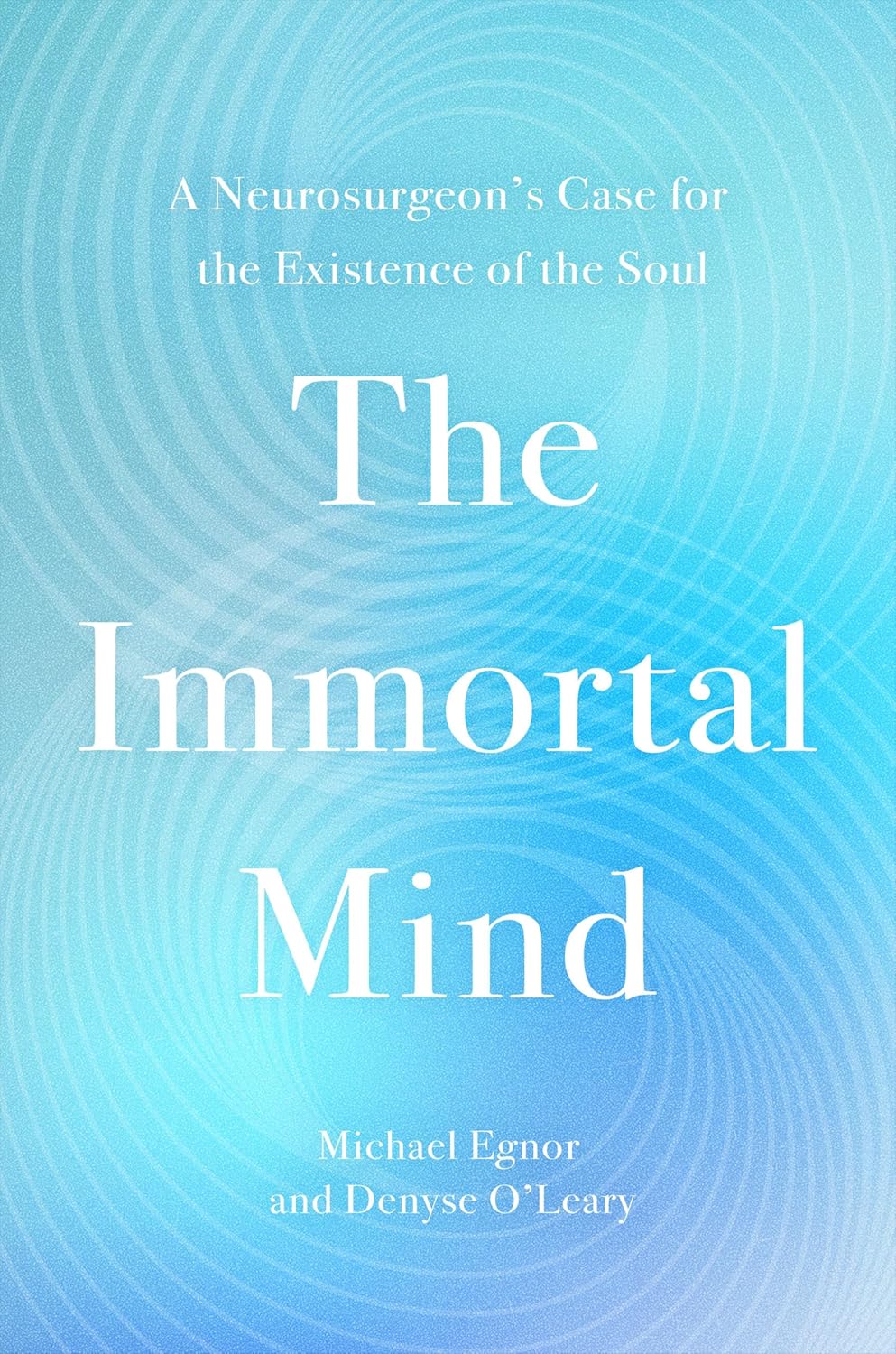 Published by Worthy Books
Michael Egnor, a Professor of Neurosurgery at SUNY Stony Brook, has thought a lot about consciousness too. Seven thousand neurosurgeries and much study of philosophy later, he is struck by one fact: When we try to study consciousness, we are left with a heap of “isms” — behaviorism, mind-brain identity theory, computer functionalism, eliminationism, etc. But they all simply make one or another case for materialism without shedding any genuine light on consciousness.
Thus, he found himself asking, as he writes in The Immortal Mind: (2025),
But why deny the mind, rather than deny materialism? The mind, after all, is hard to explain away. It’s hard to make a case for a belief that there are no beliefs. (p. 152)
And realizing, among other things,
We feel as if we know what consciousness is, but when we try to define it precisely, we flail. Perhaps that is because consciousness is that by which we think, not that which we think. Consciousness is the ability to think, not thinking itself. Consciousness is like contact lenses, which are invisible to us yet enable us to see. Consciousness is the means, not the object, of thought. We can’t know what consciousness is because we see and know everything through it. (p. 166)
But there’s good news for science in all this too:
The failure to find a “material center of consciousness” in the brain should be taken seriously— it’s not a failure of science, it’s a success of science. It’s strong scientific evidence that points to the truth about the human soul. We haven’t found the material center of consciousness in the brain because the human soul isn’t in the brain. Consciousness has no location. The human soul is spiritual. (p. 167)
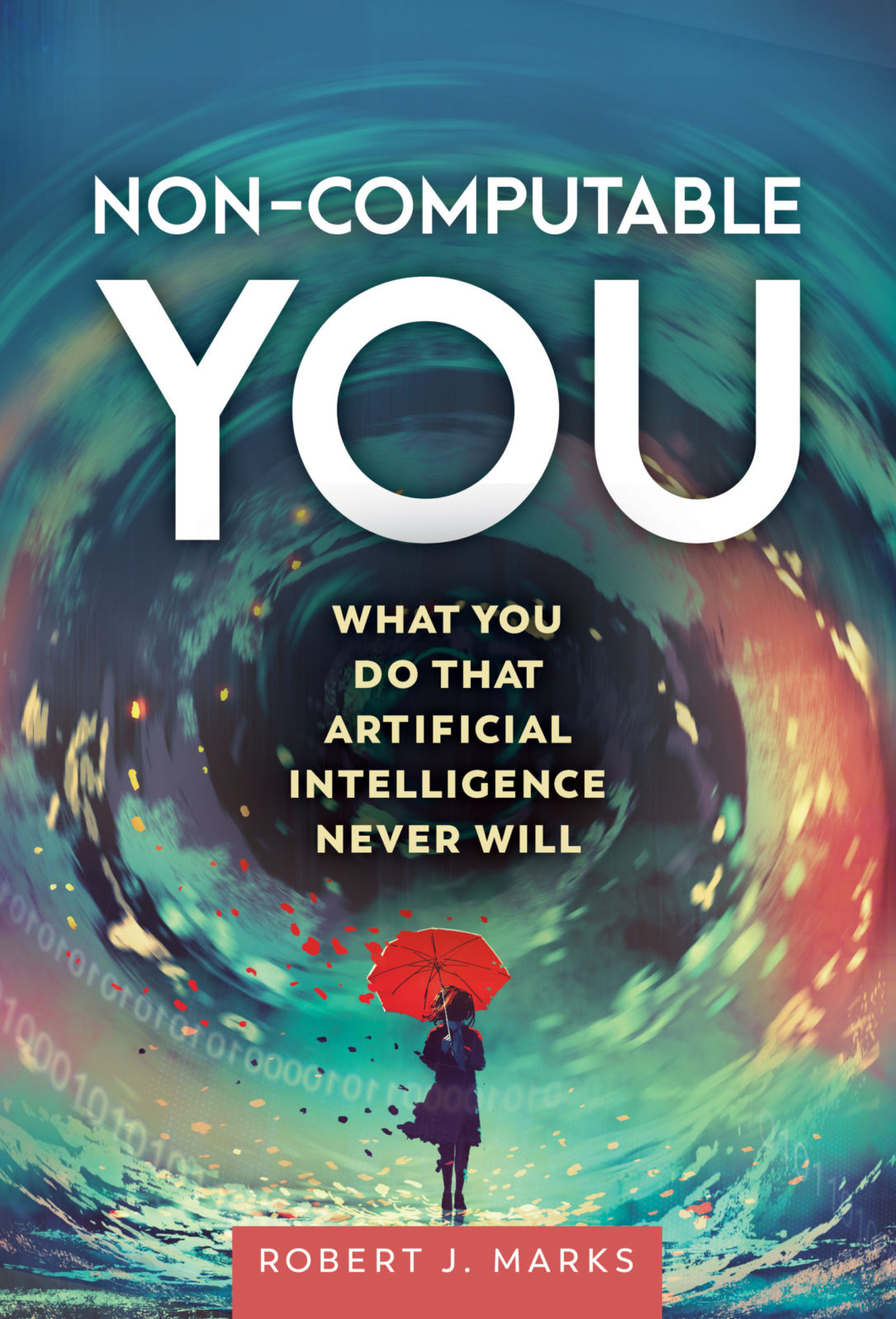 Published by Discovery Institute Press in 2022.
Robert J. Marks, Director, Walter Bradley Center for Natural & Artificial Intelligence, also wrote a book a couple of years ago, Non-Computable You (Discovery Institute Press, 2022) , focusing on the timely topic of the differences between human intelligence and one of his research areas, artificial intelligence. He focuses on the fact that humans think creatively (inventing ideas) but computers think algorithmically (adding 1s and 0s).
Prominent neuroscientist Christof Koch has been invited and we’re still hoping…
One reason the panel would love to be joined by Christof Koch is that he has coincidentally and through no fault of his own made the problems of the study of consciousness famous.
In 2023, he lost a 1998 wager with philosopher of mind David Chalmers that a consciousness circuit would be found in the brain. Later that year — despite the fact that he is the sponsor of one of the leading theories of consciousness, Integrated Information Theory (IIT) — he was the subject of a Cancel letter signed by many leading neuroscientists. They were concerned about the theory’s “panpsychist” leanings and about the possibility that consciousness in preborn humans would make abortion a more awkward problem.
Those cracks are becoming harder to paper over.
So, a philosophical evening? Yes. But dull? No, not a bit of it. Register here.
