
Religious Involvement Generally Predicts Better Mental Health
The signal that rises above the research noise is mostly positive. The question, in most cases, is what it points toIn his “Dissent From Freud” column at Psychology Today, P. Scott Richards offers a summary of forty years of research on the effect of religion on mental health:
In summary, religious involvement predicts lower levels of depression, suicide, anxiety, and substance abuse. It also predicts higher psychological well-being, happiness, purpose, meaning in life, optimism, hope, forgiveness, altruism, gratitude, social support, marital stability, and various types of behavioral health.
“40 Years of Research About Religious Involvement,” August 16, 2025
Richards, who has spent his career studying this area, points especially to the groundbreaking work of psychiatrist Harold Koenig, the moving force behind Duke University’s Center for Spirituality, Theology, and Health since its founding in 1998.
Earlier in the twentieth century, materialism was firmly in control when it came to assessing such things. As Mario Beauregard and I wrote in The Spiritual Brain (HarperOne, 2007),
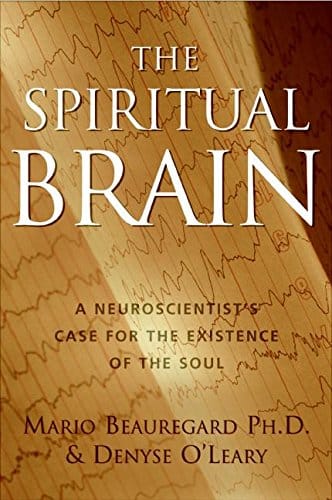
Early in the twentieth century, medicine came down firmly against the idea that the mind influenced the body and sought to trace illness to single, specific sources. Indeed, by the 1930s, the Index Medicus contained not a single reference to the effect of mental states on physiology. However, in the 1940s, “psychosomatic medicine” was introduced to foster better understanding and management of the relationship between mind and body in health. But the tendency to treat the body as a machine and the mind as an irrelevance prevented much advance in this area.
In Timeless Medicine (1996), Benson illustrates how deeply this mechanistic approach affected medicine. A woman who suffered recurrent temporary bouts of numbness and weakness in several body parts was at first dismissed as merely imagining her symptoms. However, a new doctor conducted extensive tests and diagnosed multiple sclerosis, an incurable neurological disease that was disabling her and would eventually kill her. Her response? “Oh, I’m so relieved, I thought it was all in my head.”
Indeed, by the 1960s, materialism was so pervasive in medicine that Benson had a hard time persuading his colleagues that mental stress could contribute to high blood pressure. Mentors warned that he was risking his career when he began to study the physiology of meditation in an effort to understand how the mind influences the body. (pages 233–34)
As Richards notes, Koenig played a very important role in changing the picture by platforming scholarly work on the topic, as opposed to mere opinion.
He also points to a thought-provoking observation that Koenig and his colleagues offer:
… although the strength of the positive relationships between religious involvement and mental, social, and behavioral health can sometimes be strong, they are often moderate or weak. This may be because the impact of religious involvement on some aspects of health might be minimal or nonexistent. They discussed several other reasons why the observed quantitative relationships are not stronger, including measurement limitations, the complexity of religion and mental health, and limitations in the quality of the research studies. “Religious Involvement”
One reason why it’s such a complex topic
The researchers refer to “the complexity of religion and mental health.” Indeed. Involvement with religion is not all of a piece. Some people tell us (and it is probably true) that religion saved them from horrible deaths from drug addiction or alcohol abuse.
For others, especially in highly religious societies, religion is part of a package of social acceptance and advantage. It probably improves the lives of those who live by it — but perhaps that isn’t a spiritual experience so much as a social one. Theirs is quite a different situation from the one the recovering addict experiences.
Then there are people for whom religion offers a profession, a living. They may display levels of sincerity ranging from a charlatan evangelist like Elmer Gantry through to St. Teresa of Calcutta (1910–1997). Averaging the two would produce rubbish data, of course. And, to be sure, the victims of religious charlatans and abusers have their own stories to tell…
But the signal that rises above the noise is mostly positive. The question, in most cases, is what it points to. Koenig and colleagues are confident that improving the quality of research will strengthen the usefulness of the overall database:
Koenig and his colleagues concluded that “Despite the complexity of the religion-health relationship and limitations in many studies that have examined that relationship thus far, the research findings [we have] reported… indicate that religious beliefs-practices often have significant effects on health, usually positive and occasionally negative” (2024, p. 670). They expressed optimism that as measures of religiousness and mental health improve, and as more funding support allows for higher-quality research studies, the findings will show even stronger and more consistent links between religious involvement and various indicators of mental, social, and behavioral health. “Religious Involvement”
Richards’ references are a good starting point for further reading on a fascinating topic.
