The Astonishing Fact That Split Brain Patients Reveal
Perception (what we take in from the world around us) can be split but conception (ideas) are not split. And no one has two mindsIn April, Popular Mechanics ran an article pointing to The Immortal Mind: (2025), a book written by neurosurgeon Michael Egnor and myself. The book was targeted as “damaging.” Specifically,
It’s damaging to go out there and say, ‘I’m a neurosurgeon, and this is the way science works,’ and cherry-pick these distorted examples that may give people the impression that something is true, that isn’t true.
-Neurologist Steven Novella, quoted in Hanna Webster, “This Neurosurgeon Studies the Brain Close to Death. He Believes the Soul Transcends the Body,” Popular Mechanics, April 30, 2026
As a matter of fact, the science is very much on our side in this one so we thought we might take a bit of time to unpack it. We chose a dialogue format, with me asking the questions:
Split opinions on split brains
We started with one of the topics covered in the article — people who have had their brains split as a last-ditch treatment for intractable epilepsy.
From Popular Mechanics:
Egnor opens the book by discussing split-brain patients, who have had a key white matter tract that connects the two hemispheres, called the corpus callosum, cut to stop debilitating seizure activity. “Studies the Brain“
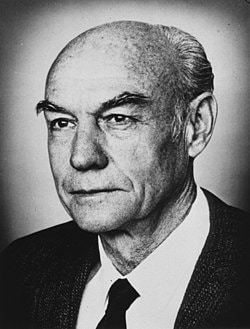
Splitting the human brain in half sounds radical but it has prevented otherwise intractable epileptic seizures from becoming brainwide. Roger Sperry (1913–1994) received the Nobel Prize for discovering the subtle ways that split brain patients were handicapped. He established that the right and left hemispheres do different things. However, generally, the patients live normal lives afterward.
O’Leary: Okay, you had to split a guy’s brain once …
Egnor: In the interview with Popular Mechanics, we discussed, Roger Sperry’s general finding — which is the finding of every single person who’s dealt with split-brain patients — that they are remarkably unsplit in everyday life. That’s just a fact, you see it all the time.
Perception vs. conception
Egnor: The fascinating thing is the dichotomy between the rather radical splitting of perceptual ability — the ability to perceive or notice things — and the almost complete absence of splitting of conceptual ability — the ability to think about concepts, ideas.
The astonishing thing, that I believe was first really noticed by Justine Sergent, has been followed up on by Alice Kronin-Golom at MIT and Yair Pinto in the Netherlands, is that despite the radical perceptual split, there is virtually no conceptual split — even when, for all practical purposes, there’s no part of their brain that has access to all of the information that the concept is dependent upon.
That is, people can still form concepts between the hemispheres, even though they cannot transfer perceptions between the hemispheres.
O’Leary: So clearly, the mind is not simply what the brain does, as often claimed.
Okay, what about the surprising claim made in the article that these people have two minds. “Although these patients still recognize themselves as one entity after surgery, they very much do have two minds, other neuroscientists argue.” I honestly can’t understand what these people are talking about.
Although these patients still recognize themselves as one entity after surgery, they very much do have two minds, other neuroscientists argue. When scientists flash one image to the left eye—which the right hemisphere processes—patients cannot verbalize why they pressed a button of a picture associated with that image, because the right hemisphere has no language capabilities. They will instead justify how the picture relates to the image the other eye saw. “Studies the Brain“
Egnor: That’s all BS. A number of scientists have tried to make that claim, but honestly, nobody who’s thinking deeply about this can sustain that.
First of all, they don’t define what they mean by minds. Let’s say that I’m typing away, and I’m not a very good typist, I make a lot of mistakes. And I go to type an A with my little finger on my left hand, and I hit the S key instead. And that happens to me quite often, actually, so I go back and I correct it.
One aspect of me meant to type an A. But another aspect of me typed an S. Does that mean that I have two minds? No. It just means that I made a mistake.
How many minds can one brain keep track of??
O’Leary: Well, how about this? A third mind recognized the mistake!
Egnor: Well, yeah, right, except there is no third mind, meaning that…
O’Leary: Well, wait a minute, how do we know?
 Image Credit: rolffimages -
 Egnor: Precisely. And you can carry that even further and say that a fourth mind recognizes that the third mind recognizes that a mistake was made. So, it becomes infinite minds.
O’Leary: Sure. Maybe every time you make a mistake, another mind splits off… Just like Everett’s universe.
Egnor: There’s a wonderful book by Maxwell Bennett and P M S Hacker called The Philosophical Basis of Neuroscience, (2003) where they talk about this kind of thing in considerable detail. They have a relatively short chapter on split brain surgery in that book. And they point out that normal human functioning involves the integration of many, many different kinds of perception and many different kinds of conception.
And even in everyday life, we’re not perfectly integrated. We make mistakes. We have Freudian slips, we type the wrong letter, you know, integration is an ongoing project in every human being.
O’Leary: So, summing up, conceptual thinking — ideas — are not split by splitting the brain.
Next: Do people with split brains have little-known back door methods of communication?
