At The Federalist: Science Is “Catching Up” to Philosophy
David Weinberg points out that traditional descriptions of the powers of our souls are remarkably like what modern neuroscience is revealing to us in the twenty-first centuryThis article by David Klinghoffer is republished from Evolution News
Writing at The Federalist, David Weinberg offers a wonderful review of The Immortal Mind, by our colleagues Dr. Michael Egnor and Denyse O’Leary. The book finds “a real distinction between the mind and brain.” Weinberg brings out a point at the end that resonates with me.
An Immaterial Reality
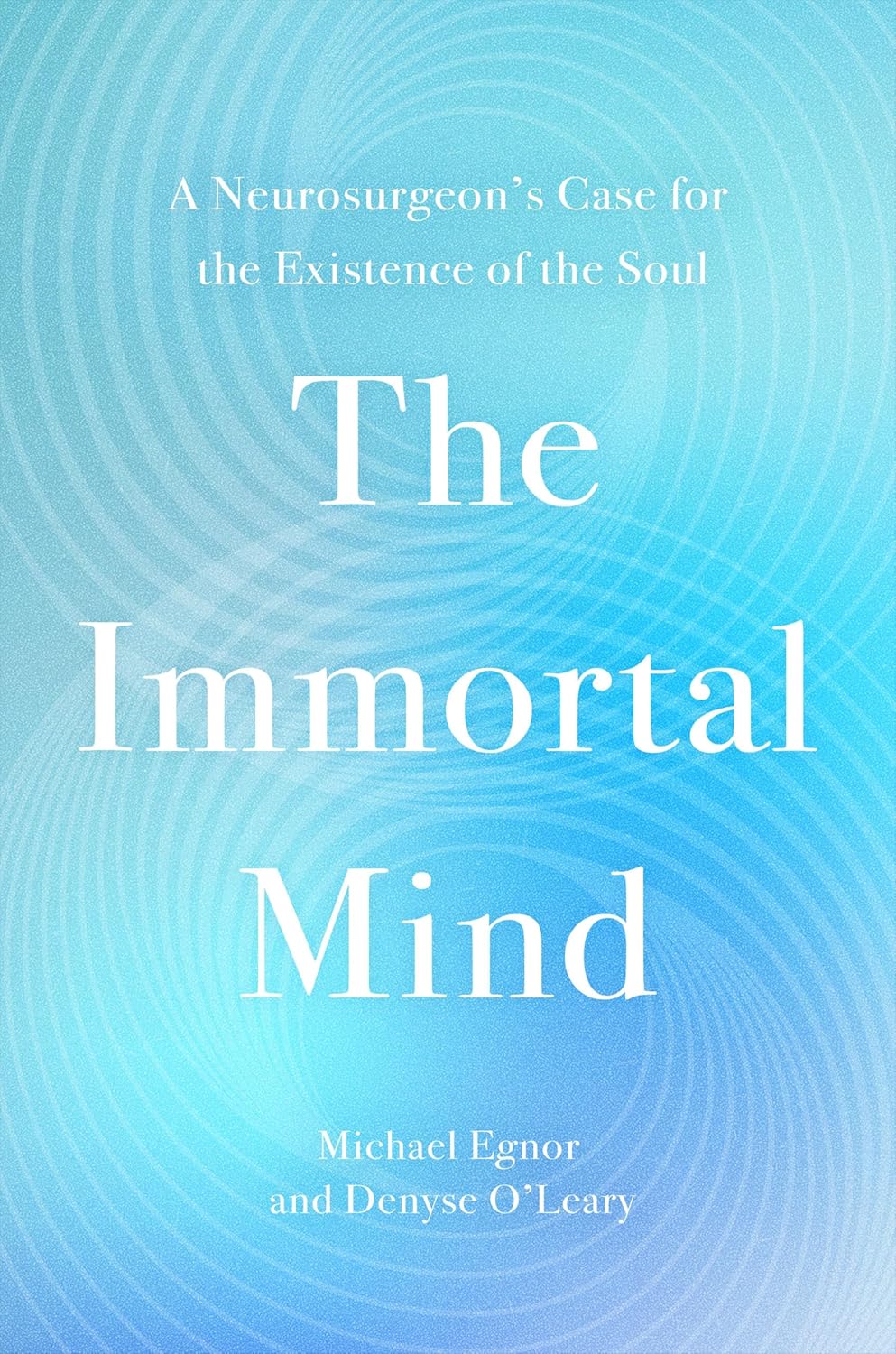 Published by Worthy Books
From, “Neuroscience Offers Surprising Evidence For The Existence Of The Soul“:
Once this distinction is established, … the obvious next question concerns the relationship between the mind and the soul. Is the soul, for instance, identical to the mind, or is it something more? For millennia, philosophers recognized the soul as that which makes something to be alive. In this sense, all living things have souls — plants, animals, and human beings alike. Of course, the souls of living things differ based on their natural powers and capacities. Plants, for example, have the powers of nutrition and growth. Animals, while also having those powers, have more besides, including sensation and locomotion. Human beings, finally, subsume the powers of both plants and animals and in addition possess the capacity for reason and will.
These last two powers of reason and will define the essence of the human soul, and for reasons examined above (and other reasons expounded on even more in the book), they explain the distinction that neuroscience continues to discover between the mind and brain. In this way, modern science is catching up to what ancient philosophy already knew. As Egnor puts it, “[ancient philosophers’] description of the powers of our souls are remarkably like what modern neuroscience is revealing to us in the twenty-first century.”
No doubt, the trend in recent decades has assumed that science reveals us to be nothing more than bones, muscles and connective tissue. The truth, however, is that we are much more than that, and The Immortal Mind is a welcome corrective to this profoundly impoverished belief. [Emphasis added.]
An “Unseen Order”
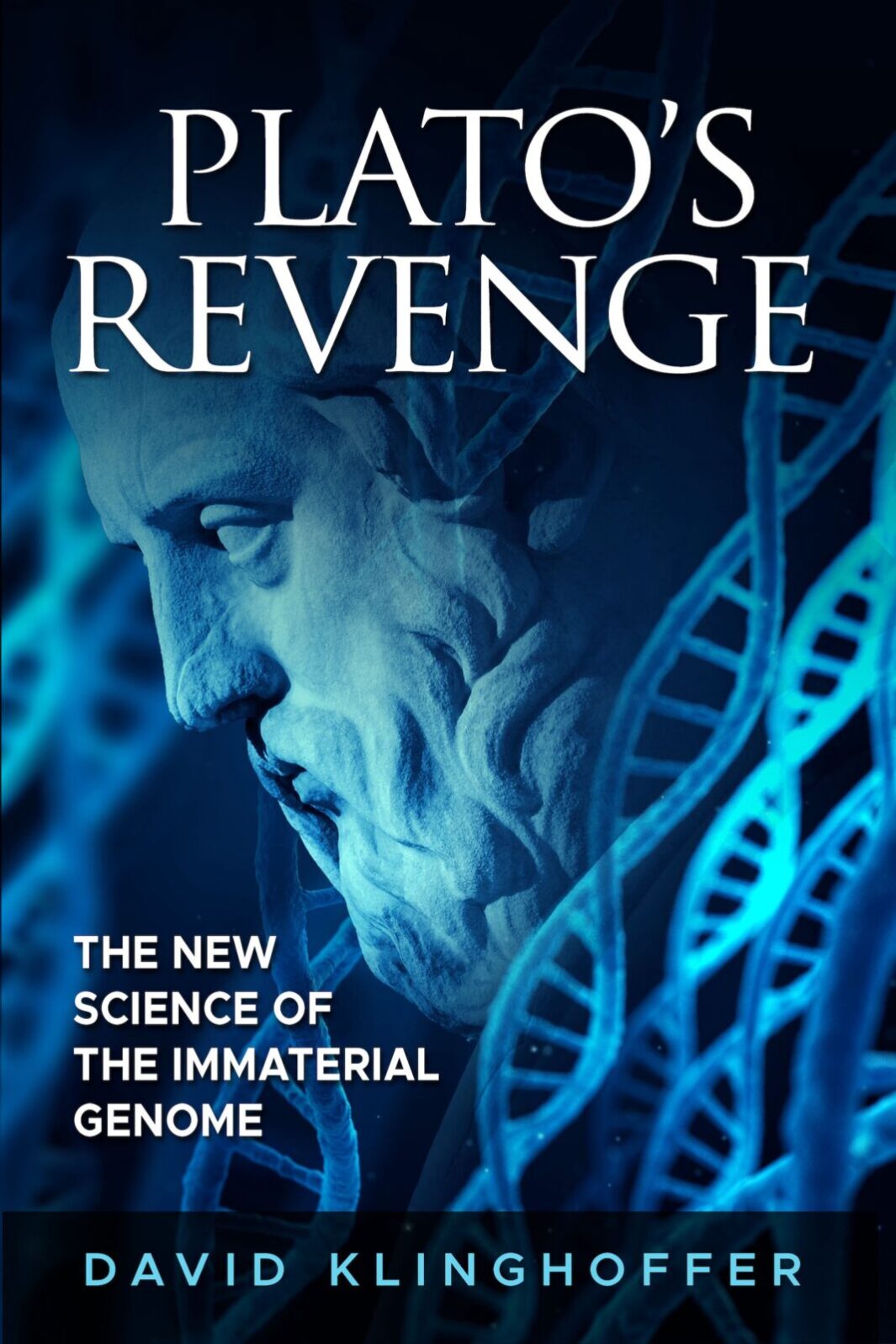
The idea that philosophers of the ancient and medieval worlds had thought their way to conclusions that science is confirming, with its own tools, only now is also the theme of Plato’s Revenge: The New Science of the Immaterial Genome. In two different areas of research — the nature of the mind, and the nature of genome — science points us to the existence of an immaterial reality, what William James called an “unseen realm,” an “unseen order.”
“First there was the genetic revolution — the discovery that physical structures in the cell, including DNA and RNA, shape every organism. Now, says evolutionary biologist Richard Sternberg, we are overdue for another and more profound revolution. Recent findings reveal that genetic and even epigenetic sources alone cannot account for the rich dynamism of life — not even close. Some other informational source is required.
The idea was anticipated 2,400 years ago in Plato’s Timaeus, and periodically revisited in the ensuing centuries. Sidelined by scientific materialism, it is now reasserting itself on the strength of cutting-edge molecular biology, higher mathematics, and commonsense reasoning. In Plato’s Revenge, science writer David Klinghoffer takes Sternberg’s profound explorations and weaves them into a lively and accessible account of a most remarkable realization: At every moment, we owe our lives to a genome that is more than matter, and to an informational source that is immaterial, transcomputational, and beyond space and time.” – From the Publisher
