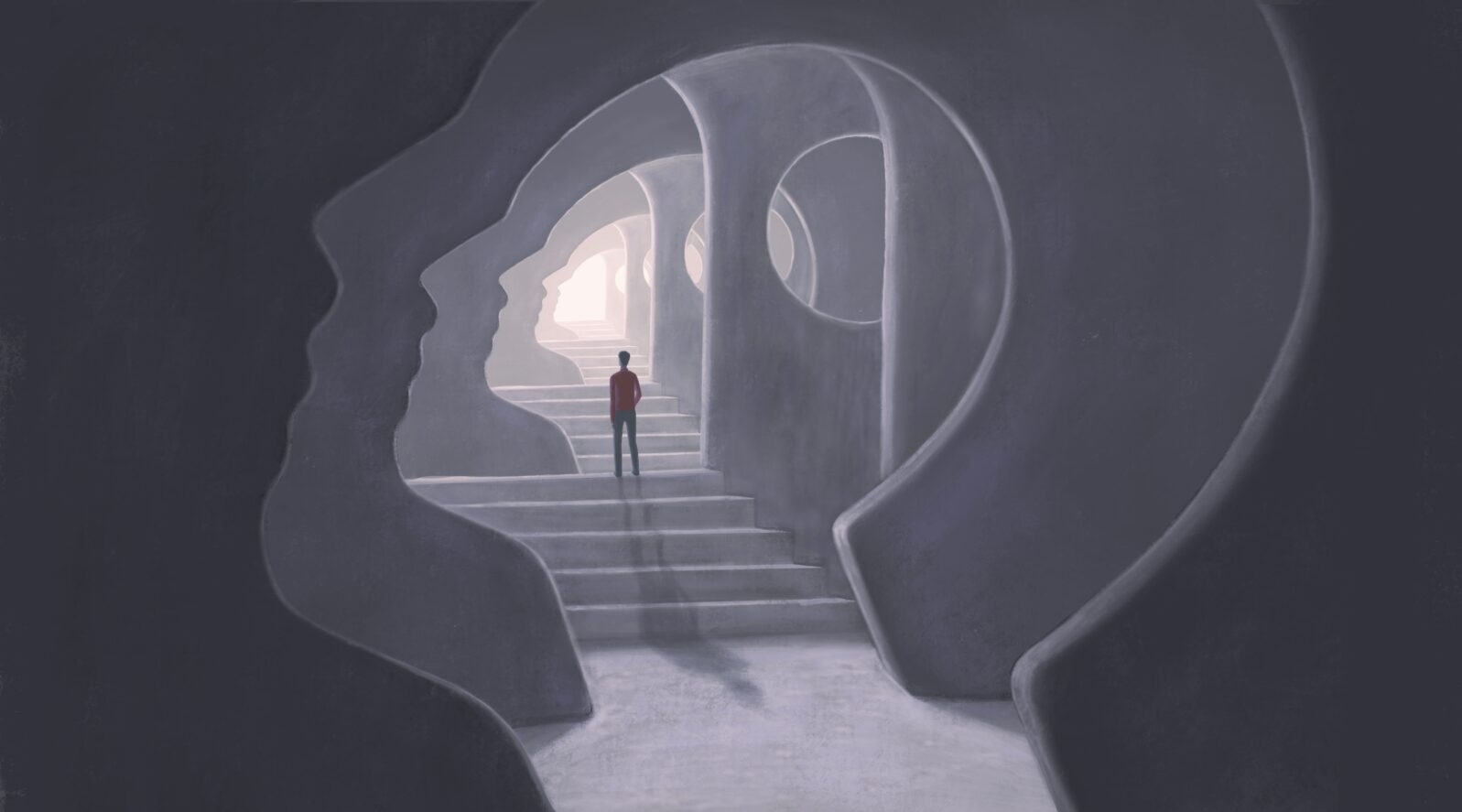
An Ancient Argument for the Existence of the Human Soul
Sixteen hundred years ago, Augustine tells a friend about a dream a skeptical local doctor had, where a sharp youth asked him some pointed questionsAugustine (354–430 AD) was a very important Christian thinker who lived in North Africa during the last days of the Roman Empire. Britannica describes him as “perhaps the most significant Christian thinker after St. Paul” because he adapted the work of classical philosophers, principally Plato (c. 427–348 BC), to Christian teaching.
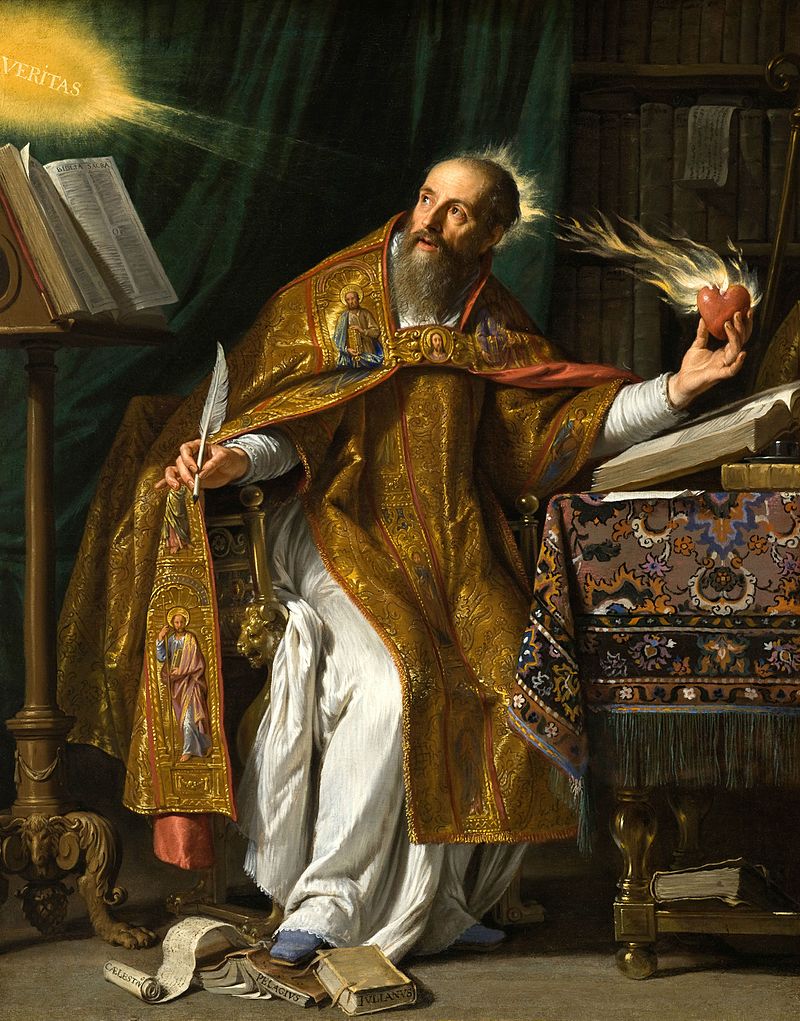
Museum of Art: online database: entry 171584,
Public Domain
It was an age of much religious controversy and Augustine — a convert who became a priest and later a bishop — addressed many of the disputes in his books and letters.
One issue that arose was whether the human soul could be immortal, as most people believed. How could anything like a human mind function without a body? A Christian physician in Carthage expressed such doubts, and Augustine records in a letter sent to a fellow priest how they were resolved:
An excerpt from the Letter 159 (A.D. 415) by Augustine to Evodius, My Lord Most Blessed, My: Venerable and Beloved Brother and Partner in the Priestly Office, and to the Brethren Who are with Him, Augustine and the Brethren Who are with Him Send Greeting in the Lord. – New Advent
You know our brother Gennadius, a physician, known to almost every one, and very dear to us, who now lives at Carthage, and was in other years eminent as a medical practitioner at Rome.
You know him as a man of religious character and of very great benevolence, actively compassionate and promptly liberal in his care of the poor.
Nevertheless, even he, when still a young man, and most zealous in these charitable acts, had sometimes, as he himself told me, doubts as to whether there was any life after death.
Forasmuch, therefore, as God would in no wise forsake a man so merciful in his disposition and conduct, there appeared to him in sleep a youth of remarkable appearance and commanding presence, who said to him: Follow me.
Following him, he came to a city where he began to hear on the right hand sounds of a melody so exquisitely sweet as to surpass anything he had ever heard. When he inquired what it was, his guide said: It is the hymn of the blessed and the holy. What he reported himself to have seen on the left hand escapes my remembrance. He awoke; the dream vanished, and he thought of it as only a dream.
On a second night, however, the same youth appeared to Gennadius, and asked whether he recognised him, to which he replied that he knew him well, without the slightest uncertainty.
Thereupon he asked Gennadius where he had become acquainted with him. There also his memory failed him, not as to the proper reply: he narrated the whole vision, and the hymns of the saints which, under his guidance, he had been taken to hear, with all the readiness natural to recollection of some very recent experience.
On this the youth inquired whether it was in sleep or when awake that he had seen what he had just narrated. Gennadius answered: In sleep.
The youth then said: You remember it well; it is true that you saw these things in sleep, but I would have you know that even now you are seeing in sleep.
Hearing this, Gennadius was persuaded of its truth, and in his reply declared that he believed it.
Then his teacher went on to say: Where is your body now? He answered: In my bed.
Do you know, said the youth, that the eyes in this body of yours are now bound and closed, and at rest, and that with these eyes you are seeing nothing? He answered: I know it. What, then, said the youth, are the eyes with which you see me?
He, unable to discover what to answer to this, was silent.
While he hesitated, the youth unfolded to him what he was endeavoring to teach him by these questions, and immediately said: As while you are asleep and lying on your bed these eyes of your body are now unemployed and doing nothing, and yet you have eyes with which you behold me, and enjoy this vision, so, after your death, while your bodily eyes shall be wholly inactive, there shall be in you a life by which you shall still live, and a faculty of perception by which you shall still perceive. Beware, therefore, after this of harbouring doubts as to whether the life of man shall continue after death.
This believer says that by this means all doubts as to this matter were removed from him. By whom was he taught this but by the merciful, providential care of God?
Classical — and modern — philosophy
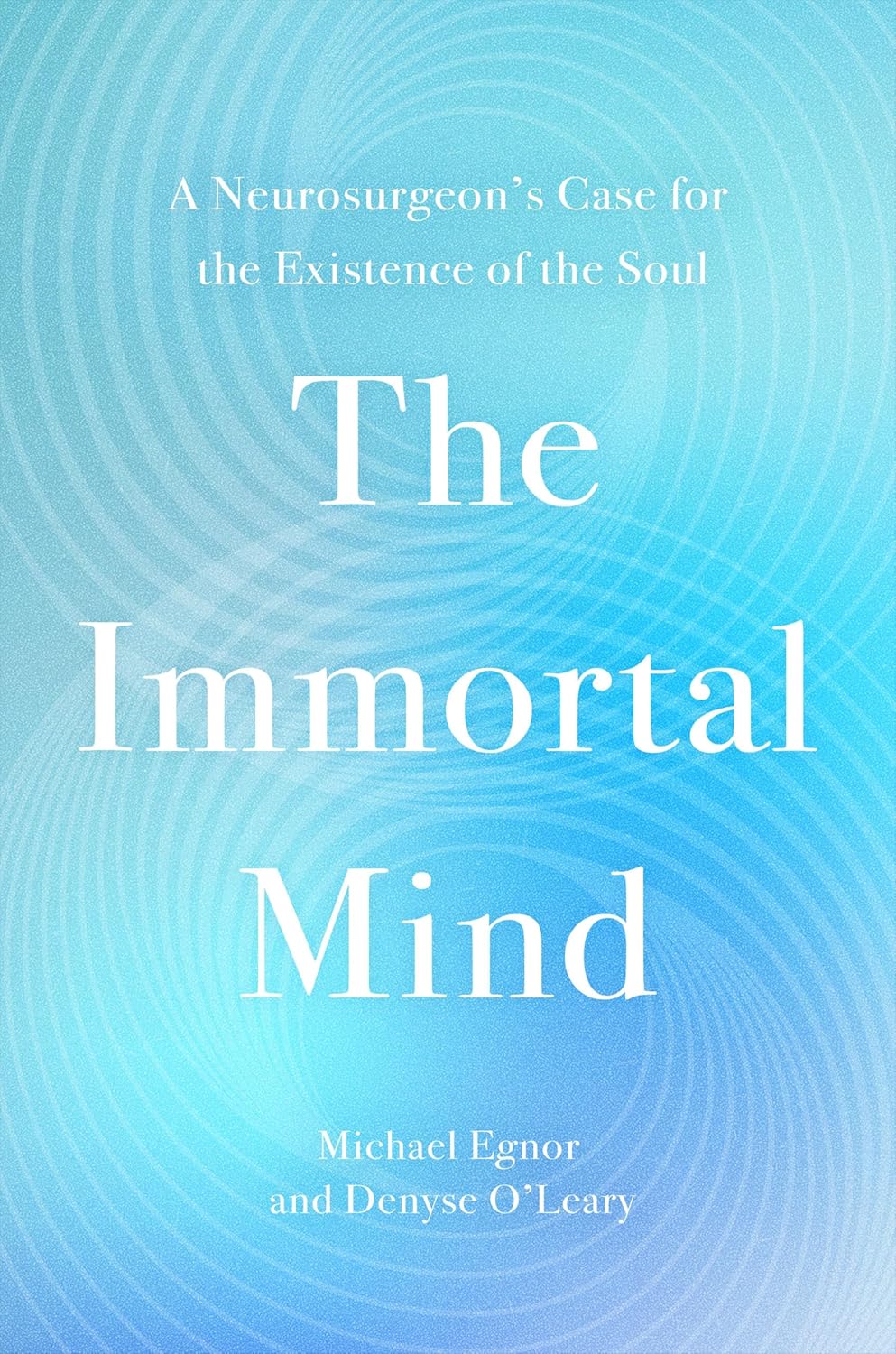 Published by Worthy Books
Classical philosophers like Plato and Aristotle (384– 322 BC) were not, of course Christians. But we can see how their approach to thinking — a series of questions — influences Gennadius’s visionary dream.
Belief in the immortality of the human mind or soul is one of the oldest and most persistent human beliefs. It’s interesting to note that Kurt Gödel (1906–1978), the mathematician who singlehandedly brought about the destruction of an important materialist school of philosophy (logical positivism), wrote a series of letters to his mother, patiently explaining why he believed that the human soul was immortal.
People come at that insight in surprisingly different ways. You might want to check out the new book, The Immortal Mind: (Worthy, June 3, 2025) by Michael Egnor and Denyse O’Leary, for a view from neuroscience.
You may also wish to read: Why logician Kurt Gödel believed in life after death. He saw human folly as an opportunity to reform and learn, because our souls are immortal whether we like it or not. In a deeply rational, ordered universe, Gödel argues, human potential — frustrated in so many ways here — must flower afterward elsewhere.
