
Cosmologist: Dreams Point to Non-Material Reality of Consciousness
He argues that consciousness is fundamental and prior to the world that science describesIn an interesting piece at IAI.TV, cosmologist Andrew T. Jaffe argues that “the structure of dreams reveals reality’s observer problem.”
Observer problem?
From the introduction:
Every scientific experiment requires an observer; every measurement is made by one. But the observer itself remains elusive. Andrew T. Jaffe uses the example of a scientist within a dream who can discover the physical laws of the dream world but can’t use the scientific method to discover they’re dreaming. This isn’t a gap science will eventually fill because the observer isn’t just another object. Consciousness is fundamental; it is prior to the world that science describes.
“Dreams show us consciousness is fundamental,” August 13, 2026
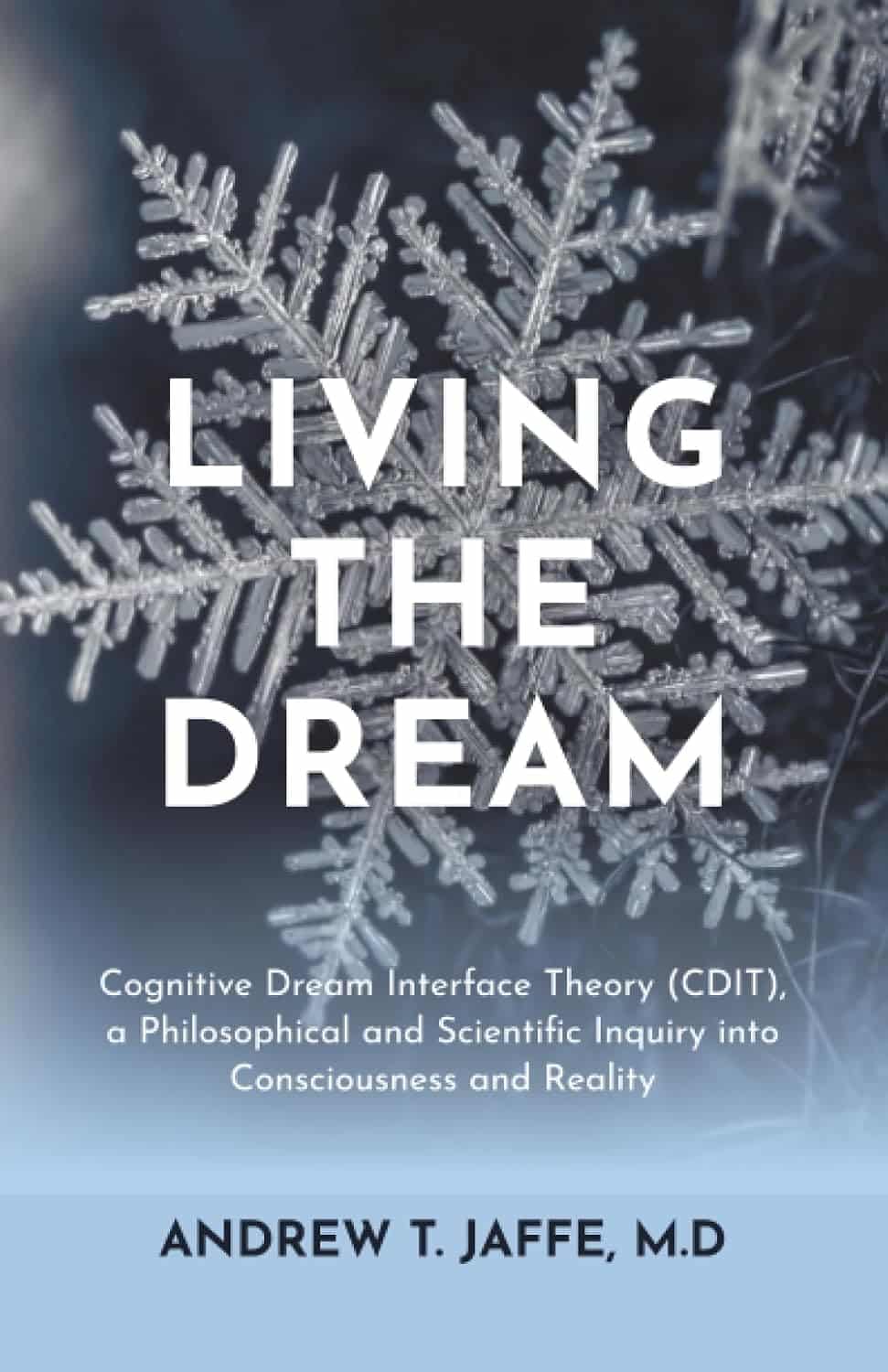
Jaffe, author of Living the Dream: Cognitive Dream Interface Theory (Essentia Books, 2026), has chosen a rather broad field of study: the history of the universe. Try as he might, he simply can’t find a way to make the observer a mere part of the scene.
Not for him is the thesis of genome mapper Francis Crick (1916–2004)’s Astonishing Hypothesis: The Scientific Search for Soul (Scribner, 1994): “You are nothing but a pack of neurons.”
Jaffe writes,
Every experience you have ever had, whether waking or dreaming, shares one remarkable feature. There has always been someone there to have it. Interestingly, this phenomenon is rarely investigated. Science has become extraordinarily successful at explaining the world before us. It has traced the origin of galaxies, explained the evolution of species, mapped the circuitry of the brain and the DNA of the body. Physics has uncovered laws governing matter and the movement of light with astonishing precision. But every scientific explanation begins with an assumption so obvious that it is rarely acknowledged: there is an observer.
All experiments require one, each measurement is made by one, and every theory is conceived by one. The observer itself remains elusive. Philosophers call one aspect of this mystery the hard problem of consciousness: why should physical processes be accompanied by subjective experience at all? Neuroscience confronts another challenge in the binding problem: how do countless disparate neural processes become the single unified experience each of us enjoys every moment? Beneath both questions lies an even simpler one: who, or what, is the observer?
Neuroscience has taught us through brain imaging which regions become active during various activities like perception, memory, language, emotion, and decision-making. Researchers are adept at identifying neural activity that consistently accompanies conscious experience. But, as of now, there is no place they can point to and confidently say this is where the one having that conscious experience can be found. “Is fundamental”
Indeed, three hundred and twenty-five or more theories of consciousness later, we may have begun to suspect that more research will not be the answer to this problem.
H2 On the other hand, one more theory can’t hurt either
Jaffe argues, along with Annaka Harris, that consciousness is fundamental. His Cognitive Dream Interface Theory (CDIT) describes it as a universal and impersonal precursor of the cosmic order:
Our individual lives differ because the experiences unfolding through each of us differ, but the awareness observing through each unique window may be the same. Dreams offer a clue. In our dreams, a variety of characters and scenarios are both created and observed by one mind, one awareness. All explanations must end somewhere. Physics begins with laws and constants that are accepted as part of a framework from which everything else is explained. CDIT makes a similar move. It treats awareness as a timeless, natural primitive, not as something supernatural or outside nature, but as the one thing that does not require another explanation beneath it. The question then becomes which starting point explains more while assuming less. “Is fundamental”
What does it take to get labeled a crackpot?
If some want to argue that he and Annaka Harris (wife, incidentally, of neuroscientist Sam Harris), are just crackpots, here’s a question: Why are they crackpots if they think that human consciousness — so far unexplained (and certainly not explained away) — is something outside the material universe? But somehow Francis Crick is not a crackpot for thinking that we are nothing but a pack of neurons — a statement that does not remotely resonate with either human history or human experience?
One of the unexpected changes that the 21st century is bringing is that more people are asking these questions and many of them will not be put off by glib explainaways or putdowns. Keep watching this file.
