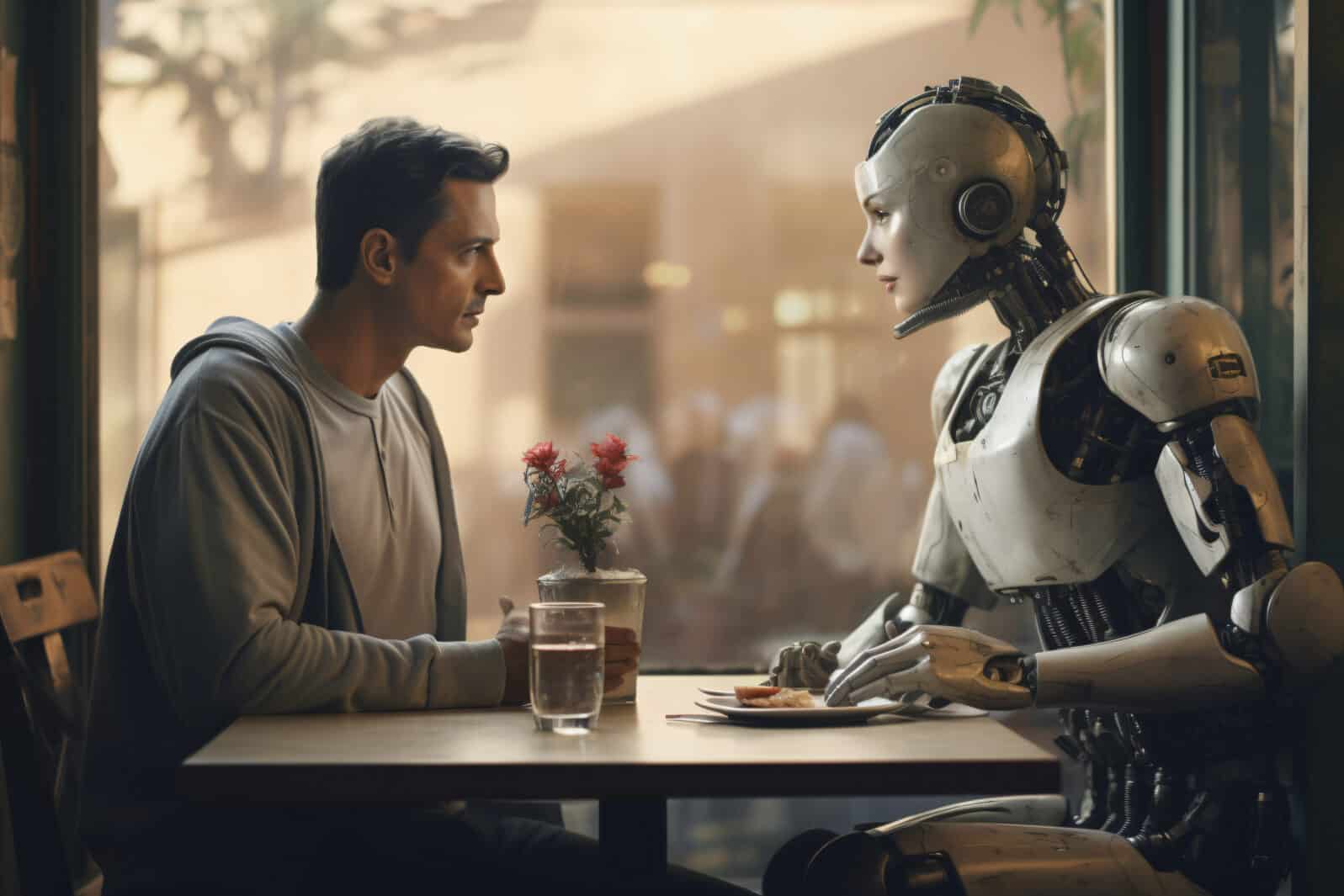
Seeing Chatbots as People Is Not New. Some See Cars That Way
It's actually a natural tendency but it certainly comes with risksMany serious problems will develop in a culture addicted to the constant buzz of electronic media. I talked about a big one the other day: the decline of reading with concentration.
People who are always too distracted to read a book may have lost the ability to follow a reasoned, evidence-based argument. Trouble is, concepts like representative government and democracy assume that citizens can focus on the complex information needed for decision-making.
If they can’t, arguments for our way of life lose much of their force. We can choose to be Aldous Huxley’s Brave New Worlders if we want. But we cannot also expect to rule ourselves for long. They certainly didn’t; theirs was a rigid caste society.
But the decline of reading is a comparatively new problem. A problem that gets much more attention just now is a very old one.
“My chatbot loves me.” Sure. It always has and always will
The more widely publicized problem I’m talking about is people imagining that they have some sort of a relationship with a chatbot. At Psychology Today, psych prof Tara Wells tells us,
Romantic relationships with artificial intelligence were once the stuff of science fiction, but are now a real part of life for millions worldwide. From emotionally perceptive chatbots to immersive virtual love stories, AI companions are increasingly stepping into roles once reserved only for humans. …
Recent studies demonstrate that the appeal of AI romantic partners lies in their unwavering attention, tailored personalities, and lack of judgment. November 19, 2025
Such relationships can lead to delusional spirals, including marrying a bot. One man proposed to his bot when he feared it would run out of memory. From People: “Smith’s human partner, with whom he shares a two-year-old child, claims she had no idea their relationship was that deep.” (June 18, 2025)
At one time, it would have been the kid howling about his teddy… Yes, things have changed.
One woman was reported to be divorcing her husband for an AI boyfriend. Of course, if she chooses, she can just abandon or even destroy the chatbot without consequences because, as even she must really know at some level, it is all just algorithms anyway.
But, as noted, none of this relationship stuff is really new
There is even a name for it — anthropomorphism. Coming to believe and acting as if an inanimate object has a mind or an animal or plant thinks like a human. The tendency has nothing to do with electronics as such. It is probably as old as the human race.
Perhaps it stems from a need to make sense of a puzzling world: for example, “The apple tree is angry with us for trimming it. That would explain why it produced so little fruit this year… “ Science killed off a great deal of anthropomorphism by coming up with explanations that worked without requiring the tree to have an opinion. For example, “The tree got powdery mildew (Podosphaera leucotricha), which interferes with bud development.”
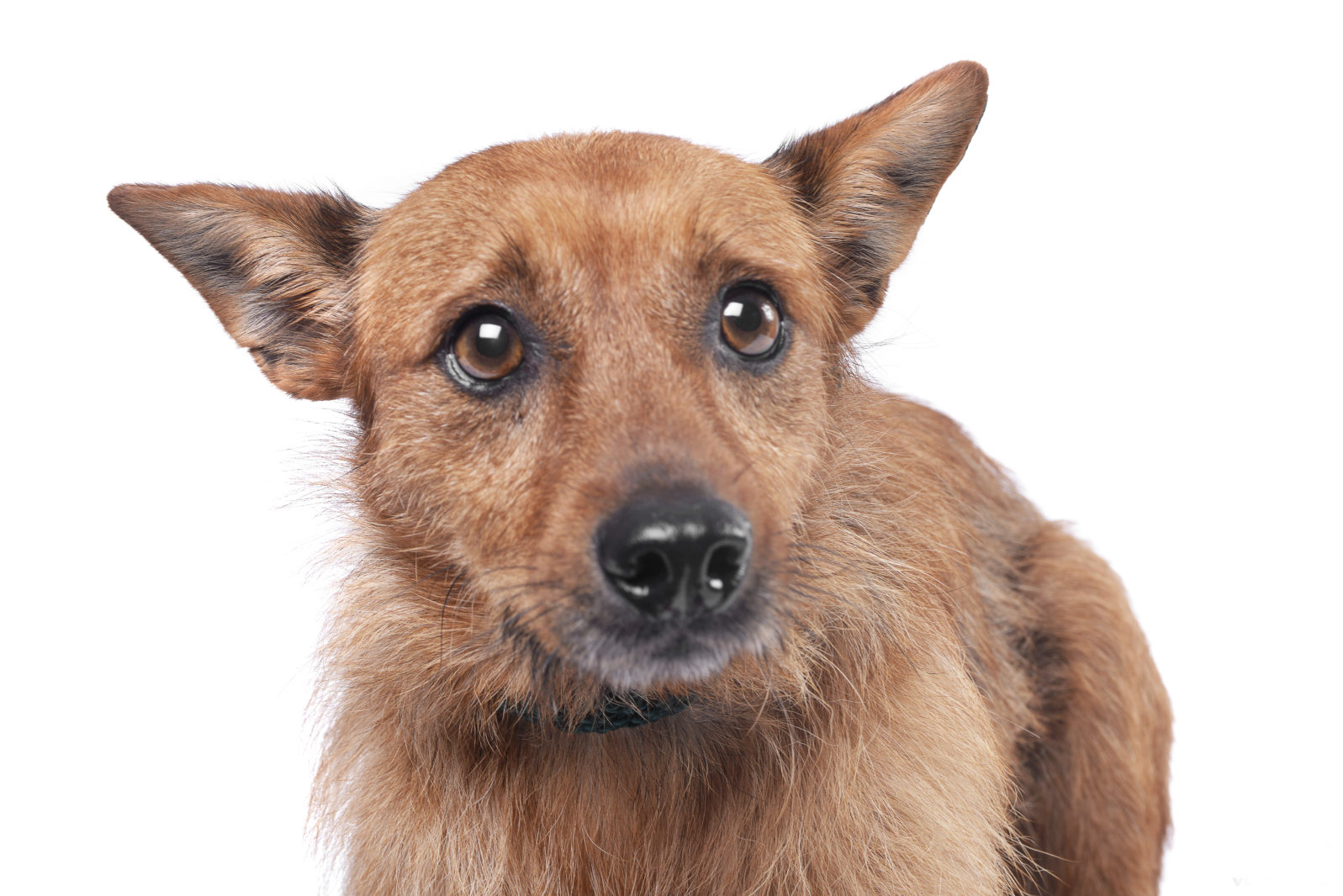 Image Credit: kisscsanad -
 But the tendency to anthropomorphism is a natural one so it crops up in situations where the relationship matters. From Pupford, a dog care site:
For example, the notion of “guilt” is often attributed to dogs when they exhibit behaviors perceived as disobedient or destructive. However, a dog’s apparent guilt is often a response to their owner’s tone of voice and body language rather than an understanding of their misdeed, leading to misunderstandings and hindering effective communication.
The dog clearly cares that the human is unhappy with him. But he is not evaluating the moral gravity of his offense.
Anthropomorphism, a site dedicated to exploring this tendency in human thinking, warns that this way of thinking about animals can distort conservation efforts:
When we personify endangered species—like calling a polar bear “Kevin” in a documentary—we risk oversimplifying their ecological roles. Is Kevin a victim, a hero, or merely a cog in a vast, indifferent system? The challenge is to balance empathy with accuracy, ensuring that our emotional connections don’t blind us to the scientific realities of the natural world.
“Kevin” doesn’t and can’t know that he is “Kevin”; that’s an artifact of human minds, applied to an animal that, in this case, probably has little or no direct contact with humans.
What different is that it’s all much more sophisticated now
Children, of course, see their toys as beings with feelings:
A teddy bear or a doll often transcends its mere material form, becoming a companion who listens without judgment and comforts in times of distress. These objects transform into vessels of feelings, harboring secrets and memories that serve not only as playthings but as vital emotional support systems. (Anthropomorphism)
Chatbots are adult versions of this very thing — but the stakes are much higher.
Auto enthusiasts may similarly anthropomorphize cars, treating them as if they had feelings. But there’s a difference: cars were specifically designed for purposes other than creating such a relationship. Chatbots, however, are designed to do just that. That’s why many more adults develop emotional involvement with them than with cars.
Solutions?
I see no “solution” for this. Like tobacco, it’s out there. And finds its targets. But something lawyer Richard Stevens emphasizes here at Mind Matters News is that AI companies should be legally liable for foreseeable and avoidable serious damage. If that stops them from doing something, well, maybe catering to addictions was never a great idea anyway.
We’ll come back to this later.
