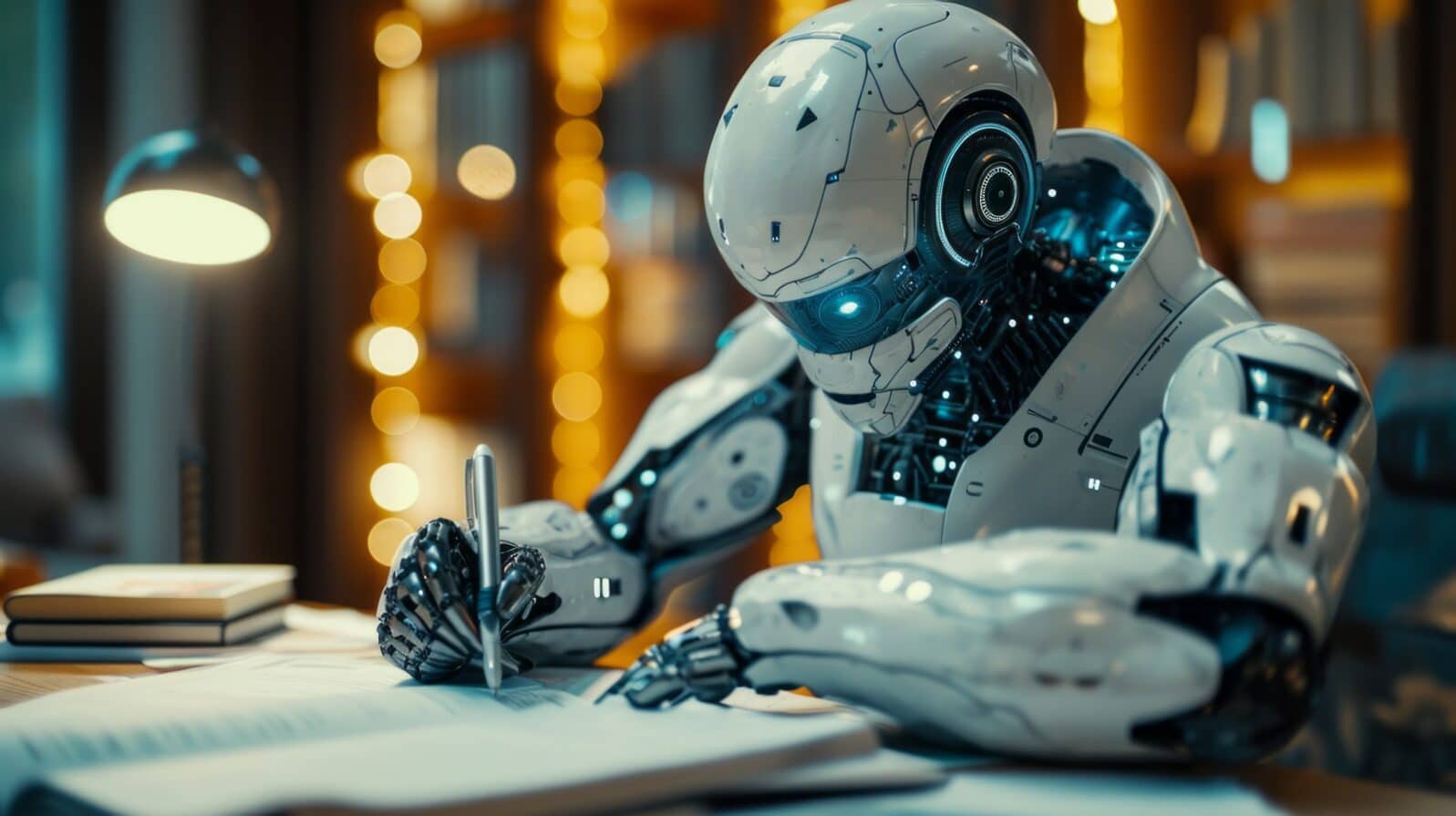
Author Bites Bullet: What If AI Does Write Good Novels?
Without getting hung up on definitions, we need to start by establishing what we mean by a good novel. What are we trying to do?Owen Matthews, Associate Editor of The Spectator and author of Overreach: The Inside Story of Putin’s war on Ukraine (2023), brings us up to date on AI invading the literary domain.
He starts with the case of Thélyson Orélien, a Haitian-born, Quebec-based author whose book was delisted for the prestigious Prix Goncourt, due to the finding that it was AI written. That story, like the nearly contemporaneous Jason Arday tragedy/scandal at Cambridge, was complicated by the question of the role race relations played in the affair.
Matthews, determined to dig deeper, asks a more fundamental question:
What would it mean if a novel part-written by AI were actually excellent? In a fair world, should the author be sharing his prize with the large language model which may have toiled as his coauthor? “This book is very good – if it’s AI that made it, we should use it!” the Goncourt Committee member Éric-Emmanuel Schmitt told a talk show. “No, I’m kidding!” he quickly added.
“What if AI is actually good at writing novels,” October 2026
Other writers have gone Orélien’s route and succeeded:
The Orélien case is just the latest in a long line of acclaimed books that have been flagged as AI. Rie Kudan, winner of Japan’s 2024 Akutagawa Prize, admitted that she had used ChatGPT. AI-detector-triggering stories have won four out of the ten Commonwealth Short Story regional competitions in the last two years. An almost wholly AI written book was runner-up in a Chinese science fiction prize in 2023. “Good at writing ”
Part of the story, Matthews suggests, is that AI has ingested so much material (in violation of copyright) that it can regurgitate good literature. And the AI detector company Pangram will — for a fee, of course — humanize the text for you, to evade other detectors. As Matthews says, it is “playing both gamekeeper and poacher” here.
He speculates,
Could we soon be living in a world where ‘the one who produces the best novels will be the one who has invested the most creativity, intelligence or, at least, some kind of something in their AI’? …
The machine could become ‘a cognitive lever, a talent amplifier’ for those with sufficient mastery to use it. Non-masters of the craft, meanwhile, will merely produce derivative rubbish. “Good at writing ”
So creative writing — especially fiction — then becomes a form of skilled AI use.
Going back to Orwell for a moment…
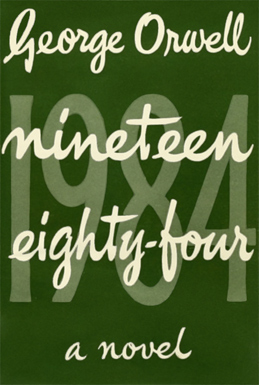
As I have often pointed out, George Orwell (1903–1950), a master at portraying totalitarian systems, believed that machines could write novels. Indeed, his principal female character in Nineteen Eighty-Four (1949) looks after a novel-writing machine for a living.
He recognized back then that if masses of data could be collected and organized according to rules, formula fiction could be automated.
He was right. Amazon now offers books entirely written by artificial intelligence. AI books with some human involvement include novels, illustrated children’s books, and “get-rich-quick schemes, dieting advice, software coding tips and recipes.”
The critical question is, could Orwell’s own novel have been produced by AI?
I doubt it because Nineteen Eighty-Four, a portrait of Britain as a totalitarian state, is not derivative. To contribute as much as he did to an understanding of the totalitarian mindset, Orwell actually had to live among people with that mindset and write about what he had learned.
He had to write things that no one had said before, or anyway, not very clearly. He fought and was nearly killed in the Spanish Civil War, where he got a crash course in politics as a blood sport and learned about the real world of the Stalinists.
Could a modern writer come along and produce similar work, using AI? Possibly, but someone actually had to be Orwell first — to experience those events and write them down.
Could a modern writer using AI, with no background or experience in a given area, make up an original masterpiece out of whole cloth? Maybe. But, in a universe of possibilities, what are the chances of getting it right with neither a model nor experience as a guide? And no masterpiece is produced by getting the mood half right. There is a reason that writers are encouraged to write about what they know.
As noted earlier, the big issue today is actually not AI. an overall decline in reading. If publishers are losing the battle for attention, AI slop will not rescue them. AI can produce much bigger and better distractions than literary slop.
Insisting on authentic work is a better bet for publishing. It’s a small market but a sure one because there is no substitute for authenticity.
