
Economics: It’s All About the Human Mind
What an ice-cold cola teaches about value, choice, and exchangeSuppose you’re in a laundromat, or at a mid-desert highway rest stop vending machine. You need just one more quarter to get the machine to work.
You see another patron with change and offer to give her a dollar bill ($1) to get from her just one quarter ($0.25). Or, back in the day, you might pay somebody a dollar for just one cigarette. Or $4.00 for an 8-ounce ice-cold cola at a ball game on a sun-drenched afternoon.
I’ve done all of these things before. But maybe you wouldn’t do them. You might pull back, saying, “No way, that’s not worth it!”
One way of looking at it is, my preference at the moment wasn’t your preference. Our preferences are different because our minds are different. The technical term for this difference is subjective value.
The Everyday Win-Win
 Image Credit: mrallen -
 Back to the hot summer’s evening ball game. You see a fellow holding an 8-ounce ice-cold cola, and you offer him $3 for it. What you are saying is, you’d rather have the cola than the $3. If he takes the offer, it shows he values the $3 more than the cola. Both you and he get what you want at that moment. That’s a win-win. The satisfaction with the exchange is within the two human minds. The technical term for that concept is mutual gains from trade.
But suppose the fellow says no to $3. If you are desperate, you might offer him $5 for the drink. If he takes that deal, then, again, it’s a win-win. Each of you is willing to part with one thing to get another instead.
It seems that the cola drink doesn’t have a “value” in itself. We humans assign value to such things based upon our internal, subjective views about, say, drinking the cola or giving it up. The value of a thing comes from the minds of the buyer and seller; we learn the “price” from seeing the actual exchange the two people make based upon what is in their minds. The technical term for this is last traded price.
Why your third cola isn’t worth four bucks
Let’s consider another aspect of buying and selling. You bought a cola for $4 from the ball park seller. So tasty, that hit the spot! And the seller, liking this deal, offers you a second one at the same $4 price. Maybe you buy that one too.
Then seller offers you a third, fourth, up to a tenth cola drink for $4 each. You don’t really want the extra colas, so you decline. He might “make you a deal,” and offer the added drinks for only $2 each. You might consider that lower price for the third or fourth cola, but not for any more after that.
Why not? Because you would rather have the money than colas that you really don’t desire nearly as much as that first cold one. People value things on a scale of goals, pleasures, or other uses, according to their subjective importance. The technical term for this is scale of values.
 Image Credit: Heng Kimhong -
 The fifth cola is not inferior in quality; it is simply less subjectively important, less desired, than the earlier ones. That’s universally true. The more units of the same good you acquire, the less additional benefit or satisfaction you will experience. The technical term is diminishing marginal value.
Moreover, while you might not value a fifth cola even at $2, you might value switching to a root beer instead for that price. Why? You just feel like it. It’s just your personal preference on your current scale of values.
All of these buy and sell decisions flow from the minds of the buyer and seller. You can’t assign the preferences number values, nor use a formula to predict any of them. Then, too, human minds are always changing based upon evaluations of the circumstances and internal desires. The deal you accept on one day may not appeal to you at all on the next day.
Life, comparisons, action!
Every day, we humans act. We feel the most urgent wants, choose ways to satisfy them, and use whatever means we believe will feasibly help us do so. We want something to be different, or imagine how something might be improved, and then try to make the preferred situations real.
Our minds do not passively observe the world. We constantly compare our present circumstances with possible alternatives. We decide that one state of affairs is preferable to another, choose an objective, and act in hopes of bringing about the better result.
A person thinking about acting basically considers:
• What do I want?
• Which alternative do I prefer?
• What must I give up?
• What means are available?
• What do I believe those means will accomplish?
• Is the expected improvement worth the sacrifice?
• What might I do if the action doesn’t work?
If we think in terms of economic theory, we can see the process as:
perception → dissatisfaction → imagined alternative → valuation → choice of goal → selection of means → action → result → assessment
All of these elements of economic thinking occur when we buy, sell, order from a menu, choose our entertainment, save, invest, produce goods, change jobs, hire employees, lend money, start businesses — basically any time we decide how to use our time and resources. Long before prices, markets or money enter the picture, all these actions start in the human mind.
It’s not about psychology
The study of human action that drives economics is not psychology. Psychology deals with understanding and predicting why people choose certain goals and make certain choices, or how people will act in certain situations. Questions like why you like dark chicken meat and feel nervous in crowded places are psychological ones.
The study of human action, by contrast, deals with what follows logically from the fact that people have desired goals and the fact that they act to achieve them. The technical term is praxeology.
What you do to get more dark chicken meat or to enjoy public events without crowds entails mental activities, i.e., evaluating, choosing, planning, etc., that result in action.
Mind beyond matter
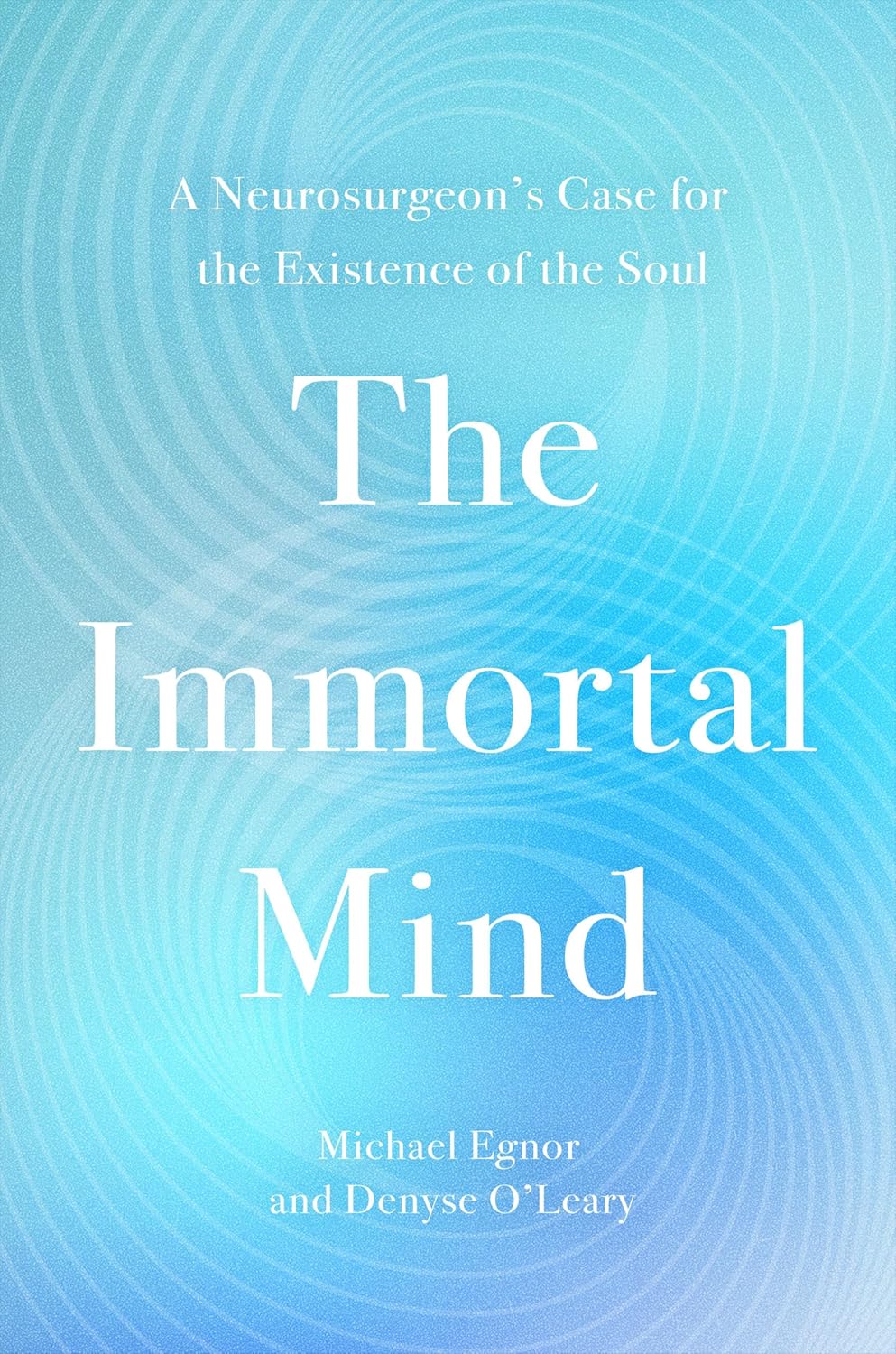 Published by Worthy Books
The Immortal Mind (2025) by Dr. Michael Egnor and Denyse O’Leary describes how human minds retain their self-awareness and personality despite brain defects, damage, or surgery. The same observations show those human minds still seeking and preferring to have things or other changes they desire, and taking the steps that they expect will help obtain their desired better state of affairs.
In human communities, people act as individual minds dealing with each other. Economics describes and predicts how people coordinate to build prosperous societies. That’s the next level to explore.
