A Fantastic Voyage into the Brain but Not the Mind
The movie's special effects show how the biological elements of the human body workThe Fantastic Voyage, Fantastic Voyage | #TBT Trailer | 20th Century FOX, which is a 1966 American Sci-Fi movie directed by Richard Fleischer and based on a story by Otto Klement and Jerome Bixby, this year celebrates its 60th anniversary in August.
The mid-/late-1960s was a watershed in Sci-Fi movies, with Stanley Kubrick’s 2001: A Space Odyssey being released two years after The Fantastic Voyage.
Like Kubrick’s film, this movie is a Sci-Fi classic and won awards for its great cinematography and imaginative production design, receiving five nominations at the 39th Academy Awards mostly in technical departments, winning for Best Visual Effects, showing how the biological elements of the human body works.
The film won two Academy Awards (1966) and was nominated for three more. The special effects have dated a little but look a lot more magical than the current soulless CGI. Back in 2024, a Transformers’ artist said such visual effects were “being used as a crutch.” VFX artist explains why CGI in films is worse now | The Independent
The Fantastic Voyage portrays our internal bodies like inner-space, where our immune systems are designed to recognize harmful invaders, such as bacteria, fungi and parasites, and as they enter the body, the immune system identifies them through specific proteins called antigens present on their surfaces.
The film starred Raquel Welch, Edmond O’Brien and Donald Pleasence, along with some other Hollywood actors, and it is about a submarine crew which is shrunk to microscopic size and sails into the body of a scientist patient to repair damage to his brain in a conventional surgically inoperable area.
The plot: America and Russia have developed technology that can miniaturize matter by shrinking individual atoms, but only for one hour. The crew must save the patient’s life, as he lies in a coma with a blood clot in his brain that can only be removed by the method used by such a fantastic voyage.
The submarine, named Proteus, is miniaturized to the size of a microbe and injected into the patient’s body. With only one hour to get to the clot and remove it, the team must act extremely fast as possible because if they do not get out of the body in the time allocated to them, then the submarine and crew will revert to their normal size.
The crew faces obstacles during the voyage, but I won’t spoil what happens as many readers might never have heard or saw this fine movie that I highly recommend.
Back in 1966, the average person and scientists would never believe how far technology has come in the years post-1966 and beyond.
Conducting fantastic voyages, without tiny humans in a microscopic submarine, are now a nanotechnological reality. Post 2006, various procedures have been developed including navigating carriers just a fraction of the thickness of a hair through the arteries using a clinical magnetic resonance imaging (MRI) platform in a living organism.
The journal, Communications Biology, said the following of The Fantastic Voyage:
This sparked the idea in the public consciousness of a drug delivery agent which could function as an armoured vehicle, transporting its cargo to a destination (such as a tumour), moving easily through the blood stream, warding off serum proteins, dissolving blood clots on the way and ultimately killing the diseased cells. Unarguably, we have taken this idea seriously. Researchers from all over the world have tackled the enigmatic challenge of specifically targeting diseased cells and tissues heads-on. With the advent of nanotechnology, such drug delivery vehicles are now largely a reality.
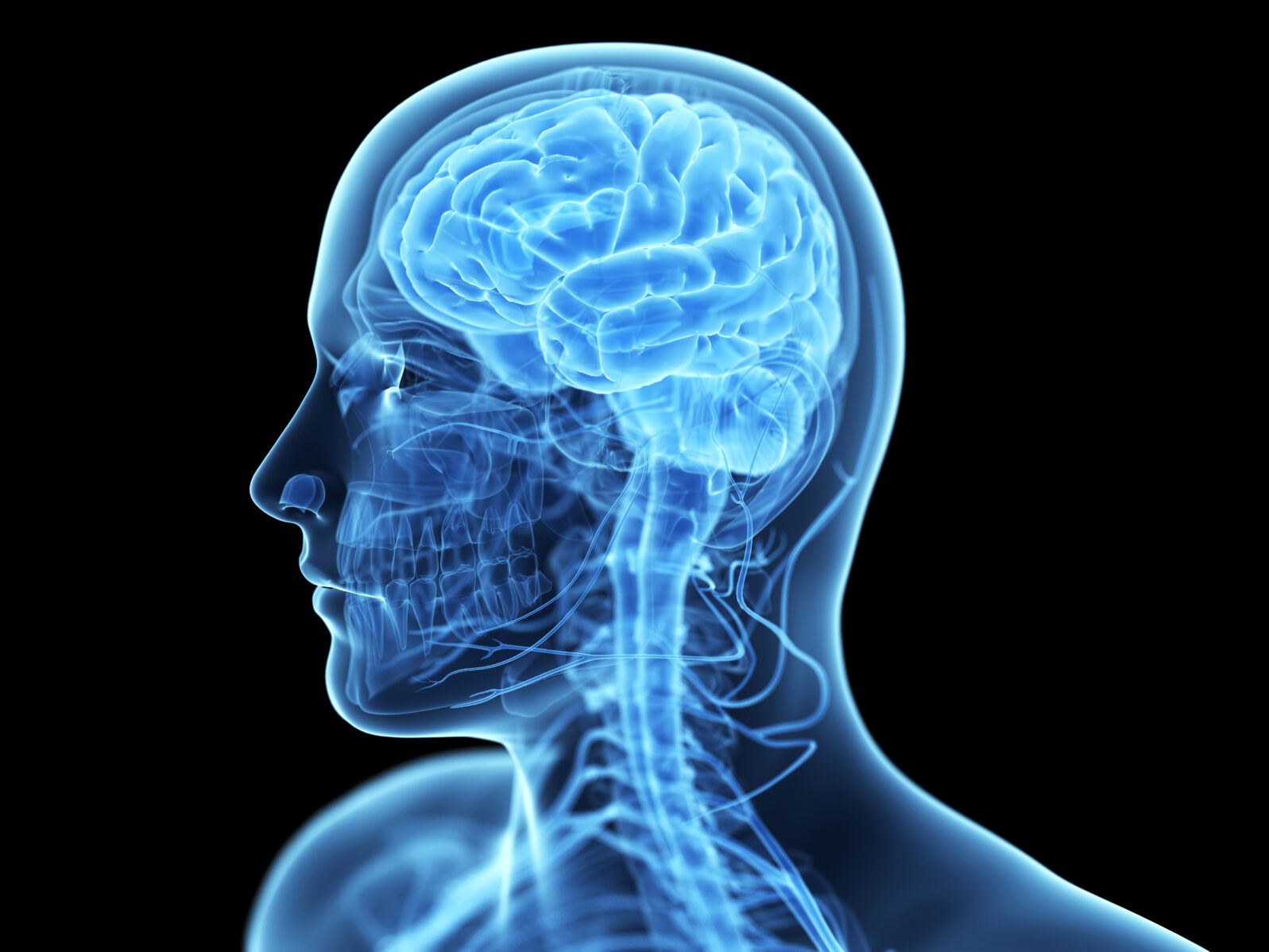
But here’s the kicker: When the crew reach the patient’s brain, they perceive the wet grey matter and the biological elements functioning around the meat. What they do not perceive are the patient’s thoughts and/or emotions. Why? Because the brain is not the mind. It’s Not Even Clear How the Mind Relates to the Brain | Mind Matters
Brain activity can be visualized using various techniques that capture how different regions of the brain activate during tasks or states, but the same cannot be applied to the mind’s thoughts.
A crew member cannot say: “Oh, look!” pointing to a part of the patient’s brain, “That’s the part where he’s dreaming about walking in the park, and we can see him doing this.”
All they can see are the ‘sparks’ flickering from some thoughts that the patient might be experiencing, but only the patient and God can know and see what those thoughts are.
Dr Michael Egnor, of this parish, said:
As I began neurosurgical practice, I routinely encountered patients with deficient brains from birth defects, trauma, strokes, tumors, etc. who were surprisingly normal people. Of course, sometimes brain damage causes severe disabilities, but not always, and my neuroscience textbooks never explained or predicted this. A seminal moment for me was when I performed awake brain surgery on a woman with a left frontal lobe brain tumor. She had to be awake for the surgery (we used local anaesthesia so she felt no pain) so I could map and protect the part of her brain that controlled speech which the tumor was near. I had to remove quite a bit of her left frontal lobe that was invaded by the tumor. We had a conversation throughout the operation, about the weather, her family, the hospital food, and so on. She was completely normal while I removed a part of her brain that the textbooks said was essential for higher thought, reason, etc. Dr. Egnor: Abstract Thought Comes from the Mind, Not the Brain | Science and Culture Today
There is no doubt that Dr Egnor could not see the thoughts in this woman’s brain when there were brief silent gaps in the conversation.
Regarding reviews, the weekly entertainment-trade magazine, Variety, gave The Fantastic Voyage a positive pre-release review, stating: “The lavish production, boasting some brilliant special effects and superior creative efforts, is an entertaining, enlightening excursion through inner space—the body of a man.”
