
Toward a True — and Also Scientific — Picture of the Human Mind
Alexander Batthyány offers a personal anecdote about Nobel Prize-winning neuroscientist Sir John Eccles that might help point the wayThe discussion at ID the Future of terminal lucidity (TL) — the strange awareness sometimes found among dying people, even those who are demented — took an unexpected turn when psychologist Alexander Batthyány expressed a concern: Study of TL and similar phenomena risks being captured by New Age gurus and nonsense peddlers (though Batthyány did not phrase it quite that way).
He wrote a book on TL, Threshold (2023), based on a study he had conducted. Host Andrew McDiarmid’s other guest, neurosurgeon Michael Egnor agreed in principle but he offered a more proactive approach to that problem. His own recent book The Immortal Mind: (2025) also takes a look TL, in defense of an overall non-materialist perspective.
Midway through the discussion, Egnor pointed out that he did not see any problem with injecting “religious” viewpoints into science. By that he meant an approach that leans on great philosophers like Plato (c. 427–348 BC) and Aristotle (384– 322 BC), rather than, say Carl Sagan (1934–1996) and Richard Dawkins:
The classical definition of science, which I think works really well, going back to Plato and Aristotle, is that science is really natural philosophy. That is, science is the organized study of nature according to its causes, so that you look for causes in nature. You try to understand what causes a certain state of affairs in nature. And if you do it in a systematic, organized way, you’re doing natural philosophy, which is science, which what we call science.
And if you note that, the definition of science is not the study of effects. It’s the study of causes in nature. And if the causes in nature are divine, if the causes in nature are from a different realm than the earthly realm we live in, then to do good science, you have to pay attention to those causes. [30:23]
So if the light people are seeing in near-death experiences is divine light, if the lucidity and clarity of people’s minds when they have terminal lucidity is divine light, divine understanding, then that’s a scientific truth about terminal lucidity and about near-death experiences.
So a danger we run, living in this material or materialistic framework that we’ve all been brought up in — and I fight it constantly myself; it’s hard to get out of it — the danger we run is accepting that framework. And over the years, I’ve come to disregard that framework. That is, if I think God acts in nature, that’s good science and I say it out loud.
John Eccles on the mind
A Nobel Prize winner who would likely be sympathetic was John Eccles (1903–1997), and Batthyány was in a position to offer ID the Future fans a personal anecdote about him.
As a neurophysiologist, Eccles had shared the Prize in 1963 for discoveries about how nerve cells communicate. But he made clear on a number of occasions that he saw the human mind as a divine creation, not a meat computer. For example, in 1995, he said,
I am constrained to attribute the uniqueness of the Self or Soul to a supernatural spiritual creation. To give the explanation in theological terms: each Soul is a new Divine creation which is implanted into the growing foetus at some time between conception and birth. (Eccles 1991, 237)
Batthyány recalls talking to him [31:29]:
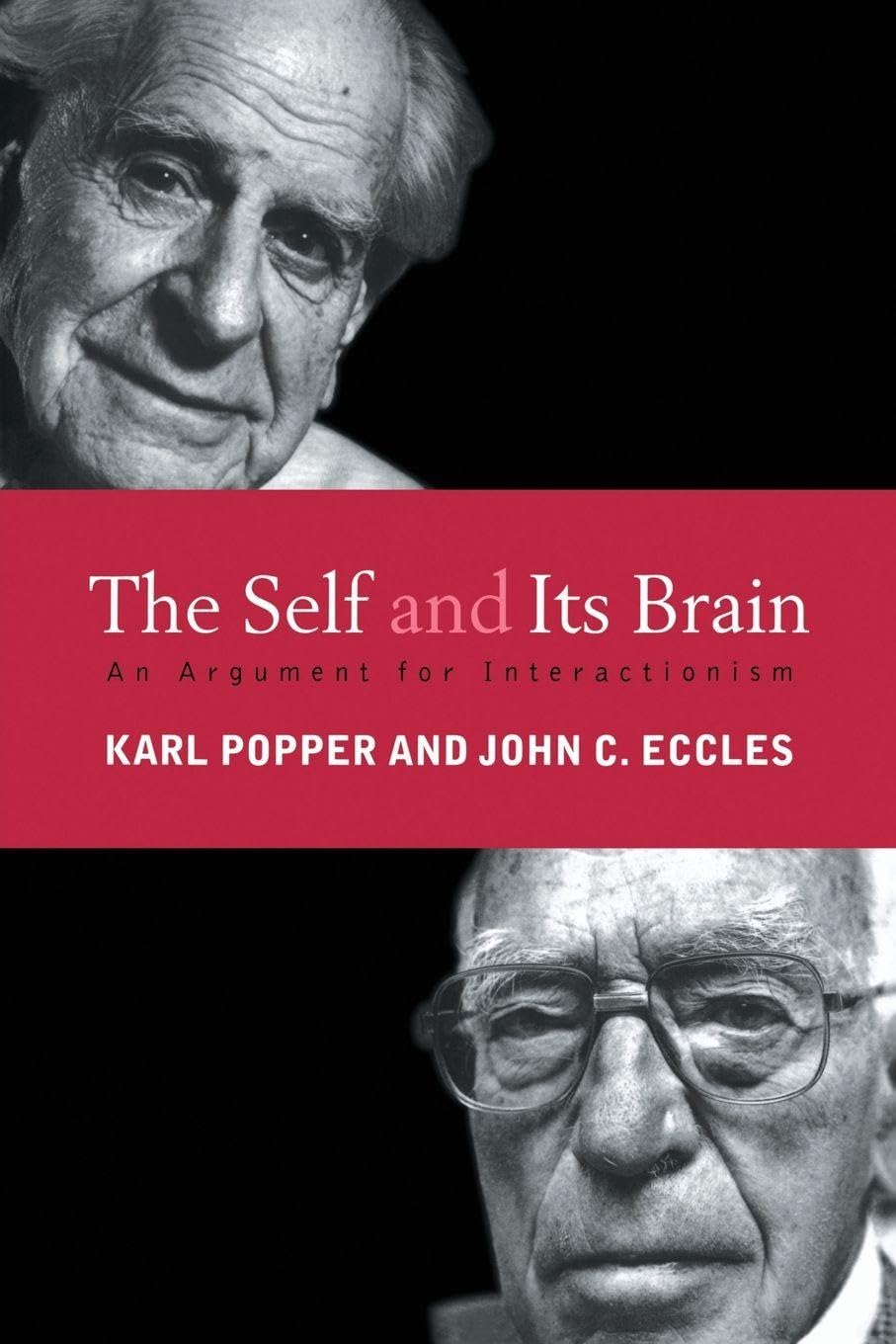
Now, listening to Mike, I remember when I was a student, I wrote on John C. Eccles, who was co-author with Karl Popper of The Self and Its Brain, which is a dualist manifesto, if you will. Not as simple as Descartes but more in the direction of.
I think Eccles was 91 when I wrote my thesis and I had a number of questions. And these were burning questions. After my thesis was done, I wanted to know because now it got personal. Who am I? Yeah. Not what, but who?
And so kindly enough, Lady Eccles, his wife, granted me a phone interview. And Eccles was very old, very weak, but utterly, I mean, totally clear. And so I asked my questions and at the end — and I quote this also in the book — in the end, I said, “Thank you very much, Sir John. [32:26].”
[Batthyány assumed the interview was over.]
And he kept on and says, “There’s a few things I would like to tell you.”
And then he said something like, I don’t have it verbal, but it was something like, “There’s no other solution than that the self is a divine creation.” [32:47]
And would you expect that from a Nobel Prize Laureate? I mean, I was very surprised.
And of course the whole drama of it, I mean the setting was, if it was a theater play, you would say, “Well done!” because [he had a] very weak voice and the strength was not physical strength, if you want. It was much more than that.
But Batthyány went on to express concern that a non-material/spiritual understanding of the human mind is being co-opted:
So listening to this, I’m reminded one reason why I’m so cautious is also because I — and I don’t know how, Mike, you view this, but the near death experience has been kidnapped or hijacked by a New Age movement, which comes up with titles such as There Is No Death. And you think seriously, I mean, how much injustice do we do to us, and to the vulnerability, suffering of other people and so on? And therefore — because they come forth with so easy solutions. [33:48]
Egnor took a different view
Egnor: [35:58] So I think we need more theological efforts to understand near death experiences, not less. And if we as Christians and Catholics are not trying to plow that ground, then the New Age people will. That is, there’s kind of a void there that will be filled and we should be some of the people filling it.
And as I said, if God acts in the world and God acts in our lives, which I think he does — I actually think that; I think that we are thoughts of God.
I think the world is a thought of God, which is what Augustine believed, that we are thoughts in God’s mind. Then that’s a basic fact about reality that ought to be showing up in science. So I have no problem saying, “Look, I bring God into it.”
Now, you may have a little trouble getting the paragraphs about God past the reviewers if you’re trying to get a paper published in Nature or something. But I bring God into it in every way that I think is justified. in every way that is effective in the world and getting the word out there.
McDiarmid then steered the conversation to a different question: How do Batthyány and Egnor think we should talk to people who have witnessed terminal lucidity in a loved on — from a non-materialist but science-based perspective?
Egnor: Well, just from my perspective, I would let them know that such experiences are probably more common than they’re aware of, that their experiences are worthy of respect and they shouldn’t accept live dismissal of their experiences from a materialistic perspective. And that I think that both of these experiences point to the fundamental dignity that we have as human beings and point to the existence of a spiritual soul.
Batthyány: What I would perhaps tell them is don’t put pressure on yourself, nor let others put pressure on you. In Munich and Germany, a colleague of mine, a Jesuit philosophy professor at Goodhart, he founded the self-help group for near death experiences.
[40:17]: They are millions. And even the city like Munich, we have about, let’s say 80 of them, 50 to 80. And what I find, these are not saints. [40:29]: They observed something beautiful. They had a peak, but they come back and they drink beer and eat hamburgers and they get angry and life. And that is good because they should try to better themselves like every one of us should, but we shouldn’t put all our projections when it comes …
In a doubting modern society, people who come back are sometimes treated like prophets, but they are not. And I’m always a bit unhappy in the popular NDE movement that every other year a new bestseller arrives from somebody who had an experience and he or she claims to know about the nature of God or whatever.
It looks as though we have hardly begun to delve into the topic.
Some earlier excerpts from the interviews are here, here, and here.
