2001: A Space Odyssey Was a New Type of Science Fiction
The film is perhaps best understood as three completely different stories whose only connection is the monolithThere is no doubt that 2001: A Space Odyssey (1968) is a science fiction classic. Stanley Kubrick’s realistic depiction of space travel changed the nature of the sci-fi genre. But I must confess that when watching the film, I felt like I was missing something.
I understand that the visual effects were astounding for their time. But I couldn’t decide if the film was trying to say something particular or if its entire purpose was to show its visual effects. Did the story simply exist to justify the presentation? That’s hard to believe, given how much time is spent on the first section of the film.
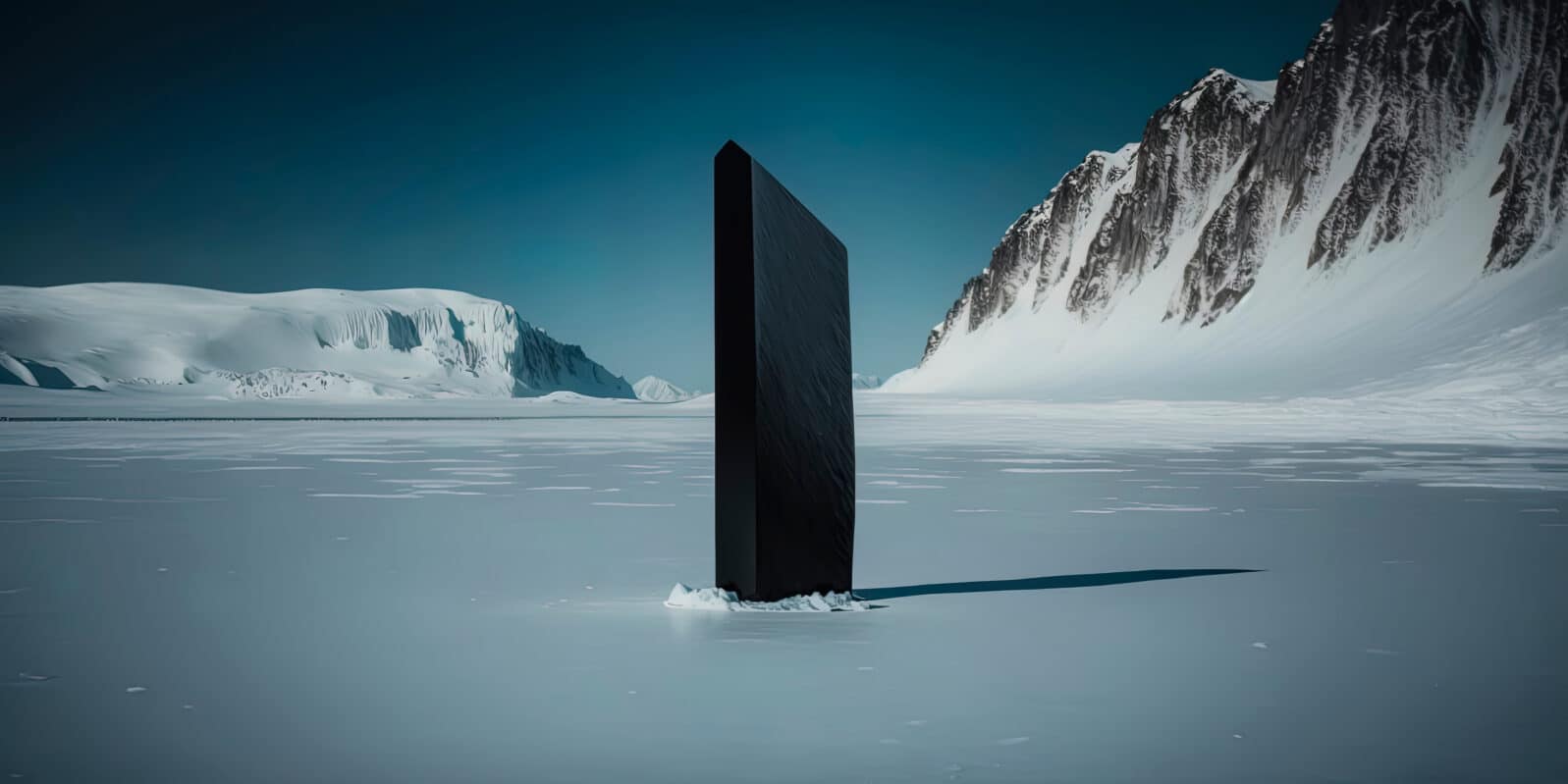
2001: A Space Odyssey is structured as three acts. But it would be more accurately described as three completely different stories with no connection with each other beyond the appearance of the Monolith. The Monolith is a giant space domino, and it’s difficult to describe what it actually does.
We’ll talk more about the Monolith later, but the important thing to note for now is that the Monolith is the only connecting thread for the film.
Breaking every convention worked in this case
Personally, I hated the movie’s structure. I can’t say that the choice to divide the film into three unconnected acts was bad because 2001: A Space Odyssey has overcome the test of time. In fact, it breaks just about every story convention I hold dear. And yet people still seem to love it.
I think I know why they do and that issue will be one of my main subjects in the next few reviews. I will go as far as to say that the why behind this film’s success is my “Monolith,” a fine narrative thread that connects an otherwise seemingly unconnected series of articles on the film. But now, for the sake of my own sanity as a film critic, let me address the story structure issues.
But where is the story loop?
A coherent story must travel in a loop. That is, the story has to close. Now typically, in a three-act structure, the writers will try to close the loop by intertwining the plots and concluding all of them by the end of the film. This way everything seems connected, and the viewers don’t feel like they wasted their time with a story that wasn’t going anywhere.
I believe 2001 was trying to build one large loop through the course of three individual plots. But this created a narrative issue. Whether the issue was intentionally created depends on the question I asked earlier: Was the film intended simply to show off spectacular special effects or was there a deeper meaning to the story?
Here’s the technical problem: There are three protagonists, but the viewer doesn’t see any sort of resolution for the first two. They see a resolution — relatively speaking — only for the third. I found the expectation of a resolution for the first two hard to shake. I kept expecting Kubrick to demonstrate how all three acts are connected, but he never does. Because I never learned anything more about the first two acts, the third act felt incomplete. Instead of the story coming full circle, I just got more visuals, more details, more clues, more and more, until the story just — stopped.
Chaotic surrealism can undermine emotional stakes in the story
This sort of chaotic surrealism can be intriguing from a presentation standpoint. That is, it’s arresting, unusual. But, in terms of storytelling, it can be a real problem because an unconnected collage of events can undermine the stakes of the story. At least, it did for me. Let me explain why.
For plots A and B, all the audience basically gets is a setting and an inciting incident. In plot A there’s a little more — that is to say that the inciting incident has consequences. When the monolith lands among ape-like creatures four million years ago, they begin to display more human-like behavior:
But plot B, where space-age humans are investigating the monolith’s appearances, shows the consequences of its inciting incident only in plot C. This makes plot C very confusing because its inciting incident is completely unconnected to either of the first two plots.
This is an issue because in both plots A and B the story arcs are incomplete. That is, the audience never sees the full consequences of the inciting incidents for either of the first two protagonists. The reason this matters is because if the three-act structure is not going to be interconnected in any way, then the first two acts have to, somehow, foreshadow what’s going to happen in the third act in order for anybody to be invested in the final protagonist.
For myself, by the time I’ve gotten to Act Three, I’m asking, “If Kubrick hasn’t told me the fate of the previous two characters, why should I care what happens to this third character? I’m not going to get any answers.” And I didn’t. By the start of act three, the most well-known plot in the film, I was already checked out.
The first act (or story)
I want to discuss the first act of this movie in a lot of detail because I feel like it deserves the time. Here’s a synopsis that demonstrates my point. The Dawn of Man sequence basically follows a tribe of primitive ape-like ancestors as they go about their lives. It’s a bleak existence. The creatures are aggressive but have no adequate way to defend themselves against their environment.
A tribe of apes is driven from their watering hole by another tribe, and shortly afterward, the Monolith appears. The apes jump around it, touch and inspect it, then the Monolith disappears and everything returns to normal. That is until one of the apes remembers the Monolith and picks up a bone. He begins swinging it around and realizes the bone can be used as a weapon.
It’s difficult to describe the connection between the Monolith and the bone, but I plan to return to that issue later. What I want to focus on here is the story structure. The life of the ape tribe is the setting. The appearance of the Monolith is the inciting incident, and the revelation that a bone could be used as a weapon is the consequence of that inciting incident. The next consequence is that the ape-like ancestor uses the bone to chase off the tribe that had pushed his group away from their watering hole.
Typically, the next step in the story would be escalation. The consequences of using the bone to defeat the other tribe would lead to that tribe picking up bones as well. Thus, the main ape protagonist would suffer a consequence for changing the status quo. But this typical story progression doesn’t occur. Instead, a bone thrown into the air turns into a space station, leading us to plot B. That also implies that technology and weaponry are equivalent.
As I said earlier, I can’t say the movie is bad because the greatest measure of a film’s success is the test of time. Something about this film works even though it breaks conventions. I will try to explain what I think is going on here next time out. But for now here’s a closing thought: 2001’s first two acts are the cinematic equivalent of an incomplete thought. “Technology and weaponry are the same; therefore . . .” See you next Saturday!
