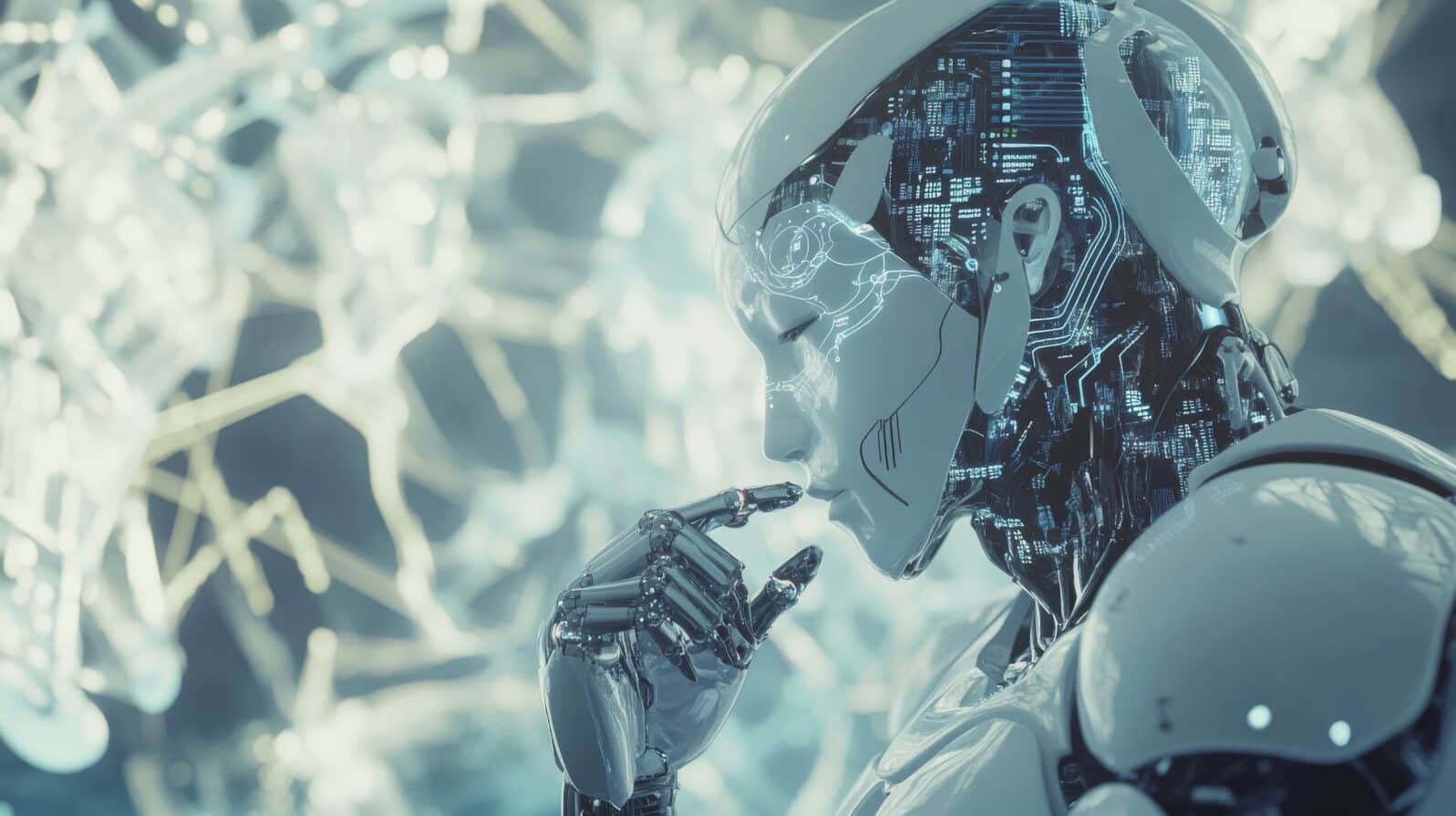
Brain Surgeon Shows Why AI Can Never Become Human
Spoiler alert: AI requires physical hardware; the mind does notOkay, let’s just say it. Artificial Intelligence (AI) systems can never become human or even close. Those systems are confined to the physical electronic “brain.” The human mind, however, is not confined to the human brain.
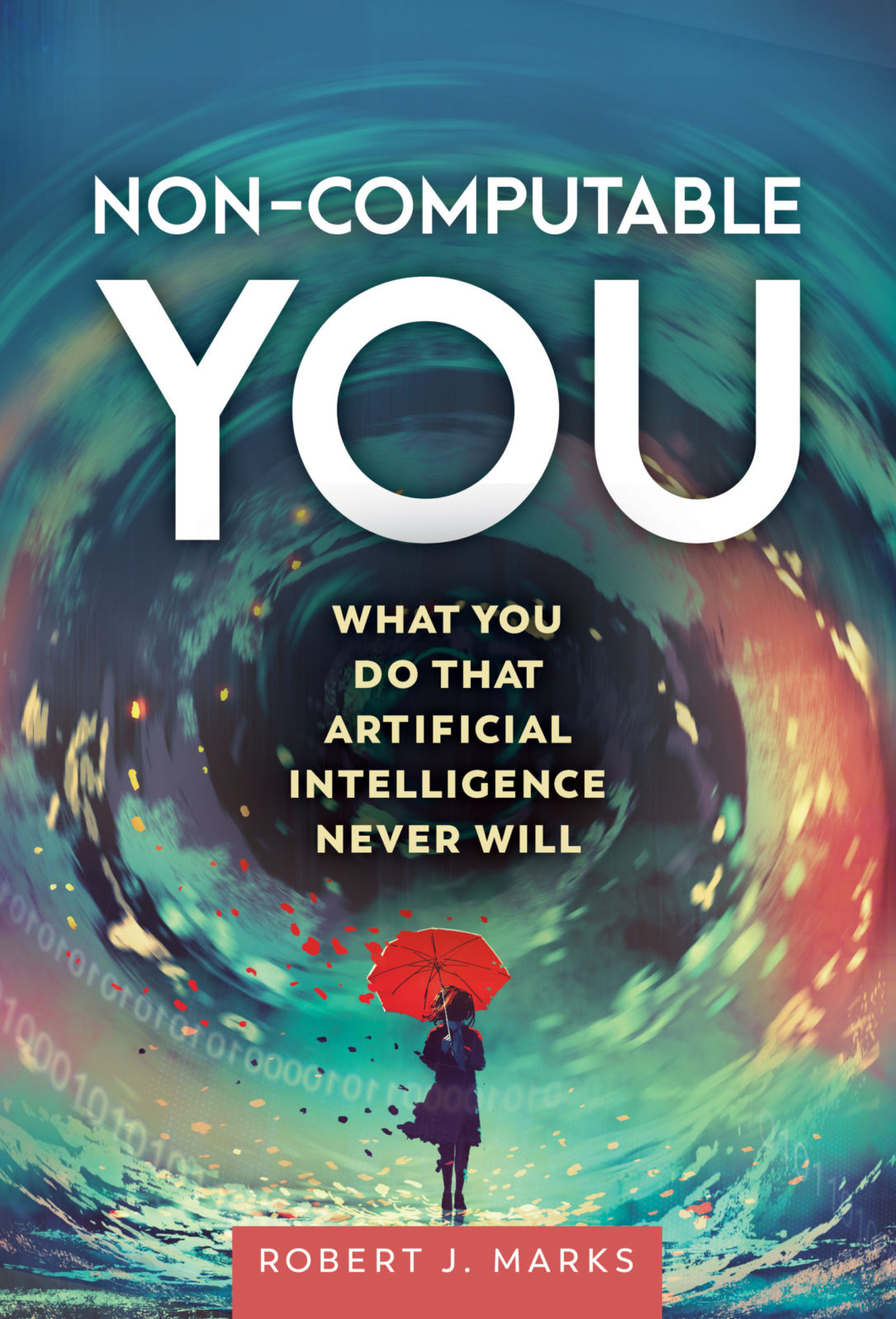 Published by Discovery Institute Press in 2022.
Computer science professor Robert J. Marks’s book, Non-Computable You (2022), explains that AI cannot truly become human-like because it cannot perform non-computable functions. AI is limited to algorithms, which, at root, are sets of step-by-step instructions. Those instructions come from an outside source — traceable always to one or more human minds.
His book shows at least 16 features of the human mind are non-computable, including compassion, love, empathy, elation, sadness, fear, anger, disgust, pleasure, pride, excitement, embarrassment, regret, jealousy, grief, hope, and faith.
Underlying these features are mental powers of creativity, understanding and sentience (self-awareness of feelings). AI systems lack these features and powers and thus are not even close to human.
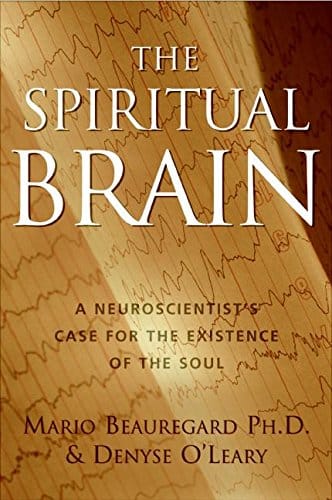
In an earlier book, The Spiritual Brain (2007), authors Mario Beauregard (neuroscientist) and Denyse O’Leary (science writer), observed:
To make any sense of human behavior, we must confront mind and consciousness, which means confronting beliefs, goals, aspirations, desires, expectations, and intentions, none of which is relevant to the functioning of computers. Self-consciousness, self-agency, and self-regulatory capacities are all characteristics of human consciousness that are irrelevant to the workings of computers.
If we see an AI robot expressing emotions or apparent feelings, we are seeing the results of software programs. All of the bots’ deeply affecting expressions of pain, fear, and love can only be the output of awesome but engineered software.
The mind is just the brain?
As software becomes compellingly humanoid, the human heart and mind are downgraded to being viewed as equipment, i.e., more like robots. Some well-known academics say the mind comes from the brain — a cool biological machine, but that’s all. Famous astronomer Carl Sagan said:
My fundamental premise about the brain is that its workings—what we sometimes call “mind”—are a consequence of its anatomy and physiology and nothing more.
Cognitive scientist Daniel Dennett saw the mind as only a deterministic machine:
A brain was always going to do what it was caused to do by local mechanical disturbances.
Scientists Todd E. Feinberg and Jon Mallatt contend the mind is just a natural process:
Despite some of life’s unique features, all basic life processes remain in principle explainable within the constraints of normal physics and chemistry. … [We] find no scientific explanatory gap between the brain and subjective experience from the standpoint of biology and neurobiology … [There is] no obstacle for a naturalistic explanation of consciousness.
Evolutionary biologist Kenneth Miller says the mind is just atoms doing their thing:
[W]hen atoms interact with innumerable others inside a living cell, those actions generate the remarkable process we call life. The same . . . is true at an even higher level for the far more remarkable process of consciousness. … Consciousness, therefore, is something that matter does, not something that matter is.
These views converge to say: The human mind is nothing but matter and energy. AI is the same; therefore, AI can equal the human mind and thus become human.
Can AI surpass and swallow the human mind?
Transhumanist inventor Ray Kurzweil and others have suggested everything that matters in a human brain and mind could someday be uploaded into a magnificent computer. The human being would then exist within the computer indefinitely and never die.
Predicting enormous artificial intelligence trouncing mere humans, a recent Psychology Today piece headlined:
AI could surpass humans across cognition, economy, biology, and ethics, and even redefine reality itself. Some thresholds are already here; others remain speculative—but the human-machine boundary is fading.
People fear or welcome the ideas of AI becoming human or humans melding with AI. But those ideas rest upon one assumption: The human brain is basically a physical computer. Truly amazing, yes, but still no more than an organic electrochemical device. And human consciousness is a byproduct of that device’s operations.
Think outside the skull
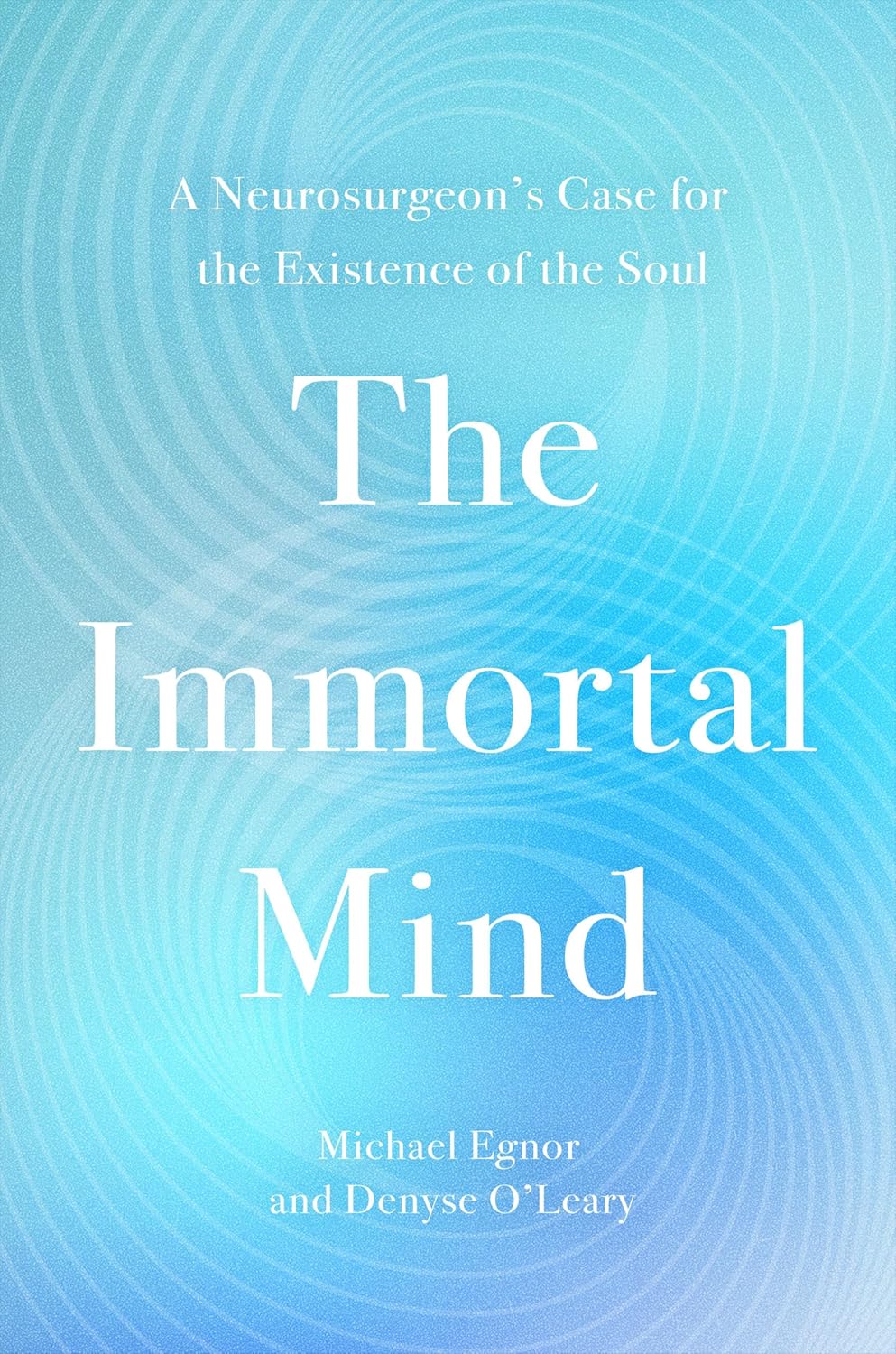 Published by Worthy Books
Brain surgeon Dr. Michael Egnor and Denyse O’Leary overturn that mind-is-brain-is-computer assumption in their new book, The Immortal Mind (2025). Dr. Egnor personally performed over 7,000 brain surgeries. Study of the mind‒brain issues led him to realize the mind is not just the brain; it is associated with the brain. The book’s argument can be used to show that an AI system mimicking a brain still does not have a mind. Let’s compare AI to the observed realities of the human mind.

The human mind doesn’t need a whole brain. There are rare cases of people born without a cerebellum who nonetheless grow up to live fairly normal adult lives. Similarly, there are children born lacking most or all of the cerebral cortex, usually considered the heart of the mind, yet the children are still conscious. They can feel, think, and experience life. Patients undergoing surgery to remove diseased brain tissue, for example, may or may not lose some intellectual or motor functions, but their personalities usually remain the same.
☒ AI systems require a full “electronic brain” to work. Take out chunks of hardware or damage sections of software — the computer loses some or all functions.
Higher mind functions don’t map neatly in the brain. Dr. Egnor reports four distinct activities of the mind — perception, movement, memory, and emotion — that appear to be generated and controlled by specific regions of the brain. But intellect, reason, abstract thought, and free will do not appear to map so neatly. For example, the brain area that controls the hand writing a math equation can be pinpointed in the left frontal lobe. The understanding of the equation cannot be localized in the same way.
☒ AI systems’ functions are all identifiable in specific hardware and software, and in processing modules that communicate.
A split brain doesn’t create two personalities. A widely-known surgery to alleviate epilepsy involves completely splitting the brain’s two hemispheres. Post-surgery, the patient’s personality and mental functions are nearly all intact. The two half-brains do not produce two personalities or two minds. Connections among neurons alone do not create the mind.
☒ Split a computer that’s hosting AI, i.e., physically disconnect it from its other elements, and it doesn’t work as before or at all.
Twins sharing bodies and brain tissue are two separate people. Conjoined twins may share material functions of the brain and physical sensations but don’t share abstract reasoning. Each has a personal identity, individuality, and free will. They cannot divide their intellectual tasks so that one studies geometry while the other studies calculus; each must learn separately. Each twin has an observable separate will, and they can argue and disagree with each other.
☒ The idea of “conjoining” two AI computers would require specific engineering for them to communicate and share tasks. If the conjoined AI systems had “personalities,” they’d be the same as previously programmed.
Brain stimulation and seizures don’t do mathematics. Pioneering neurosurgeon Wilder Penfield (1891–1976) conducted over 1,100 ethical, painless, open skull brain operations on fully conscious patients, keeping careful notes while mapping the brain extensively using electrodes. He found that stimulating certain regions would spark memories or trigger emotions. Penfield found he could never force a patient to reason, reflect, or choose. Abstract thought and free will never appeared on command. Even seizures that hijack brain circuitry never produced genuine reasoning; at most there appeared only compulsions, obsessions, memories and illusions, or emotional surges. These facts hold true today.
☒ Any amount of outside “stimulation” to AI computer hardware does not result in amazing new features; it results instead in system malfunctions. Outside modifications of software, whether AI or otherwise, almost always damage or destroy the operation of the software module or entire program. Random modifications of software do not produce grand new sophisticated functions.
Near-death experiences confirm that unique mind and personality survive despite a flat-line brain. People undergoing surgery or suffering accidents can sometimes lapse into clinical brain death. An estimated 20% of those who are later revived report what is called a near-death experience (NDE).
The details vary, but certain core features appear in NDEs. Most NDErs report at least one, often several, of the following: a sense of being dead, feelings of peace or pleasantness, freedom from pain, separation from the body, passage through a dark region or tunnel, or the presence of a voice or being. Many describe a panoramic “life review,” where their past is vividly re-examined. Others report moving toward a bright light, meeting spirits or deceased relatives, or gaining sudden and profound insights — all while their brains showed no measurable activity.
Many NDErs describe leaving their bodies, watching events unfold from above, or even traveling to other places. Some report hearing conversations in the operating room, describing clothing worn by staff, noting where objects were placed, or recalling details from outside an accident scene that they could not have observed through normal senses.
Such accounts are especially striking when later investigation can confirm that the patient’s observations were accurate (veridical NDEs). The NDErs report their personality, their self-hood, persisted even though they were in a very different state of being.
☒ AI systems can’t have NDEs. None of the above-listed NDE features can occur with computer hardware and software. AI systems could only mimic the subjective and sensory “feelings” if their software was written to do that. Broken hardware and malfunctioning software don’t produce immaterial experiences or vivid visions of another intangible existence. AI systems can’t leave their “bodies” and view themselves or others. AI systems that die won’t go through tunnels, move toward bright lights, and meet spiritual beings or deceased relatives.
AI cannot produce the transcendent human mind
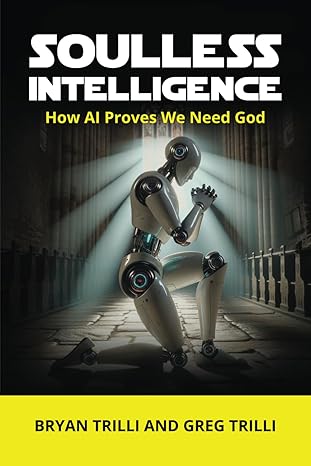
In Soulless Intelligence (2024), authors Bryan and Greg Trilli argue from software analysis and philosophy that AI lacks the defining characteristics of a human, which amount to a soul beyond the body. The Immortal Mind supplies the brain surgeon’s view from the trenches that key defining aspects of the human mind are not contained fully in the brain as a product of interconnected neurons. AI can never be more than a machine; the human mind soars far above any machine model.
Be nice to your robot. But don’t think she is human.
