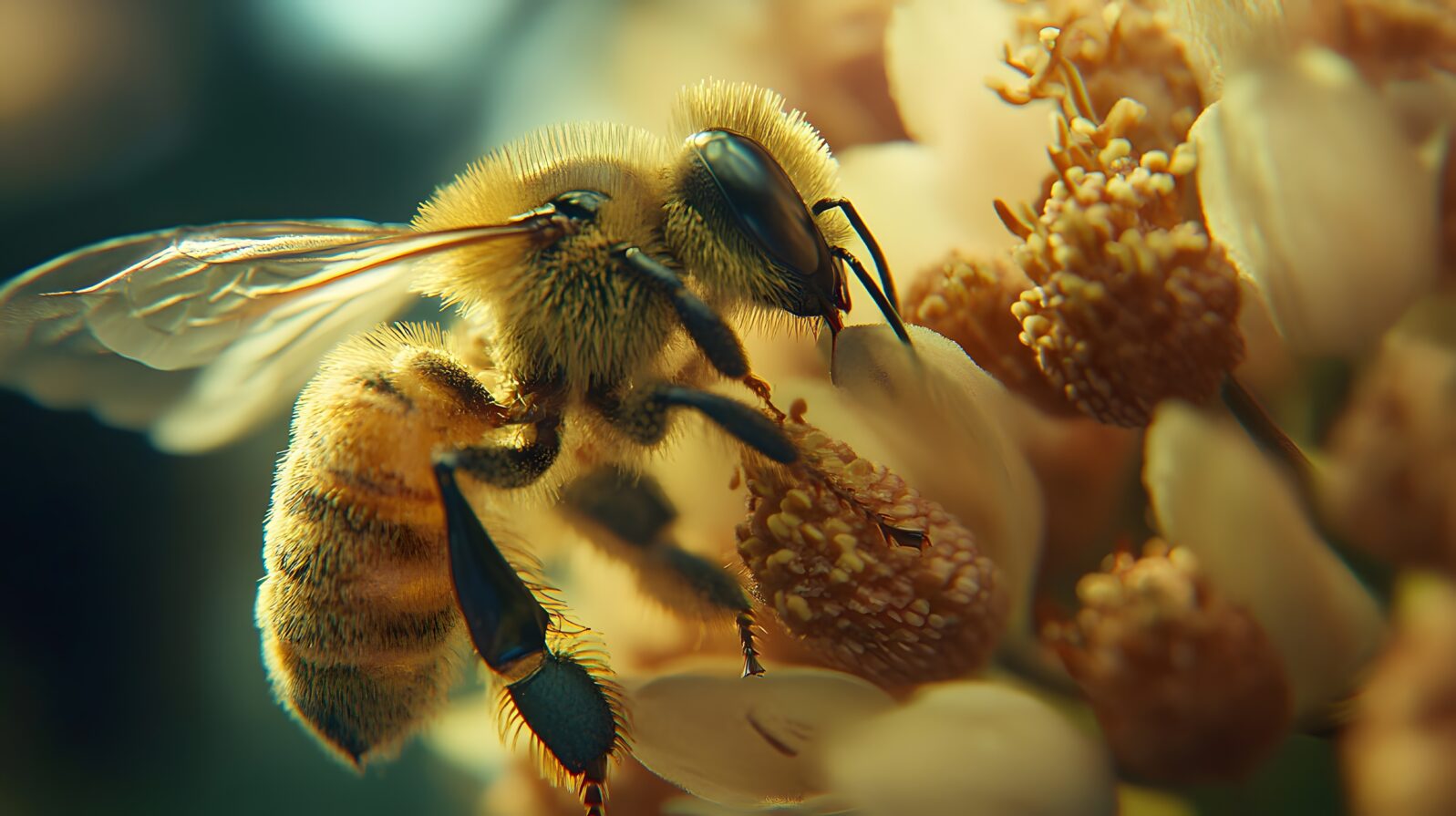
Possible Breakthrough: Bee Gene Specifies Complex Hive Behavior
The researchers used CRISPR/Cas9 genetic scissors to modify or switch off the dsx gene in selected beesThe staggeringly complex societies of social insects are a genuine mystery in biology. An individual ant or bee, for example, cannot envision a way of organizing a complex society. So how do beehives or termite mounds get organized?
A large group of insects, pooling their intelligence, can’t do it because intelligence is not cumulative, the way physical strength is. If one bee cannot figure out how to organize a hive, a thousand bees won’t be able do it either.
Granted, an individual human may not be able to organize a human society. But with humans, it is not so simple because our ability to abstract plays a role. As a result, some groups of humans can organize a society — think of the Federalist Papers or the Confederation meetings. But these humans were relying explicitly on abstract intelligence that insects do not have.
So how do we account for the hive mind?
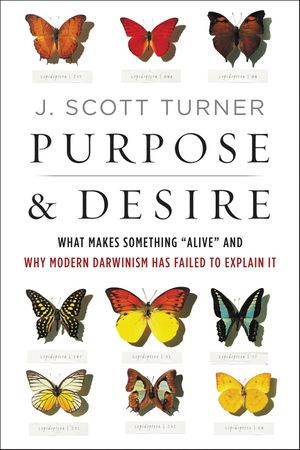 Purpose and Desire by Scott Turner Amazon fair use claim
 The hive mind is a reasonable hypothesis in biology — even if we cannot currently account for its origin. We observe that insects grow into their succession of roles in a hive or colony in a way that shows clear evidence of purpose, design, and organization even though they can have no individual awareness of abstractions in the way that the authors of the Federalist Papers did.
J. Scott Turner, author of Purpose and Desire: (Harper One 2017) documented the hive mind at length in connection with his speciality, termite mounds.
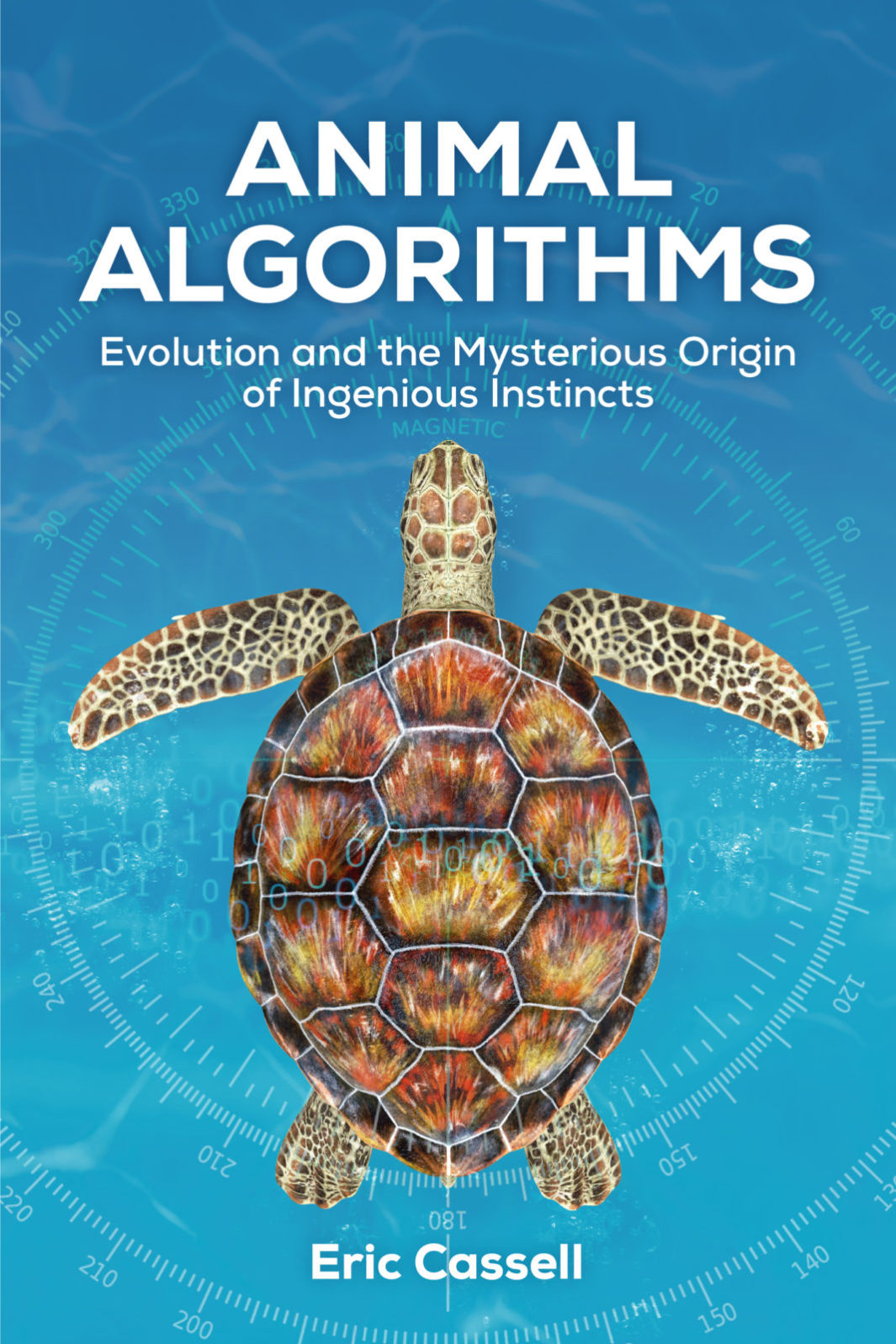
Navigation expert Eric Cassell has suggested in Animal Algorithms (2021) that social insect intelligence is better understood if we think of it as like computer intelligence rather than like human intelligence. The individual insect does not have a personality that thinks independently but rather acts as part of a sequence of instructions.
A clue to the genetic origin of the hive mind
Many of us attribute the hive mind’s origin to the design of the universe. If the universe is the product of intelligence, insects could have access to some type of intelligence in principle. But how, exactly? That’s where a recent find from Heinrich-Heine University Duesseldorf is of interest:
Professor Dr Martin Beye, who heads the Institute of Evolutionary Genetics at HHU and is the corresponding author of the study that has now been published in Science Advances, emphasises: “The behavioural repertoire of the individual bees and their function in the colony are not learned, but rather inherited. Until now, it was not known how such complex behaviours were genetically encoded.”
Together with colleagues from the universities in Frankfurt/Main, Oxford and Würzburg, the team of researchers at HHU led by Beye and first author Dr Vivien Sommer has now discovered that a special gene known as dsx specifies worker bee-specific behaviour.
Sommer: “The gene programmes whether a worker bee takes up a task in the colony and for how long. This includes collective tasks such as caring for the larvae or foraging for food and social exchanges on food sources, for example.”
“Bee gene specifies collective behavior,” November 1, 2024 The paper is open access.
The researchers used CRISPR/Cas9 genetic scissors to modify or switch off the dsx gene in selected bees, attaching a QR code to them. They then used cameras to monitor how they behaved in the hive. Their findings pointed to a “ fundamental genetic programme that determines the neuronal circuitry and behaviour of worker bees” according to University of Würzburg study lead Wolfgang Rössler. The researchers hope to study colonies as a whole to test their hypothesis.
From their Abstract in Science Advances: “Unexpectedly, unlike in other insects, the dsx gene is required for the neuronal wiring of the mushroom body in which the gene is spatially restricted expressed. Together, our study establishes dedicated programming for group-supporting behaviors and provides insight into the connection between development in the neuronal circuitry and behaviors regulating the formation of a eusocial society.”
You may also wish to read:
Do ants think? Yes, they do — but they think like computers. Computer programmers have adapted some ant problem-solving methods to software programs (but without the need for complex chemical scents). Navigation expert Eric Cassell points out that algorithms have made the ant one of the most successful insects ever, both in numbers and complexity.
and
How do insects use their very small brains to think clearly? How do they engage in complex behaviour with only 100,000 to a million neurons? Researchers are finding that insects have a number of strategies for making the most of comparatively few neurons to enable complex behavior.
